Metro looks to expand Free Food Program

It’s Thursday morning when the trucks arrive at a Port Coquitlam housing complex for the biweekly food delivery.
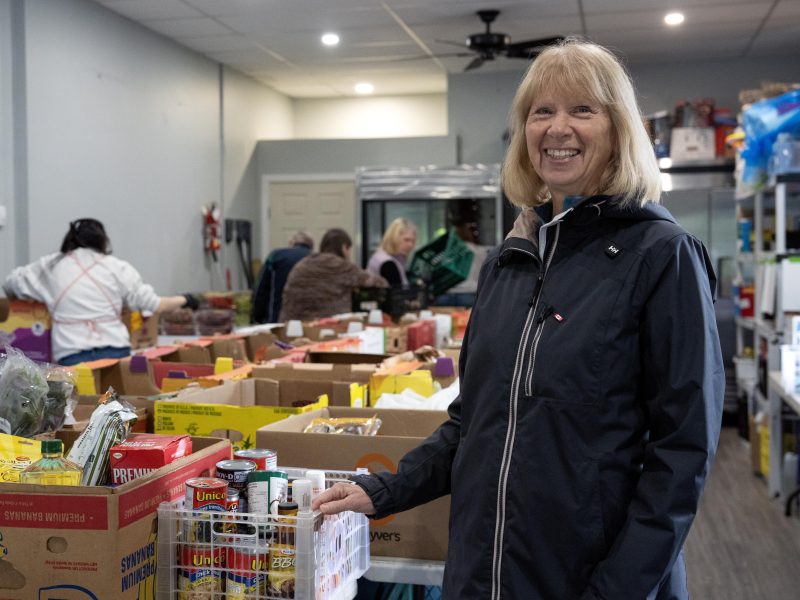
Shopping carts clatter over pavement as a team of volunteers unload and divvy up the morning’s fresh-from-the-grocery-store haul.
The bread, potatoes, grapes, chicken and other assorted groceries are intercepted from the landfill and trucked to 27 of Metro Vancouver’s housing communities as part of a Metro Vancouver partnership with the Food Link Society.
Local news that matters to you
No one covers the Tri-Cities like we do. But we need your help to keep our community journalism sustainable.
“It really helps my budget,” says Julie Sherwood between carting loads of food into Meridian Village.
A single mother raising a teen on a bookkeeper’s salary, Sherwood estimates the program saves her about $300 a month.

Amid the growing problem of food insecurity, more people are relying on the Free Food Program, notes Food Link Society director Igor Bjelac.
“Since COVID it’s going up every year,” he said, adding the tariffs aren’t helping.
When the program started up in 2017, many of the customers were refugees and newcomers to Canada. Over the past few years, Bjelac said he’s been seeing seniors, single moms, students, as well as working class families that are struggling to make ends meet.
In 2022, 33 percent of Canadians reported that rising prices greatly affected their ability to handle day-to-day expenses. By 2024, the number had increased to 45 percent, according to Statistics Canada.
After dropping off a pallet of groceries, Bjelac talks about the concept of waste.
There’s unavoidable waste – stems, seeds, and bones – but there’s also a range of avoidable waste.
Every year in Canada, approximately 11 million tonnes of food are wasted, a prospect that horrifies Bjelac, as he discusses the resources that go into raising a single cow or growing one apple.
“It still has a value,” he says.
If an apple is scratched it can be eaten. It can become cider or pie. And if it’s mashed, it can go to a farm.
“Goat will not be offended,” he says, noting he also regularly drops off food at farms across the region.
Working with Food Link was a natural fit, notes Metro Vancouver’s director of housing operations Jag Klair.
Besides ensuring people have enough food, the operation also keeps food from generating methane after being dumped in the landfill, she says.
“It’s so many birds with one stone.”
Last year, about 580,000 pounds was distributed to Metro Vancouver families.
The program is largely reliant on the volunteers who sort the food and hands out hampers, Klair notes.
“That further creates community,” she says, noting community gardens are also part of the initiative.
Metro Vancouver is planning to bring the program to 35 housing complexes by the end of 2027.
The initiative has its challenges, Bjelac says, noting the high cost of fuel and repairs. However, the operation allows every dollar to essentially pay for $16 worth of food.
“The value in my mind is not money, it’s how we can help each other and how we can lift each other,” he says. “Money is important, yes, it’s running the truck. But money is not everything. Humanity is everything.”
Author