Less to give, more in need: How tariffs are deepening the food crisis in the Tri-Cities
As a journalist and artist with an Iranian background, I cannot recall a single day of my life untouched by the weight of sanctions or the economic pressures inflicted by American foreign policy, forces that leave their deepest marks on the most vulnerable.
Now, in the country I call home, where I volunteer at a food bank, I see those same patterns repeating: rising grocery costs, shrinking donations, and empty shelves.
This long-read is not just about numbers. It is about what happens when a mother cannot find formula. When two jobs are not enough. When survival turns silent, and dignity is reduced to what fits in a grocery bag.
Local news that matters to you
No one covers the Tri-Cities like we do. But we need your help to keep our community journalism sustainable.
What strikes me most is how strain at the top – declining profits, cautious investors, shrinking margins – so often rolls down to those least able to bear it.
We may not feel hunger the same way, but we are in the same boat. And when the waters rise, it is always the lowest deck that floods first.
Tariffs impact ‘quality and quantity’
In a quiet corner of the Tri-Cities, the People’s Pantry Food Recovery Society is facing a mounting crisis. Its executive director, Alice Hale, is on the frontlines of a struggle that reflects broader national anxieties: shrinking donations, growing need, and the unseen effects of international policy trickling down into local food insecurity.
“The tariffs have absolutely impacted the quality and quantity of food we receive,” Hale says. “At first, Canadians were boycotting U.S. produce, so we were getting a lot of American fruits and vegetables. But as food prices kept rising, shoppers became more price-conscious, which changed how stores stocked their shelves. That meant less food surplus for us to rescue.”
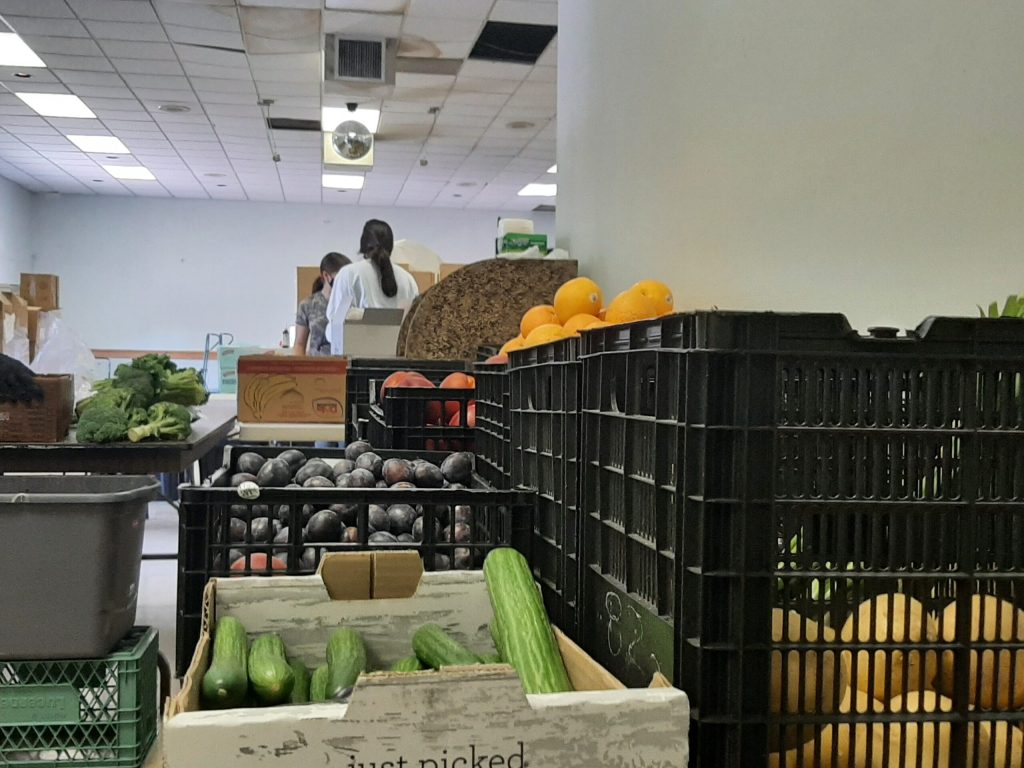
As a food rescue-based nonprofit, the People’s Pantry does not buy food. It redistributes edible, unsellable goods donated by stores, businesses, and community members. But when stores reduce their orders due to slowed consumer spending, there is less waste, and less to rescue.
Supply chains and the business ripple effect
“Stores like Costco have changed their buying patterns. Where you used to get avocados from California, now you might see them from Mexico,” Hale says. “We used to pick up quite a few boxes from Costco, but now that has been cut in half.”
She clarified that retailers are not donating less out of unwillingness.
“They are still donating. In fact, I think a lot of it is corporate responsibility. They are trying to be more green, reduce waste. But because they are buying differently, there is simply less overstock.”
And as more organizations enter the food rescue space, the available pool of rescued food becomes even smaller.
“Everyone’s share is reduced, and the competition grows, especially when food costs are so high.”
Dwindling supply, rising demand
While supply drops, the number of people in need grows.
“We are feeding 250 people weekly right now,” Hale explained. “But we still have about 60 people on our waiting list. At one point, that list was over 90. When the quality and volume of food drop, it becomes harder to move anyone off that list.”
Protein and dairy are the most severely impacted.
“We are still managing some fruit and vegetables, but protein? That has become the biggest challenge, and every food bank in the Tri-Cities is saying the same thing,” Hale says.
Stretching the limits: A creative response
To cope, the People’s Pantry has shifted its focus from perishables to shelf-stable goods.
“We have been lucky to have some community groups run food drives. So we have added dry items like pasta and sauce to hampers. It is not our ideal – we have always prioritized fresh food – but we also know that people need to eat, and we do what we can.”
Hale emphasizes the importance of collaboration. The People’s Pantry is part of the Tri-Cities Food Hub, a network of like-minded organizations that coordinate food sharing.
“If we have extra, we share it. If others have a surplus, they offer it to us. We are all working toward the same goal: feeding people with dignity and without judgment.”
The funding drought
Even though the organization operates on a lean model with two part-time staffers and no food purchases, funding remains a major challenge.
“We received a generous grant last year from the government, which was supposed to sustain us for a year,” Hale says. “But whether there is a similar grant coming? I do not know. The government has a lot of demands on its resources right now.”
Private donations have also slowed.
“Yes, we issue tax receipts for donations over $25. But donations are down. People are uncertain. They are worried about their jobs. They are cautious with their money. We understand that, but it affects us.”
A call to action
“Food insecurity is real in the Tri-Cities,” Hale says. “We see it every day. People would not come to us for hampers if they did not need them.”
Her message is clear: the issue is systemic, urgent, and growing.
“We are doing this with as much dignity as we can. But without more food and stable funding, it is hard. We do not want people on a waiting list. We want to serve them. But the supply is simply not keeping up with the need.”
To donate, volunteer, or learn more, visit their website.
The real cost will show at year’s end: How tariffs and cuts are squeezing Tri-Cities food recovery networks
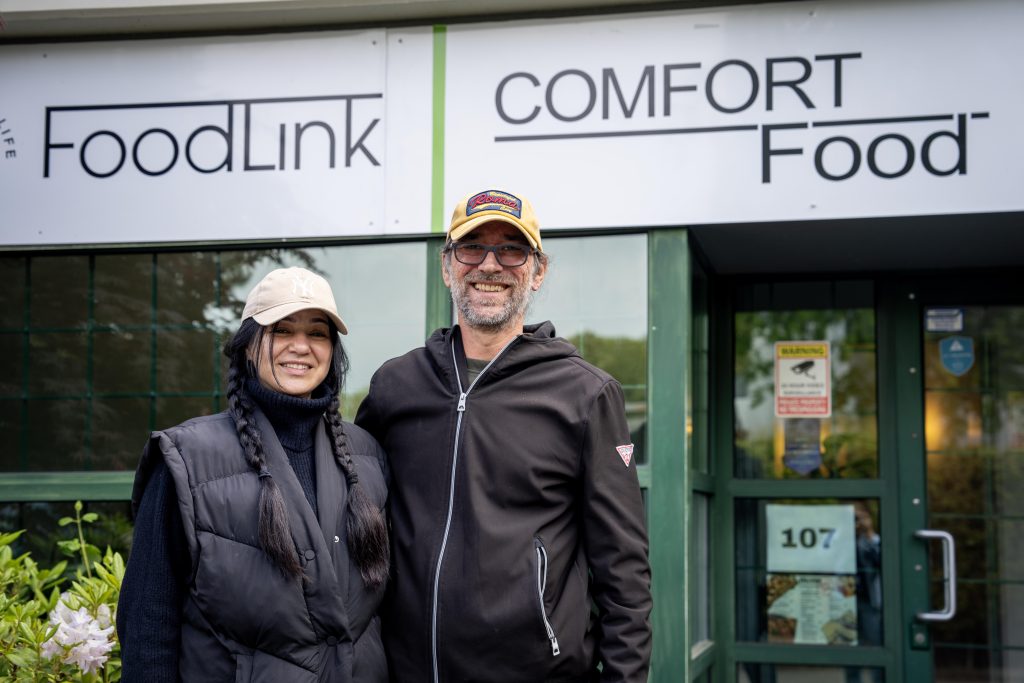
At the heart of the food insecurity crisis stands Food Link Society, a food recovery charity that has spent the past decade feeding thousands—not with bought goods, but with salvaged ones.
“We are not a food bank,” says Igor Bjelac, one of the founding members. “We do not purchase food. We recover what would otherwise be thrown away—near-expiry items, imperfect produce, and we deliver it the same day to those who need it.”
Unlike traditional food banks, Food Link Society takes a grassroots, immediate approach. Volunteers collect perishable goods from local grocers, excluding American chains like Costco, and dispatch them directly to families.
“We serve over 850 families weekly,” says Young Bong, who coordinates distribution. “We operate out of schools, churches, community centres, and housing units across Coquitlam and beyond. Every day the number increases.”
Food is distributed seven days a week across 25 sites in 11 cities, with more than 420 volunteers. Recovered goods reach the People’s Pantry, Silver Harbour, Women’s Centre, East Hastings kitchens, addiction recovery homes, and School Districts 43 and 44. On Sundays, food reaches downtown shelters.
“We do not hand food out in the street,” Bong says. “We work with kitchens that cook fresh meals.”
The real cost of tariffs
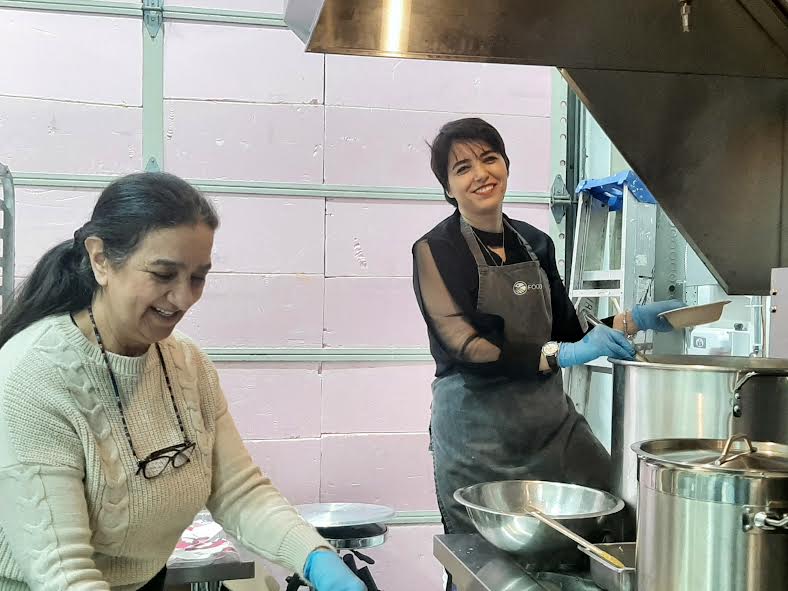
While demand has soared, donations have wavered. Volunteer and community coordinator Reihaneh Mirjani notes a decline in support, just as client numbers continue to rise.
“We have to reach out to more stores, talk to more people, push harder. Families are coming. We have to feed them.”
When asked about the impact of recent U.S. tariffs, Bjelac cautions that it is too early to measure.
“Tariffs hit companies first. Charities feel it a year later. This year, we are seeing the fallout from post-COVID funding cuts. Next year, we will feel the true impact of the tariffs. I expect one-third more families seeking help.”
The society has dealt with adversity before.
“In 2015, food recovery was not taken seriously,” Bjelac recalls. “They called us garbage people. Save-On-Foods used to throw everything away. Now, even animal feed gets recovered.”
More than meals: A human ecosystem
Food Link’s mission has grown. Beyond food, they now recover furniture and medical supplies. They train residents in low-income housing to volunteer, fostering community and combating isolation.
“One woman told us she could finally buy shoes for her daughter. Another said she prayed every day just to put a decent meal on the table,” Bong says.
The impact reaches far beyond sustenance.
“We have seen kids come to school unable to concentrate because they are hungry. If you cannot eat, you cannot think. And if you cannot think, you cannot learn,” Bjelac says. “Our work helps keep those children in school.”
From waste to worth
Food Link Society aims to expand its zero-waste model nationally. But uncertainty looms.
“Most donations come at the end of the year,” Bjelac explains. “With the tariffs only introduced this year, we are still waiting to see how deeply they will cut.”
Formerly known as Immigrant Link Centre Society, the organization has roots in ESL classrooms and mutual aid. Though the name has changed, the spirit remains: resilience, dignity, and the belief that no nourishment should go to waste.
“If you had a good year, help us. If you are a business, donate. If you care about your community, get involved,” Bjelac urges.
“Because here in the Tri-Cities, food is more than fuel. It is connection. It is dignity. And thanks to this unlikely network of trucks, volunteers, and recovered goods—it is still reaching those who need it most.”
Tariffs and tensions: Tri-Cities businesses face new economic squeeze
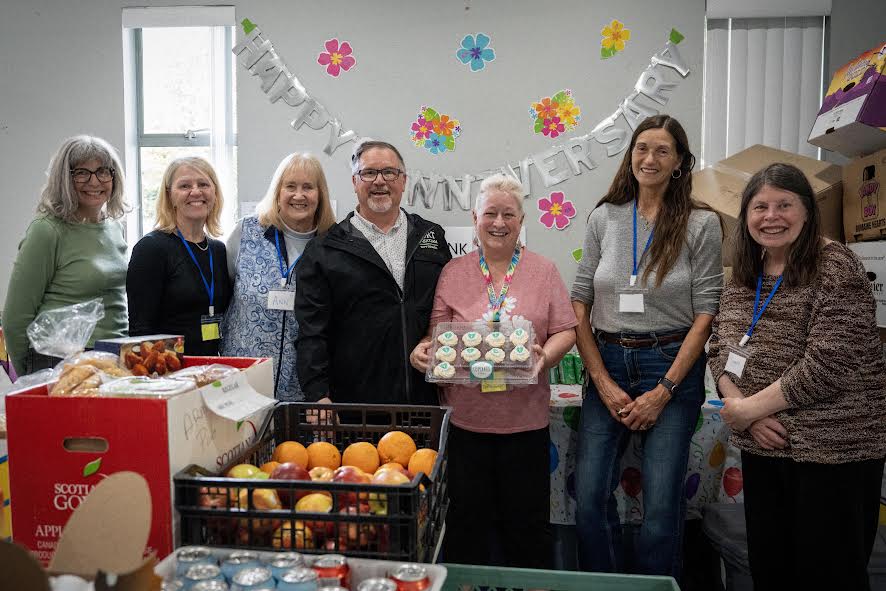
As the Tri-Cities cautiously recover from the economic tremors of the COVID-19 pandemic, a new threat has begun to cast a long shadow: U.S. tariffs. From gyms and machine shops to marine technology firms and food banks, the impact of rising costs and unstable trade relations is shaking small businesses, and local leaders are taking notice.
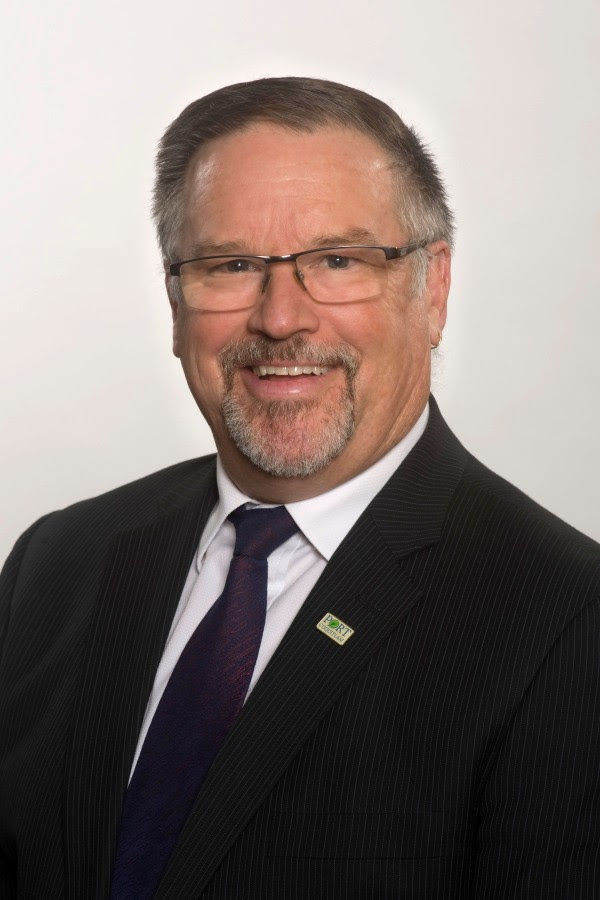
Glenn Pollock, a long-serving Port Coquitlam city councillor and a fixture in community advocacy since 2008, articulates the unease spreading across the region.
“Businesses are already on the edge,” he warns. “Post-COVID recovery has been hard enough. Now with tariffs pushing up commodity and construction prices, many of them are hanging on by a thread.”
Rent hikes without limits
He recounts a Chamber of Commerce meeting where business owners disclosed shocking rent hikes—some as high as 40 percent.
“In this province, residential rent increases are capped. But commercial properties? There are no such protections. One gym in Port Coquitlam, Twist Conditioning, was forced to shut down after a 40 percent rent increase. A tire shop moved in the next week.”
Although cities cannot directly influence trade policy, Pollock is pushing for change. At the upcoming Union of British Columbia Municipalities (UBCM) meeting, he plans to introduce a resolution urging the province to create a commercial tenancy branch mirroring protections currently offered to residential renters.
Local industry, global consequences
“Trump’s earlier tariffs on China already froze global supply chains,” Pollock notes. “Now, new tariffs threaten to unleash that chaos again. We will feel it here especially in cross-border shortages of everything from pharmaceuticals to toilet paper.”
Port Coquitlam is home to highly specialized industries, like International Submarine Technologies, which builds world-class deep-sea submarines, and Dynamic Structures, which designs optical platforms and amusement rides for global giants like Disney.
“These companies are world-class,” Pollock says. “But they are rooted here. And they depend on open trade. Isolation will crush them.”
He points to a local example: the closure of a major machinery company in Poco that triggered the collapse of two neighboring businesses dependent on its output.
“It is a chain reaction. That is why tariffs are not abstract—they are about survival, right here.”
Despite limited legislative power, Pollock says he believes municipalities still have a role to play.
“We can lead by example—buying Canadian, supporting local firms, and lobbying higher governments to act. But we need coordinated action at the provincial and federal levels.”
As economic uncertainty mounts, business owners and city officials are calling for urgent reforms, trade diversification, and stronger protections for the small businesses that form the backbone of the Tri-Cities.
“These tariffs are not just numbers,” Pollock says. “They are livelihoods. And if we do not act, we will watch them disappear one business at a time.”
The new face of hunger: When two incomes are not enough
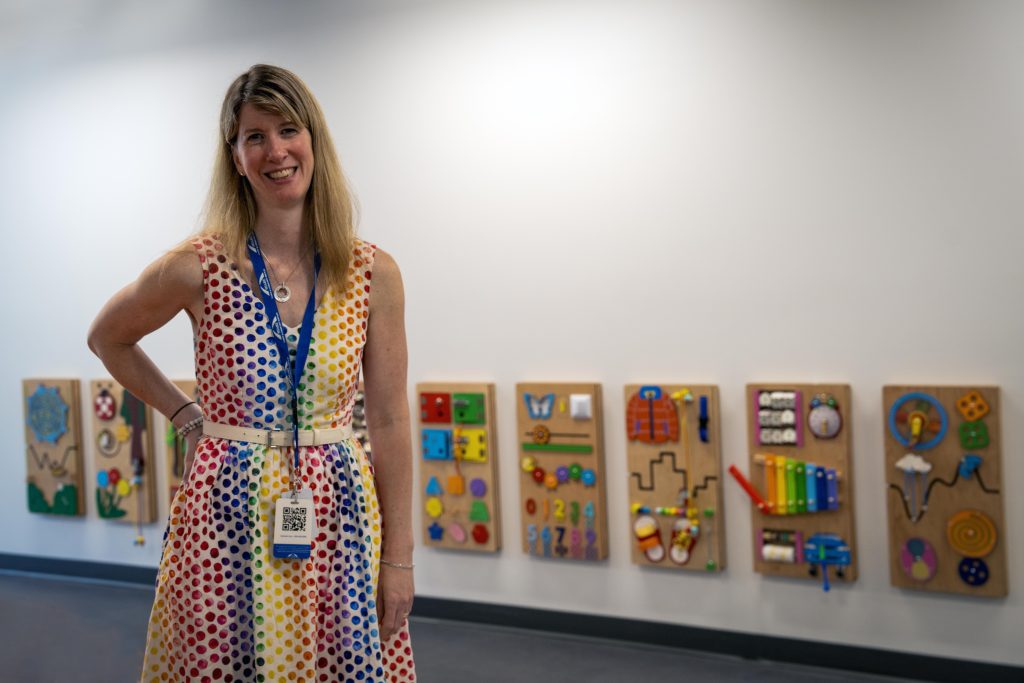
It is a quiet but growing crisis. In Coquitlam, Port Coquitlam, and Port Moody, even families with two full-time incomes are now relying on food banks.
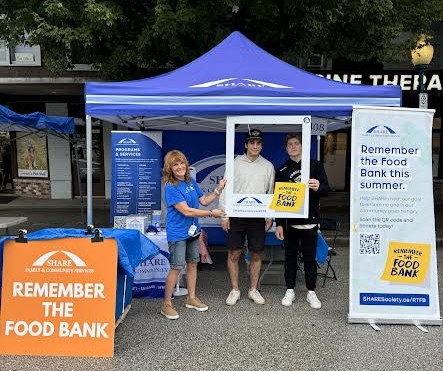
Once seen as a last resort for the unemployed or the elderly, food support has become essential for the working middle class, explains SHARE Family and Community Services Society CEO Claire MacLean.
“The most dramatic shift we have seen is the rise of dual-income households who still cannot make ends meet,” MacLean explains. “They are doing everything right and they are still falling short.”
Empty shelves and soaring costs: A formula shortage crisis
At the same time, the most vulnerable among us, infants, are facing a dangerous shortage: baby formula. With nearly all formula imported and prices soaring, SHARE is struggling to supply families with what should be a basic necessity.
“There is almost no formula made in Canada,” MacLean says. “And the cost is rising fast. Parents who cannot breastfeed are coming to us in desperation. Sometimes, we simply do not have enough.”
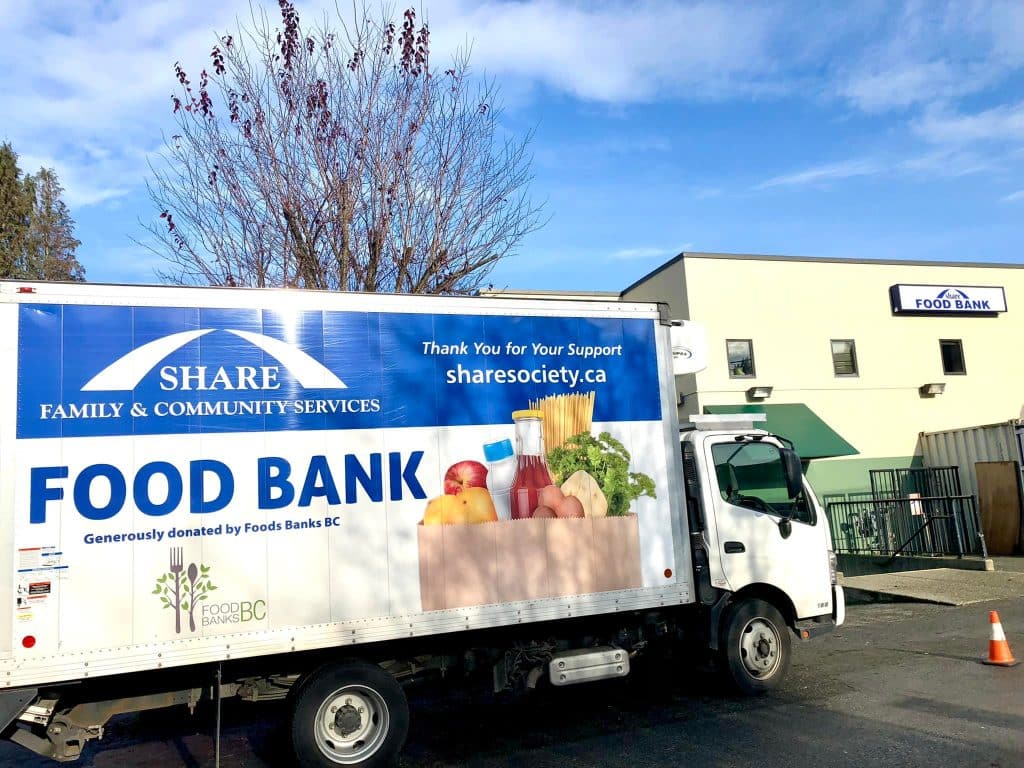
SHARE Society distributes food to more than 5,000 Tri-Cities residents each month. It offers fresh, healthy, and culturally appropriate groceries through a dignified, choice-based model. For families with infants, there are enhanced hampers, including formula and diapers when supplies allow.
From shrinking donations to shrinking hope
Economic uncertainty, driven by post-COVID strain, inflation and looming U.S. tariffs, is causing a sharp decline in donations. Many local businesses that once pledged generous support are now scaling back.
“They are telling us they just cannot commit this year,” MacLean says. “The uncertainty is too great. They do not know if they will be able to pay their own staff next month.”
The consequence is a double blow: rising need, falling support.
“One family came in recently, both parents working, but their son needed ADHD medication. After paying for it, they had no money left for groceries. That is what brought them to us,” MacLean recalls.
For SHARE, food is just the beginning. The organization also provides counselling, addiction support, senior services, child development programs, and employment services. But the weight of unmet needs is growing heavier each month.
Because folding inward, she warns, is not just a personal response. It is a societal risk.
And if the community does not hold together, especially for its most fragile members, it may begin to break.
“In times like these,” MacLean says, “we need each other more, not less. Even if people cannot give money, they can volunteer, show up, stay connected.”