Homelessness, snack packs, and the ‘Lifeguard’ of Gordon Avenue
When homelessness skyrocketed in the Tri-Cities, Macarthy Whyzel hit the street with snack packs
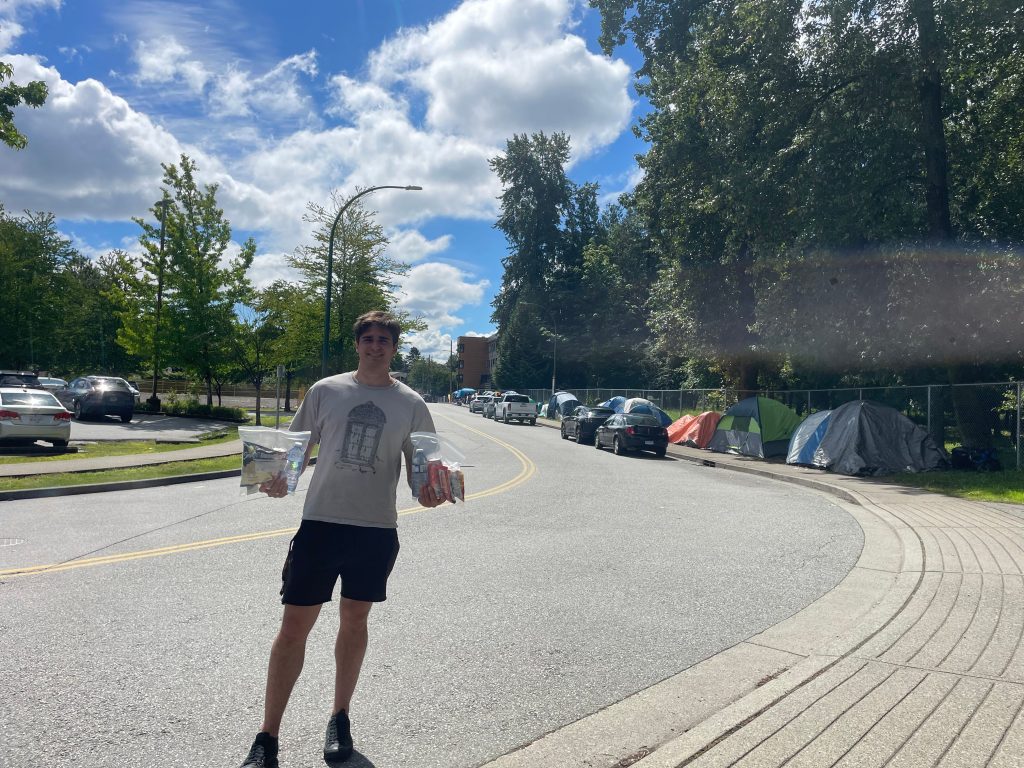
He’s visited the same street almost every day for the last nine months but now, as he waits for a woman to unzip her tent, Macarthy Whyzel, 24, looks down the road and reaches into his pocket.
Whyzel parked his car, a hand-me-down 2012 Mazda 3, next to a row of tents less than 20 metres away. A white van with medical professionals from Fraser Health is parked behind his vehicle. They offer first-aid to dozens of people living outside the 3030 Gordon Project, the only permanent emergency homeless shelter in the Tri-Cities.
Since the fall, Whyzel has been coming to the street to deliver weekly care packages filled with food, water and hygiene products. Over the last nine months, he’s assembled a team of 13 volunteers, dubbed TheUpliftingGroup, to help with his cause.
Local news that matters to you
No one covers the Tri-Cities like we do. But we need your help to keep our community journalism sustainable.
Several times per week, the volunteers, many of whom have backgrounds in social services, drive to Whyzel’s house on Westwood Plateau to pick up and deliver dozens of water bottles and snack packs — a bag of chips, granola bar and a cookie — that Whyzel assembles in his garage the day before. As of July, the team was delivering more than 250 packs to more than six different communities across the Lower Mainland each week.

“The way we recruit is all through Facebook, people reach out saying they want to volunteer,” Whyzel said. “I’m not able to go to six cities, I would love to, but I allow the other volunteers to do that with resources.”
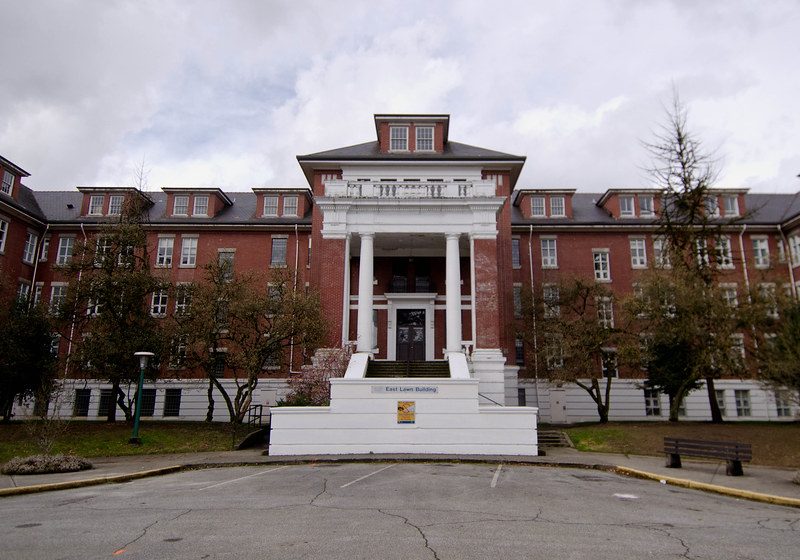
Although his network spread beyond the Tri-Cities, Whyzel has taken responsibility to help people living outside of 3030 Gordon. The facility, which opened in 2015, has permanent shelter beds for 42 people and supportive housing for an additional 30 people. However, Coquitlam has had a significant rise in the number of people looking for housing since then.
Between 2020 and 2023, the homelessness population increased by 86 percent in the city, according to data from Metro Vancouver. Coquitlam council recently agreed to write a letter to the province, emphasizing the need for more supportive housing, outreach and mental health and substance support.
The shelter is full, so Whyzel, who runs two small businesses and studies criminology full-time at Douglas College, visits the street six times per week to help people living outside the building.
The drive, a little more than five kilometres from his house, takes around 11 minutes.
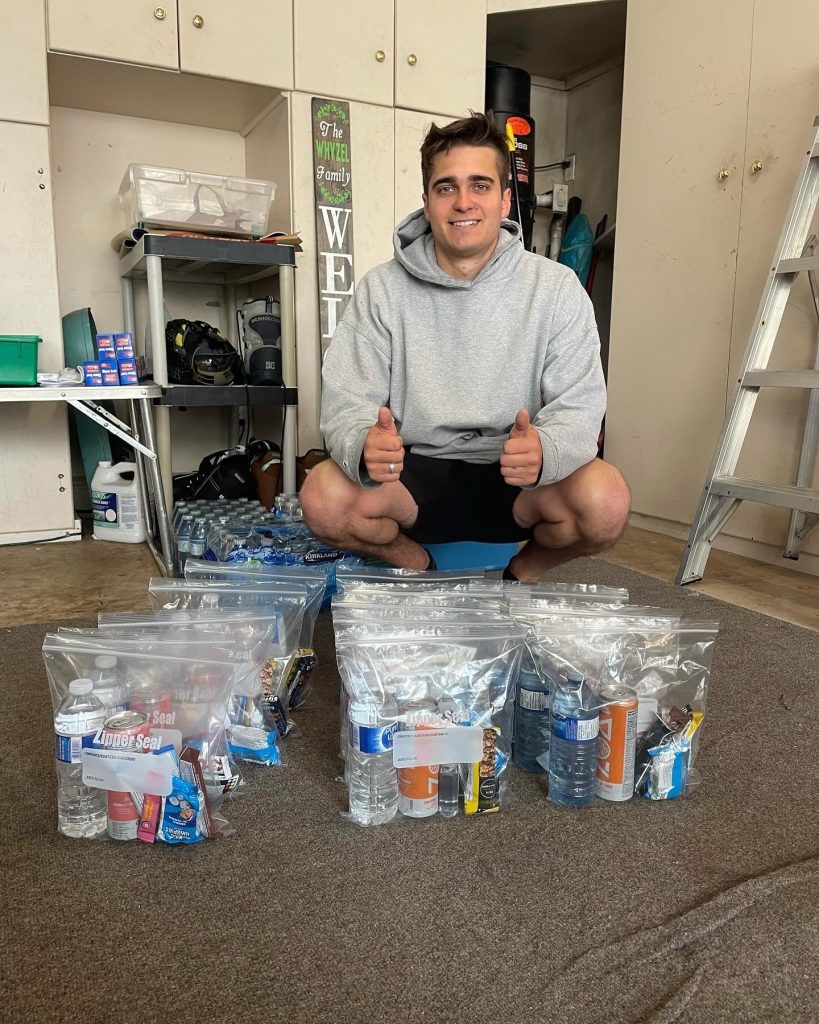
In the wet and rainy parts of the year, he handed out food and warm clothes. When the season shifted to summer, he prioritized frozen water bottles and ice packs. He’s never been harassed or called out, he says, and some days, he’ll sit on the street for hours chatting with different people.
“Hey, it’s Lifeguard!” A woman says to Whyzel as he walks down the street on a mid-July day. The woman started calling him Lifeguard a few weeks ago. The nickname stuck, and people living in other nearby tents have also adopted the name.
Whyzel carries a cooler filled with ice and frozen water bottles.
“How are you?” He replies, before handing the woman a pair of bottles.
“Good, good. Thanks Lifeguard, see you tomorrow?”
“You bet,” he replies.
He strolls down the street — usually around 2 or 3 p.m. in the afternoon — with the cooler and a bag filled with food. He calmly raises his voice as he approaches a group of people in the tent, saying, “outreach, outreach, food and ice water, anyone?”
As Whyzel nears the end of the street, he calls out one more time.
“Yes, please, I’ll take some water,” a woman says.
A sliver of the tent remains unzipped. Whyzel offers to put his hand through the tent and drop off the bottles of water, but the woman insists that she’ll open the tent and greet him herself. Whyzel takes a step back and looks up.
He notices a man walking towards the front door of his Mazda. There’s about $200 stuffed inside a Ziploc bag in a cup holder on the driver side door. It’s donation money he received the day before that’ll pay for supplies to fill his next batch of snack packs.
The man fiddles with the door. Whyzel takes two steps towards the car.

“Hey homie! Everything all good over there?” he says.
The man takes a step back from the car and walks toward Whyzel.
The problems at 3030 Gordon
Concerns about homelessness in the Tri-Cities is not a new topic, despite a recent number of headlines that placed a new spotlight on the issue.
More than 200 people were experiencing homelessness in the Tri-Cities in the late-2000s. That number dipped below 40 at one point in 2013, according to data from the Hope for Freedom Society.
But municipal leaders and advocates have long called for more resources in the region — even before the COVID-19 pandemic heightened the need for more housing. In 2020, the mayors of Port Coquitlam and Port Moody joined other elected officials from across the Lower Mainland and asked the provincial and federal government for more tools to combat homelessness.
The issue was again brought to the forefront last summer. An independent report commissioned by BC Housing concluded that 3030 Gordon — operated by RainCity Housing and Support Society — may need a reset due to high drug use, vandalism and frequent staff turnover.
BC Housing pledged to act on the recommendations, which included a team to clean the surrounding neighbourhood and a mobile response team expansion, among other areas of improvement.
Some of the recommendations in the report have been implemented, said Ravi Kahlon, Minister of Housing, in an email to the Dispatch, such as the launch of a clean team and enhanced communication with first responders.
“Recommendations that are not yet complete are either underway or undergoing further needed assessment,” Kahlon wrote.
In July, the City of Coquitlam revealed that the local police and fire department responded to more than 800 combined calls to 3030 Gordon and the surrounding neighbourhood in 2023.
“I’m beyond frustrated that we’re losing lives. We’re losing community empathy for the enormous number of people who cannot get treatment for their mental illness or their addictions,” said Coquitlam Mayor Richard Stewart at the July 15 meeting.
Two days later, Port Moody council doubled down on Coquitlam’s response, agreeing to also send a letter to the province.
“The report to council and background report to BC Housing were very, very excellent. They got to the issues,” said Penny Gurstein, professor emeritus at the school of community and regional planning at the University of British Columbia.
That kind of advocacy will be what is needed to address the issue going forward, she added.
“The municipality has the least funding for this, so they depend on provincial and federal funding,” Gurstein said.
Sandwiches and empathy
Whyzel was exposed to homelessness at a young age.
When he was six, his father took him and his brother, who was three at the time, to deliver sandwiches to people experiencing homelessness in Vancouver every month. The goal of those visits was to reiterate that people living on the street were people too, Whyzel says.
The message was especially important for his father, who is Métis and a victim of the Sixties Scoop, a period when thousands of Indigenous children were removed from their homes and adopted by non-Indigenous, middle-class families.
“These are people and a lot of these people are connected to us,” Whyzel said. “I grew up with that understanding, empathy, sympathy, all those characteristics.”
Around the age of 17, Whyzel decided to start giving back himself. He launched a haunted house in the garage of his childhood home to raise money for local charities. Word of mouth spread throughout the community, and by 2021, Whyzel started accumulating thousands of dollars in donations.
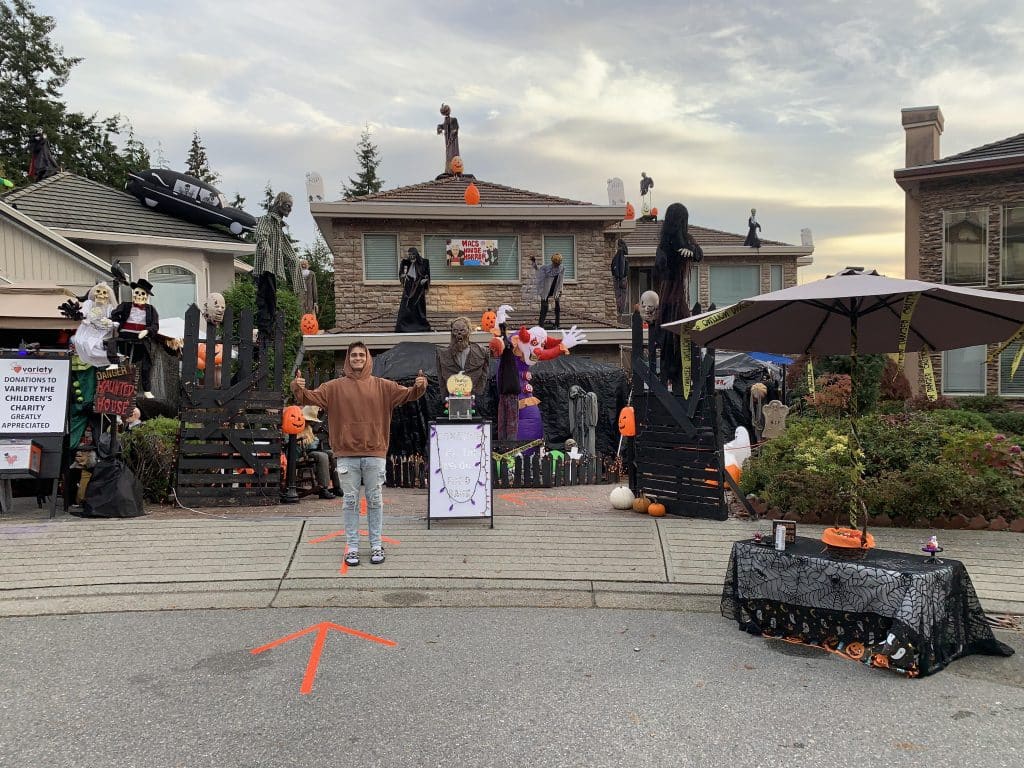
This year, more than 6,000 people came to his haunted house, raising about $1,400 for Backpack Buddies, a Vancouver-based charity that delivers meals to kids battling food insecurity. He also spent $3,500 on supplies at multiple Walmarts for a local homeless shelter.
“We had three RCMP officers come by,” Whyzel said. “They were basically like, ‘Hey, look, we have to be here for presence. In case something happens our paramedics, fire team can’t get here.’ Because of the amount of people, we shut down Parkway Boulevard.”
But after running the house for six years, this past winter, Whyzel said he felt like he could do more. Rather than holding one big fundraiser per year, he longed to do something that offered more consistent support throughout the year.
“We bought out Walmarts with stuff [the homeless shelter] needed,” he said after his latest haunted house. “Then we dropped it off and I felt empty. I didn’t want to wait another 10 months to do something good again.”
About a month after his Halloween house, Whyzel was driving when he noticed a man on the ground. He stopped to make sure he was OK and offered him a sandwich. The interaction inspired him to help more often as he drove around the Tri-Cities and Lower Mainland.
“I was like, ‘Oh, there’s something to that,’” he said. “I turned to, ‘How about I go to Walmart, buy some basic supplies, put them in plastic bags, carry them in my car when I’m just out and about.’”
He did that on his own for three months. During that time, he focused on building relationships with people living on the street, which included showing up every day, asking how their day is going and not getting discouraged if someone declines help.
In the spring, he posted about his work on Facebook and received dozens of requests from the community. Strangers started dropping donations off at his front door and sending e-transfers. Others asked to help and shared his message online.
“That was kind of the demarcation point of ‘oh, this is a thing now,’” he said.
Pressure and one place to go
The rise in homelessness in the Tri-Cities has not surprised Gurstein.
The homeless population has grown so fast that emergency shelters, such as the facility at 3030 Gordon, are now acting as a long-term solution without the support needed for that kind of facility, she says, which ultimately leads to staff burnout and high employee turnover.
It’s a problem that roots in a lack of available supportive housing units, one of two main factors — to go with unaffordability — that people across the country have cited as the biggest systemic barrier to housing in Canada.
Ideally, more supportive housing units will take people out of temporary housing and create space for folks currently experiencing homelessness. But a lot of strain is placed on a single facility if it’s the main spot for emergency shelter in a community of nearly 250,000 people.
“There’s so much pressure when you have one place to go,” Gurstein says. “And if you don’t have proper staff, if people have nowhere to go after being temporarily homeless, it makes for a really toxic situation.”
The provincial government has contributed more than 1,030 homes in the Tri-Cities since 2017, according to a message from the Ministry of Housing to the Dispatch. Kahlon also responded in an article in the Tri-City News that the province was willing to work with the city and build a new supportive housing facility near the Port Moody police station.
“BC Housing has been working closely with the City of Port Moody to identify an appropriate location for additional long-term supportive housing in the community,” Kahlon wrote to the Dispatch.
Earlier in the summer, Kahlon added, he visited with Coquitlam city council to discuss indoor shelter space and additional support.
“We recognize the need for additional housing and shelter capacity and supports for individuals at risk of or experiencing homelessness in Coquitlam and the Tri-Cities region,” Kahlon wrote.
Aaron Christopher, an outreach worker at the Hope for Freedom Society, a Port Coquitlam-based addiction treatment organization that operates five recovery homes in the Tri-Cities and Ridge Meadows areas, has also noticed an increase of people experiencing homelessness in the community.
Like Whyzel, he travels with a coworker across the Tri-Cities multiple times per week to provide food, water and other help for folks living on the street.
One of those frequent stops includes the folks living outside of 3030 Gordon, an area that he refers to as ‘3020 Gordon’ to distinguish between the people living inside the shelter and on the adjacent street.
He says the rise can be correlated with drug use. There are many different types of drugs involving fentanyl that are circulating throughout the Lower Mainland, a factor he said prevents a lot of people from being able to find stable housing.
“People getting on drugs can’t really keep housing in their addiction,” Christopher said.
The rest of the day
Before the woman has a chance to get out of her tent, Whyzel takes a key fob out of his pocket. He presses into it with his thumb. His car in the distance beeps a couple times. The man who looked in the driver’s side window backs away from the Mazda 3.
The man, clad in a grey t-shirt and shorts, nods his head at Whyzel as he walks by. Whyzel returns the greeting.
“Want a water? Snack pack?” He says.
The man shakes his head.
“No thanks,” he replies.
“All good, have a great rest of your day,” Whyzel says before returning his attention to the woman emerging from the tent.
The interaction marked the first time that anyone had tried to peek into his car, but Whyzel was not bothered.
“That mentality comes directly from the idea that you can’t judge someone based on their current actions,” Whyzel said. “You have to understand the underlying, systemic issues at play.”
Christopher said adding treatment resources will do more good for people than adding another low-barrier to entry, emergency shelter to the Tri-Cities.
“It’s a little bit like a band-aid,” he said. “It keeps them out of the elements but it’s just a continuation of them staying in their addiction. As for treatment, it’s a real possibility for a different life, a better life.”
Along with Hope for Freedom, the InnerVisions Recovery Society and Fraser Health offer recovery options in the region. The province also has its own list of resources. Christopher said an emphasis on high-barrier shelters and transitional housing units, such as the Tri-City Transitions Society, which offers both second stage and emergency housing, is a must for residents in the area.
“The Tri-Cities needs more funding and more resources,” Christopher said. “We’ve been very limited to what we can do for people in regards to our funding. . . . Sometimes we need to pull in four or five different organizations just to help one individual.”
In the meantime, Whyzel plans to continue his work outside of 3030 Gordon for the foreseeable future.
After handing the woman in the tent a few bottles of water, he heads back to his car. He grabs a cooler holding the water bottles, which is now empty and filled to the brim with water, and walks to a woman nursing a bandage on her leg.
“Do you want me to refill the water in your cooler?” Whyzel says, pointing to the white cooler a few steps from the woman. She nods. Whyzel dumps out the old water and refills the cooler. He then makes his way back to the Mazda 3.
“Thanks,” she says.
Whyzel plugs a key in the ignition and the engine roars to life. He backs away from the site and takes one last look in his rearview mirror, before starting the 11 minute drive home.
Author