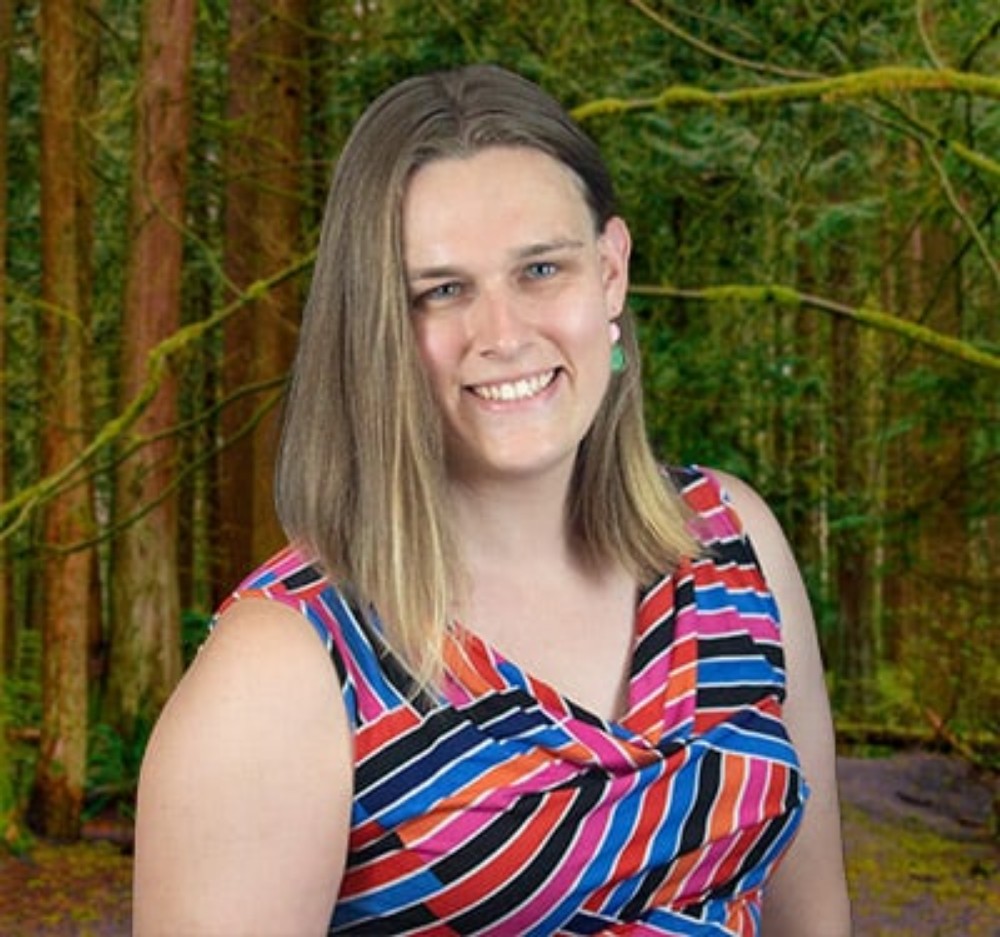
Q&A with Nicola Spurling, B.C Green Party candidate for Coquitlam-Maillardville
Candidates were given one week to respond to questions. Candidates were asked to limit answers to approximately 100 words. Aside from minor spelling/grammatical errors, responses have not been altered.
How will you improve patient care at Eagle Ridge Hospital?
The BC Greens are proposing the Dogwood model to alleviate the strain on our hospitals. A BC Green government will open community clinics, providing the care you need when you need it. Instead of going to an emergency room or urgent care centre because you don’t have a family doctor, or because it takes weeks/months to see your family doctor, these clinics will be easily accessible with low wait times. This will free up hospitals, like Eagle Ridge, to provide better care to patients who need to visit a hospital.
Local news that matters to you
No one covers the Tri-Cities like we do. But we need your help to keep our community journalism sustainable.
How should the next government address the shortage of doctors in B.C.?
Statistically speaking, we don’t have a shortage of doctors and nurses. The reason we struggle to access these services is because they’ve been mismanaged, and privatization of healthcare has taken care away from those not wealthy enough to afford it. While we can and should continue to train more doctors and nurses, and create a faster and smoother path for medical professionals immigrating from other countries to obtain the necessary licensing to work here, we also have to allocate medical professionals more effectively, and focus on providing the best public healthcare we can.
How will your party approach negotiations with the Kwikwetlem First Nation regarding the future of Səmiq̓wəʔelə, (suh-Mee-kwuh El-uh) formerly the Riverview Lands?
My first act, upon being confirmed as the BC Greens candidate for Coquitlam-Maillardville, was to reach out to the kʷikʷəƛ̓əm First Nation. I expressed my commitment to being available for dialogue, as well my belief that no legislation should be passed without consulting those who it may affect – particularly Indigenous communities.
What will your party do to improve ambulance response times in the Tri-Cities?
A BC Green government will reduce wait-times by ensuring adequate resources are allocated for healthcare. This means increasing funding for paramedics. We will also reduce strain on paramedics by implementing a mental health division of 911, where mental health professionals will be available to speak with those in need and respond to mental health calls when necessary.
How will you incentivize the construction of more affordable housing?
A BC Green government will invest $1.5B in the creation of 26,000 affordable units every year. Additionally, we will maintain existing affordable housing so it will no longer be lost to the creation of luxury units, and we will use public lands for the creation of subsidized housing, in partnership with nonprofits and cooperatives. Instead of implementing broad legislative changes that impact all municipalities equally, as the NDP government has done, a BC Green government will consult municipalities and Indigenous peoples to ensure changes to zoning can be implemented sustainably and with an understanding of local nuances.
Do you believe financialized landlords and outside investors are leading to higher rents in B.C.? If so, what should be done about it?
There is no question that treating housing as a commodity is leading to higher rents in BC. We live in a system where rents are going up faster than inflation and landlords expect to earn more than inflation on the value of their property, and be cashflow positive on their properties in the short term. That’s not sustainable in the long term.
A BC Green Government will introduce legislation to formally recognize housing as a fundamental human right and implement regulations to curb the impact of short-term rentals on the availability of long-term affordable housing. We will investigate the implementation of a property transfer tax on the transfer of properties to Real Estate Investment Trusts (REITs) or limited partnerships with REIT involvement, and advocate for federal legislation to ban the sale of residential units to REITs. We will extend the Speculation and Vacancy Tax to all interested communities, with revenues directed toward non-market housing development, and create a single income-tested housing grant for renters and homeowners alike, merging the Home Owner Grant and Renter’s Tax Credit for more equitable support. BC Greens will also apply a 2% tax on residential property values over $3 million and double existing provincial property tax rates for homes valued above $3 million, $4 million, and $7 million, ensuring high-value properties contribute more
What will your party do to help low-income people and the disabled?
Low-income people and people with disabilities have been left behind by government after government. Neither John Rustad or David Eby have taken actions to rectify this.
A BC Green Government will raise social assistance rates and disability assistance rates significantly. A single person on social assistance will receive $2,400, up from $1,060, and a person on disability will receive $2,400, up from $1,483.50. We will develop a poverty reduction plan tailored to Indigenous individuals, families, and Nations, incorporate human rights, Indigenous rights, and gender-based analysis into all poverty reduction strategies, policies, and decision-making processes, and invest in programs for specific groups such as youth aging out of care, women fleeing violence, people with disabilities, and those who are long-term unemployed. We will remove clawbacks, including the spousal cap, create low-barrier access to assistance, ensure a year of guaranteed assistance upon first receipt, reduce regular reporting requirements after the first year to ease administrative burden, and raise the food crisis grant from $40 per month to $200 per month.
The City of Coquitlam has been especially critical of the province’s small-scale, multi-unit housing legislation. Should the legislation be altered? If so, how?
The intent of this legislation is to create density around public transit, and that’s ultimately a good goal to have. We need more affordable housing and we need to make travel easier and more affordable. Unfortunately, the best path to these goals isn’t going to look exactly the same for all municipalities. A BC Green government would have, and will, consult municipalities with regard to their unique situations, to find paths toward achieving the common goal of densifying and creating affordable housing in locations that make sense.
Right now, there’s one homeless shelter in the Tri-Cities. Would you support the construction of a second shelter? If so, how and where? How will you help the region’s homeless population?
Shelters are a costly symptom of a bigger problem – homelessness. Instead of accepting that affordability will continue to get worse and more shelters will be necessary, we should be looking to provide affordable housing. To accept that our homeless population will continue to grow we should seek to prevent that by housing those who need shelter long term. If, despite our collective best efforts to reduce homelessness, more shelters are needed as a stopgap measure, a BC Green government will work with municipalities to determine the best placement of such shelters.
Do you believe we need to reduce regulations for industry? Why or why not?
Regulation of “industry” is far too vague to be able to provide a nuanced response. Are some industries over-regulated? Absolutely. Are some industries under-regulated? Absolutely.
Where regulations prevent innovation and lead businesses to leave our province we need to be looking at how we can better support those industries. Where industries are getting away with unethical practices that harm people and places, we need to look at better regulating them.
Under what conditions, if any, should an employer be able to require a sick note from an employee?
How do we, as a society, determine when someone is sick? What is sick leave intended to achieve? Requirements of sick notes indicates a distrustful employer and/or an employer who has very specific ideas of what it means to be sick. I would argue that it’s universally beneficial for employers not to require sick notes. Workers have a set number of paid sick days every year, and whether an employee is infectious or burnt out, forcing them to work means unhappy and inefficient workers, which isn’t good for business. Add to that the burdens and health risks of having to find a doctor quickly within our dysfunctional healthcare systems and I view sick note requirements as being an impediment to overall business operations, safety, and morale.
Do we need to hire more teachers and/or counsellors in schools? Why or why not?
A BC Green government will expand early childhood education, creating more opportunities for learning, and easing childcare requirements for parents. This plan will require the hiring of more teachers and counsellors. Teachers are one of the most important roles when it comes to the future of our society. They are quite literally moulding our future and they deserve well-paying jobs and the utmost respect for the great service they provide our communities.
Some independent B.C. schools receive up to 50 percent of the funding given to public schools. Should B.C. continue to subsidize private and faith-based schools?
This is a challenging question to answer. On one hand, funding given to private schools is, perhaps, not necessary, because parents are willing to spend on their child’s education. If we removed public funding for private schools, we could better fund our public school system, which the majority of students rely on. On the other hand, if the cost of private school is out of reach, parents may move their kids out of private schools and into the public school system, thereby increasing the burden. This would be an argument to maintain some level of funding for private schools, albeit at a lower amount per student than is provided to public schools.
While I would need to learn more about the impacts of changes in school funding to develop a better informed opinion, I can state, without hesitation, that any private school not willing to abide by the BC Human Rights Code should not receive any provincial funding.
Should B.C. bring back letter grades on report cards?
The grading systems we use, as is the case with any other issue, should be informed by evidence. A system should not be decided by our emotional attachment to it, but rather by its effectiveness. The ultimate goal is to ensure students in BC understand the information they’re being taught. I will support whichever system is determined to achieve the best results.
What should be done with the Burrard Thermal site?
Burrard Thermal is beyond the point of being reopened as it once was, however there are recommendations to upgrade it. Unfortunately, LNG is not an environmentally responsible means for producing energy. A BC Green government will support the use of Burrard Thermal land for energy generation, if that can be done sustainably and, if not, we would invest in other avenues of energy generation while repurposing Burrard Thermal for alternate uses.
How will you improve government transparency?
There can be no knowledge-based trust in government without transparency. A BC Green Government will establish a Citizens’ Assembly, with topics selected by the Legislative Assembly. This Assembly will ensure ongoing citizen participation in major policy discussions and decision-making. BC Greens commit to never using closure in bill debates, ensuring that all legislation receives adequate scrutiny. We will establish all-party caucuses based on geography, common interests, and background. These caucuses will be mandated and supported to work collaboratively on shared priorities.
BC Greens are dedicated to improving transparency and accountability in government operations by reforming executive practices, ensuring proactive information release, and supporting meaningful consultation. We will remove the fee for Freedom of Information (FOI) requests and require all government departments and ministers to respond to requests within the legislative timeframes. We will proactively release government materials, including ministerial calendars and briefing notes, to promote greater transparency and public accountability. To avoid conflicts of interest, we will enforce a minimum two-year stand-down period between holding a designated office in government and working in a lobbying role. We will implement a ceiling on public servant salaries, so that no staff member can earn more than five times the lowest-paid staff member.
Given the recent news of the RCMP officers facing discipline for racist comments in a group chat, what will you do to ensure police officers can be trusted to enforce laws equitably?
The Coquitlam RCMP is currently being investigated as a result of officers engaging in racist and misogynistic messages, as well as reports of misconduct toward citizens dealing with mental health issues. This is a department that told me to “deal with it” when I reported being doxxed twice by someone with a large platform during the 2020 election. This is not a department I feel safe interacting with nor do I have faith that they will do their jobs as intended.
To ensure more accountability and better service, A BC Green government will disband CIRG, the Community Industry Response Group, a branch of the RCMP tasked with protecting industrial interests at the expense of public and Indigenous rights. This group has caused significant harm to police-community relationships and must be dismantled to rebuild trust. We will create a specialized taskforce to investigate cases of missing and murdered Indigenous women, children, and two-Spirited people. A Parliamentary Committee will be established to examine how the justice system treats Indigenous peoples, racialized communities, and homeless individuals. The goal is to identify and address systemic inequities and improve access to justice.
Police education and training will be enhanced and standardized across the province to reflect key values such as cultural competence, de-escalation, and mental health awareness. We will require all police services to collect and publicly report disaggregated race-based and other demographic data. Comprehensive reviews of policies and procedures will be conducted to address systemic racism within policing. We will appoint an all-party parliamentary committee to review and modernize the Mental Health Act, and an all-party select standing committee will be created to oversee policing and community safety in British Columbia.
Do you accept the scientific consensus that human actions contribute to climate change? How will you ensure we reduce our emissions?
The science is clear, our climate is changing and humans are speeding up that process. It’s imperative that all political parties in B.C. work together to address this issue. The anti-science rhetoric being pushed by John Rustad and the BC Conservatives is horrendous, as is the BC NDP’s flip-flopping in order to appease voters who might be swayed by this rhetoric.
A BC Green government will address climate change from a variety of angles. We will end oil & gas subsidies in the province. We will stop permitting new fracking wells, set a date to phase out gas production in the province, prohibit any new LNG projects, stop permitting new pipelines, and direct the BC Environmental Assessment Office to allow the 2014 environmental certificate for the Prince Rupert Gas Transmission pipeline to expire. We will accelerate BC’s target of near-zero methane emissions from the oil and gas sector, eliminate venting and flaring, and compressor emissions, and commit to reviewing the province’s methane regulations by the end of 2027 to align with global best practices.
BC Greens will enforce a province-wide ban on gas hookups in all new buildings to reduce greenhouse gas emissions and improve human health, provide rebates for electric heat pumps , and ensure Fortis’ business plan is coherent with the goal of electrifying BC and helping homes and businesses transition off fossil fuels. We will ban oil & gas advertisements. We will also introduce a windfall profits tax on oil and gas companies, increase the industrial carbon tax and redirect revenue from industrial carbon pricing to fund climate action in communities, and eliminate loopholes that allow large industries to pollute and cause climate damage. Contrary to Conservative fear-mongering, these taxes will not have a negative impact on the average British Columbian, they will generate revenue for the average British Columbian.
What steps should the next government take to balance B.C.’s budget?
While we should always seek to maintain a balanced budget, there are times when it makes sense to spend and times when it makes sense to save. Our platform is fully costed and provides a path toward a thriving economy in B.C. We certainly won’t get there with the BC NDP & BC Conservatives’ plans to throw billions of your hard-earned tax dollars into depreciating industries, and tanking our credit rating by taking on bad debt, as they have done and intend to keep doing if elected.
Eliminating poverty, providing free public transit, and ensuring we have a world-class education system—none of this comes without a price. But inaction is far more expensive. Take just one example: eliminating deep poverty and ending homelessness in British Columbia is estimated to cost over $3 billion annually. However, the price we pay for keeping people in poverty is much higher. A single hospital stay for someone experiencing homelessness costs more than $16,000. Investing early to prevent poverty and homelessness isn’t just a moral imperative — it’s also fiscally responsible. Upstream investment is the smart choice — for people, for our economy, and for the future of British Columbia.
Likewise, we know that we must transition our economy away from fossil fuels and the depletion of natural resources. Over the past three years, inflation has affected every sector of our economy, with energy prices contributing to a third of that inflation. As long as British Columbia remains dependent on fossil fuels and invests in stranded assets like LNG, energy-driven inflation will persist. We need to invest in emerging economies, such as sustainable energy solutions. If we act now, BC can become a global leader in spaces like these, and we can all reap the benefits of higher GDP.
Regarding TransLink, do you believe the current funding model is broken? If so, how will your government rectify the situation?
It’s inarguable that TransLink’s funding model is broken. TransLink is facing a shortfall of $600 million each year, starting in 2025. Without new funding, we will see significant cuts to our transit systems, which are already overburdened.
A BC Green Government won’t just fill this gap in funding, we will expand our existing public transit infrastructure significantly, and offer public transit for free. This plan will ensure affordable transportation is available for those who need it, which is especially important in the midst of an affordability crisis. This will also reduce congestion and, consequently, reduce pollution, increase the lifespan of vehicle infrastructure, and make driving more efficient for those who still need to use their vehicles.
Author