Port Moody wins federal grant to plant hundreds of trees
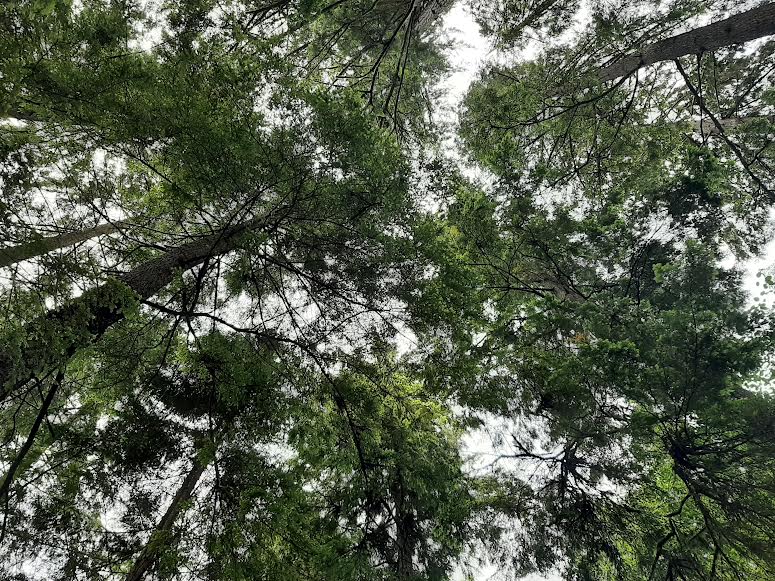
Port Moody is branching out its climate action efforts – quite literally – after landing a federal grant to help grow its urban forest and plant hundreds of new trees across the city.
The city was awarded a nearly $108,000 grant from the federal government’s Growing Canada’s Community Canopies (GCCC) initiative, which is helping support municipalities in climate resilience and urban greening.
Council unanimously approved the creation of a $215,634 operating project on July 29 to implement the program, which will be matched dollar-for-dollar with funding from the city’s urban forest reserve.
Local news that matters to you
No one covers the Tri-Cities like we do. But we need your help to keep our community journalism sustainable.
“This is going to go a long way,” said Coun. Callan Morrison. “We have to contribute 50 percent, – it’s like 50 percent off trees – and you can’t complain when you’re getting trees cheaper and get a chance to plant in our wonderful community.”
Launched through the Green Municipal Fund by the Federation of Canadian Municipalities and the federal government, the GCCC initiative is part of Canada’s broader effort to plant two billion trees. The $291-million fund offers grants of up to 50 percent of eligible project costs, to a maximum of $10 million per municipality for tree planting and $1 million for related infrastructure.
Designed to support new planting efforts, the initiative aims to build municipal capacity to mitigate climate change, reduce urban heat, and improve ecological equity by increasing tree canopy coverage in underserved neighbourhoods.
Staff said the city’s successful grant application will support a new multi-year tree planting effort, aligned with Port Moody’s Urban Forest Management Strategy and a forthcoming 10-year Master Tree Planting Plan.
Planting will focus on public lands where the benefits of tree coverage – like cooling, biodiversity, and stormwater absorption – are currently lacking.
“As I’m sure some folks are aware, most of the B.C. Interior is under a heat warning right now,” said Coun. Amy Lubik. “In a climate where we have these terrible hot days that put people at risk, we know that trees protect us, protect our most vulnerable residents.”
She noted that trees can reduce neighbourhood temperatures by up to 10 degrees and even lower nearby home cooling costs by shading buildings.
“It also helps with flood mitigation around permeable surfaces, and prolongs the life of our infrastructure,” she added.
The city’s share of the funding will come from its Urban Forest Reserve, which has a current balance of about $307,000, according to Paul Rockwood, general manager of finance and technology.
Staff confirmed during the meeting that the grant does not subsidize tree replacement required through development or tree removal permits.
“This is a separate program outside of any permitting process.”
Morrison said the funds will be earmarked and allocated for the program, and can’t be used for other purposes.
“You wouldn’t think that $108,000 is going to go a long way, but it absolutely does,” he said. “It just really puts the money in the right spot.”
Coun. Kyla Knowles called the grant “fabulous news,” commending both council and staff for their commitment to expanding Port Moody’s tree canopy. “So excited to keep this going,” she said.
The city will promote the program through a new webpage, social media, print materials, and public events as required under the grant agreement. Planting activities are expected to begin later this year.
Author