Fire drill: Simulation helps emergency responders prepare for watershed blaze
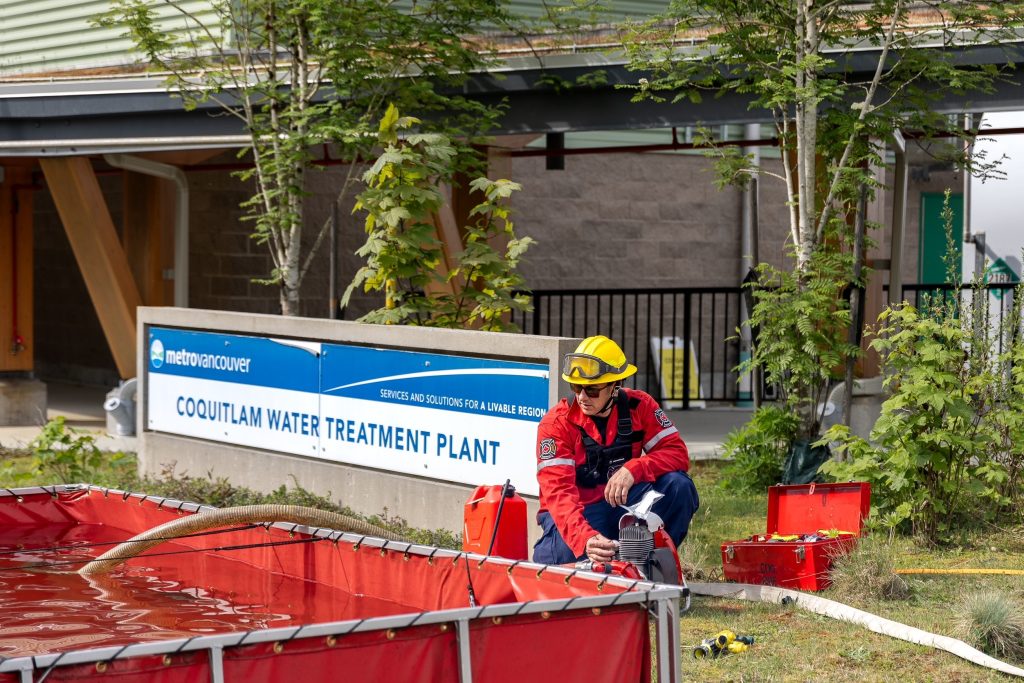
The goal is to keep the fire from the water.
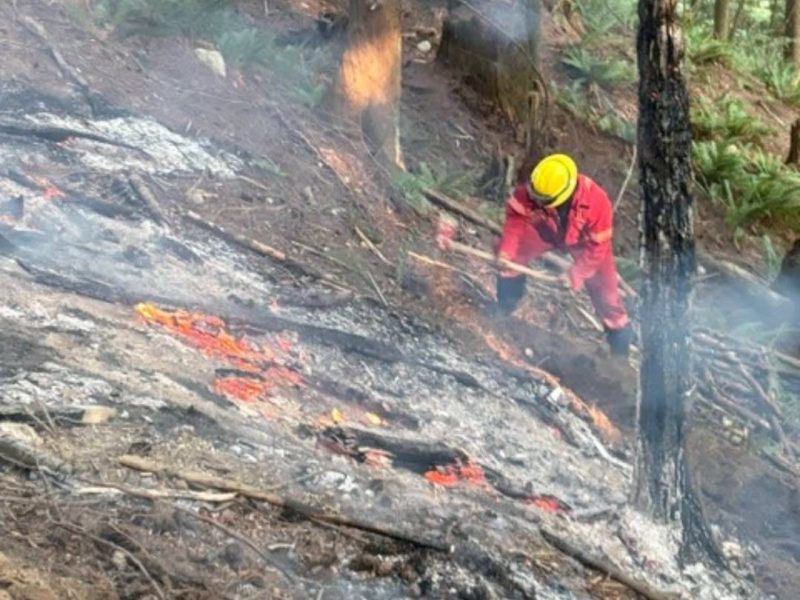
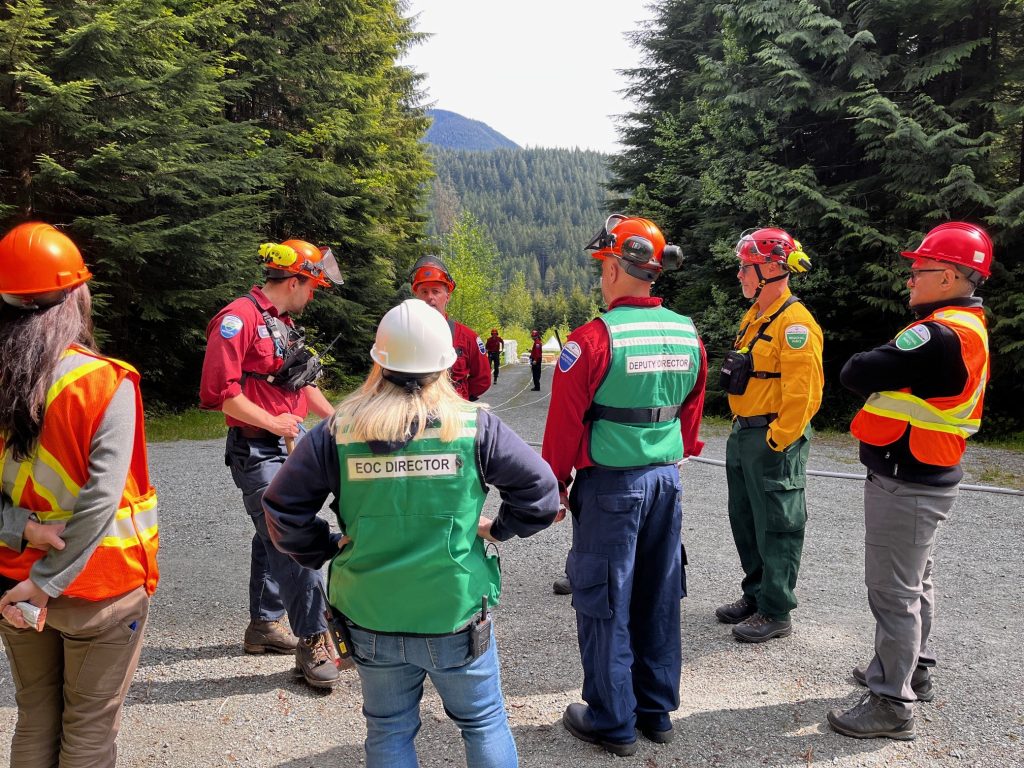
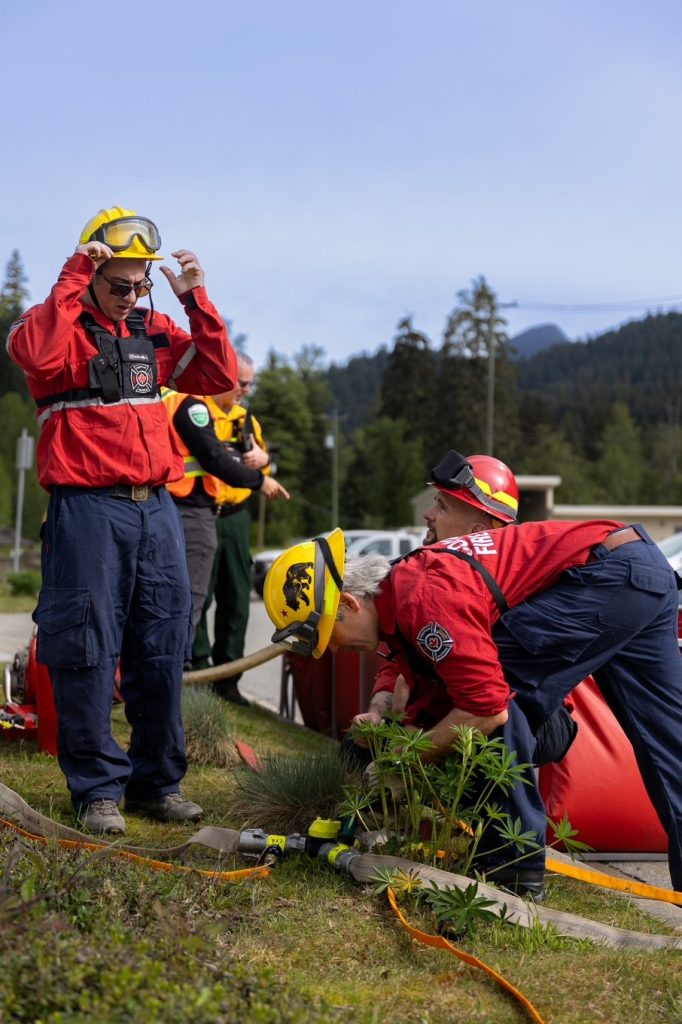
It’s May 9 and more than 40 firefighters trek past the uppermost tip of Westwood Plateau and into a 200-square-kilometre area of concern. The drill is called Exercise Trailblazer.
A joint operation between Metro Vancouver and Coquitlam Fire and Rescue, the simulation is intended to help crews prepare for a worst-case scenario: fire in the Coquitlam Watershed.
Local news that matters to you
No one covers the Tri-Cities like we do. But we need your help to keep our community journalism sustainable.
“It’s been warm and dry and a small fire has begun overnight in the watershed,” explains Kevin Brown, Metro Vancouver’s division manager of watershed operations and protection when discussing the exercise.
Metro Vancouver has three initial attack crews, small groups trained for helicopters and vehicles. They’re the first to go in.
“Their goal is rapid deployment,” Brown says, explaining those crews represent the first chance to contain or even beat back a wildfire.
“We’re built, we’re trained, we’re structured for that wildland wildfire response,” he says.
Meanwhile, the Coquitlam firefighters don their personal protective equipment and look to save the Coquitlam Water Treatment Plant.
“That’s their bread and butter,” Brown says, emphasizing the expertise needed to deal with structure fires.
In this case, the structure is vital to the region.
The treatment plant handles anywhere for 350 to 700 million litres of drinking water each day, accounting for about 85 percent of all water used in the Tri-Cities.
It’s a huge responsibility, Brown acknowledges.
Protecting a terrain as vast and mountainous as the watershed presents logistical challenges for firefighters. However, the fact that there’s limited access to the area can help stop a fire before it starts.
With no public access, there’s less concern about a campfire or a flicked cigarette starting a blaze. Metro Vancouver staff also patrol the area from sunup to sundown during the summer months, looking for anything that could put the drinking water at risk.
Based on fire risk, Metro Vancouver can also shut down work in the watershed.
However, there’s no controlling mother nature.
“In the summertime, our greatest risk is really lightning fire,” Brown says.
Guided by lightning maps that are updated almost in real time, helicopter pilots take to the sky after a storm and scan the watershed for smoke.
If they do see smoke, the response might include boots on the ground and water bombers in the sky, notes Brant Arnold-Smith, Metro Vancouver’s division manager of protective services & emergency management.
It’s not unusual to see as many as 60 firefighters battling a one-acre blaze. Depending on the jurisdictions involved there could be 20 responders working in the operations centre, Arnold-Smith adds.
It’s crucial the supervisors in the operations centre make tactical decisions in concert rather than in silos, Arnold-Smith notes.
“It’s important that you have a chain of command to effectively respond to the emergency but also to ensure safety of responders.”
A fire in the woods can quickly change direction or shape. A swift wind can carry a burning ember as much as a kilometre, he adds, recalling the West Kelowna fire that jumped the Okanagan Lake.
It’s part of the reason Arnold-Smith encourages residents to make sure their gutters are clean and any potential wildfire fuel is stored safely, particularly as the dry weather takes over.
Ultimately, the May 9 exercise is part of a larger effort to be prepared and coordinated in the event that lightning sparks a fire in the backcountry, Brown explains.
“We want to build competence and confidence,” Arnold-Smith explains.
Besides meeting monthly with the top brass from Coquitlam Fire and Rescue, they also bring firefighters into the watershed on occasion so they have a feel for the terrain.
It’s impossible to know exactly what to expect from a fire, but they can know what to expect from their firefighters.
“They know what to expect when everybody shows up to a fire,” Brown says. “Everybody’s coming to the party.”
Author