Eagle Ridge Hospital aims to hire more staff to ease pressure on emergency department
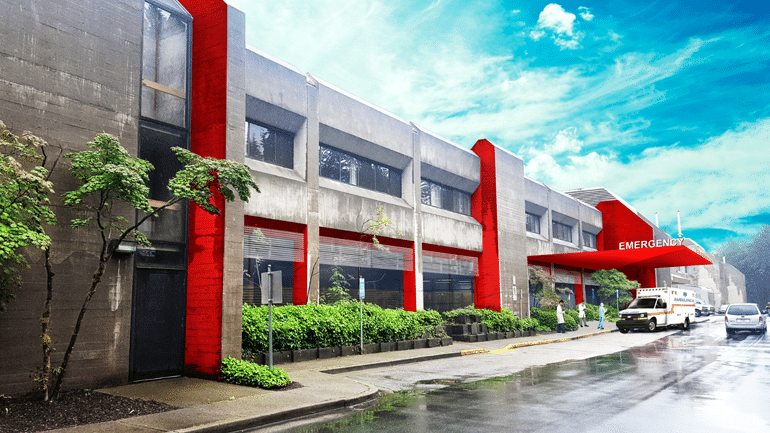
In an effort to lessen the strain on its emergency department, Eagle Ridge Hospital (ERH) is looking to hire permanent staff for 25 beds.
While these beds have been open, they haven’t had regular employees specifically hired for them. Instead, they’ve called in workers to staff them on an as-needed basis.
“There have always been physical beds here at Eagle Ridge Hospital that haven’t been staffed on a regular basis. But now — since we’re using them on a regular basis — we’re now staffing them on a regular basis,” said Scott Brolin, the executive director of Eagle Ridge Hospital.
Local news that matters to you
No one covers the Tri-Cities like we do. But we need your help to keep our community journalism sustainable.
He said the disagreement between the Port Moody-Burquitlam MLA and BC Nurses Union on the reasons for long wait times “was a difference in interpretation.”
Late last month, MLA Rick Glumac posted in a local community group, describing the reason for long waits at Eagle Ridge Hospital as not “so much staffing” but bed availability.
The Dispatch spoke with the BC Nurses Union (BCNU), who said it was “fundamentally a staffing issue.”
“Despite recent efforts, staffing and resources in the Eagle Ridge Hospital emergency department remain critically stretched. Fraser Health has not added any new ER beds, and they’re leaving the nurses to manage increasing patient volumes without adequate support,” said Wendy Gibbs, the BC Nurses’ Union (BCNU) regional council member for Simon Fraser.
In a recent interview with Glumac, he said his social media post “doesn’t in any way disregard staffing challenges that nurses at Eagle Ridge Hospital face. And I very much respect the work that they do.”
He added that the province is working on recruiting new healthcare workers by simplifying the process for them to transfer their credentials, especially from the U.S. and U.K. Since May of this year, he says there’s been 1,800 job applications from U.S. health professionals.
What’s the cause of the long waits in the ERH emergency department?
While the number of emergency visits have remained relatively stable over the past year, the sickness levels of patients have increased, according to Brolin.
Every patient who comes to the emergency department is triaged on a five point scale, and those at levels one and two (the highest acuity) have increased by about 10 percent, he said.
“So what it indicates is that when those patients come in, they take up a lot of time, and they tend to get admitted in the hospital,” Brolin said.
Brolin said their emergency physician group (that covers both Eagle Ridge Hospital and Royal Columbian Hospital) might be down a staff member and they might be down a nurse or two, varying day to day.
“That being said, we will then also try to fill those shifts at the last minute, either on overtime or rescheduled days. So our staffing fluctuates from time to time.”
Brolin said there are no plans to build new beds in ERH at this time, but they are looking to relocate non acute services to other areas to create more space in the emergency department.
Meanwhile, he reminds people that if they need emergency services, “go to your closest emergency department.”
“Even though some patients wait a long time in emergency, sick patients get seen right away.”
If someone needs a health service but isn’t in an emergency, he recommends they consider other options, like their family doctor, an urgent primary care center, or call a virtual health line.
Why is there a staffing shortage?
Brolin said there’s “lots of factors” for the nursing shortage, but said he thinks it comes from a health and resource shortage across the entire system.
“The demand is increasing, but . . . the supply of producing new healthcare workers isn’t increasing at the same rate. So we probably need to be considering our training volumes across the board,” he said. “Within B.C., within Canada, within the world, this problem is present across the globe.”