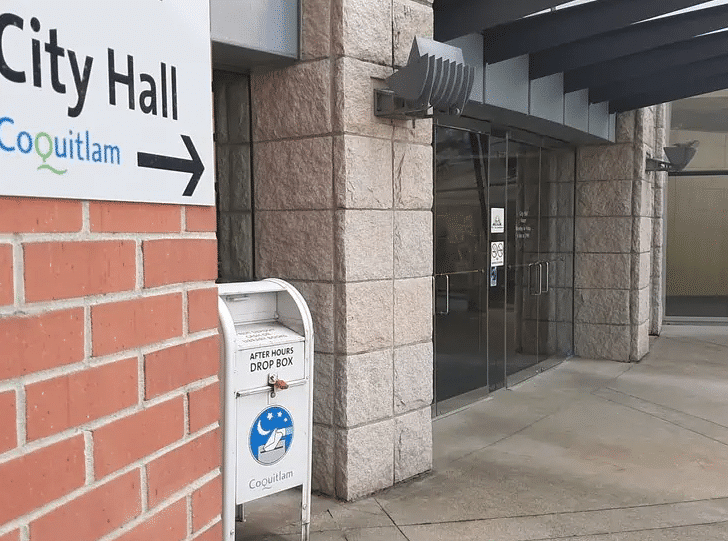
Supreme Court upholds decision in barking dog case

The constant barking of two dogs has cost an absentee Coquitlam landlord $20,000, following a recent B.C. Supreme Court ruling.
Xian Yu Tang was living in China in the summer of 2020 when tenants moved into his property in Coquitlam’s Harbour Village neighbourhood. The tenant’s dogs, a rottweiler and a German shepherd, barked incessantly at pedestrians, cyclists, and delivery drivers, as well as sirens and car horns.
The tenants also blasted loud music day and night, much to the displeasure of neighbour Heide Goldmanis, who was trying homeschool her child in the early months of the COVID-19 pandemic.
Local news that matters to you
No one covers the Tri-Cities like we do. But we need your help to keep our community journalism sustainable.
Goldmanis asked the tenants to control their dogs. However, the tenants refused, wouldn’t identify themselves, and wouldn’t pass on the landlord’s mailing address, according to the judgment.
After several noise complaints made to Coquitlam failed to get traction, Goldmanis took the matter to Small Claims Court.
In March 2022, a judge awarded Goldmanis and another neighbour $7,500 each. The judge also awarded Goldmanis $5,000: “for her pain, suffering and mental stress.”
Tang didn’t file a response or attend the hearing.
In August 2022, Tang’s counsel asked for the order to be dismissed.
“It is notable that the Certificate of Judgment reached the petitioner but that previous communications sent or posted at the 1018 Dory Street address did not,” wrote Supreme Court Justice Baljinder Kaur Girn.
A landlord’s liability
During the previous hearing, Tang’s counsel argued “without reservation” that there weren’t any Canadian cases dealing with a landlord’s liability for a tenant’s nuisance.
As the argument relied “only on a non-binding case from the United Kingdom,” Tang’s application was dismissed.
Tang’s counsel later argued there was another case that should be considered. However, the previous judge declined reconsideration.
In Supreme Court, Tang argued that judges are “presumed to know the law,” and that the previous judge should have been aware of the relevant case.
The argument failed to persuade the Supreme Court justice.
“The difficulty with the petitioner’s argument in this regard lies with his own submissions,” Girn wrote, noting that Tang’s counsel specifically argued there was no caselaw in Canada.
Generally, a reviewing court would only substitute its own decision when the previous decision was clearly unreasonable. The previous decision was not unreasonable, Girn decided.
The failure of Tang’s counsel to adequately research the issue before a previous court appearance shouldn’t permit another opportunity to re-argue the claim, the Justice wrote.
“The respondents are entitled to finality on the underlying issue of nuisance that occurred almost four years ago,” Girn concluded.
The petition was dismissed. The previous judgment stands.
Author