
Candidates talk crime and the future of CBC at Evergreen Cultural Centre
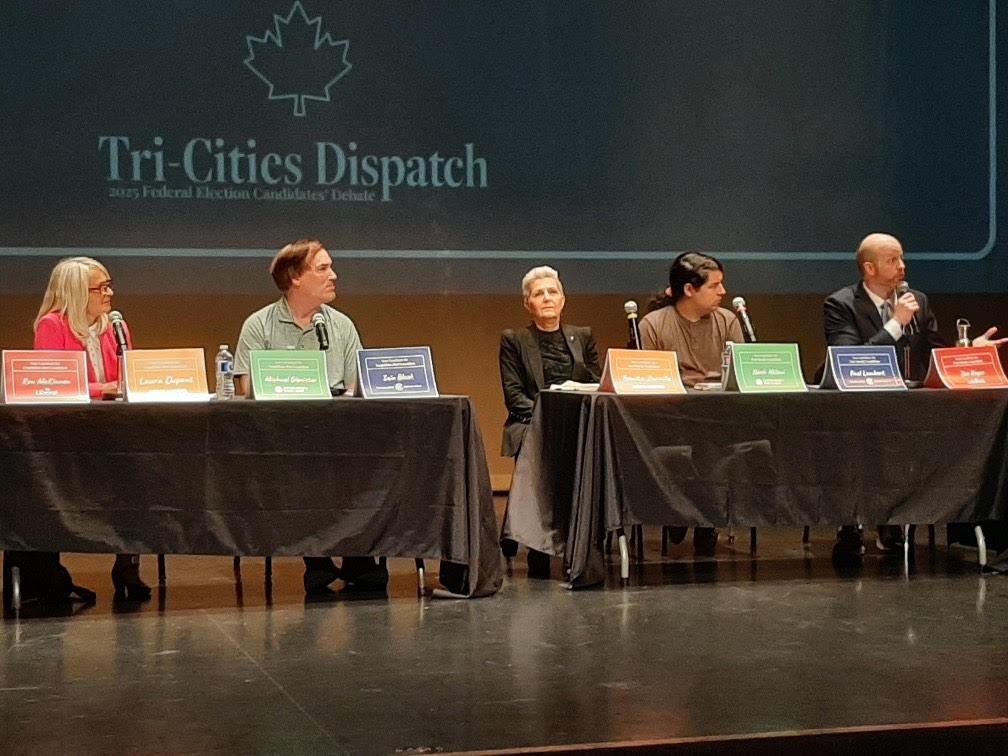
There were five candidates from three parties representing two ridings on one stage Tuesday evening.
Topics at the debate, which was organized by the Tri-Cities Dispatch, ranged from housing and crime to dental care to the future of the CBC.
Discussing the issue of crime, Port Moody-Coquitlam NDP incumbent Bonita Zarrillo pointed to vacancies on the bench.
Local news that matters to you
No one covers the Tri-Cities like we do. But we need your help to keep our community journalism sustainable.
“The Liberals waited a long time to appoint judges,” she said.
Those judges also need more training in issues like intimate partner violence, Zarrillo said.
“The NDP supports more investment in our judges, making sure those vacancies are filled and also, we want to have more funding into RCMP,” she added, noting the rising issue of cybercrime.
The need for criminal justice reform is crucial, responded Port Moody-Coquitlam Conservative candidate Paul Lambert, who blamed the Liberals and the NDP for passing laws that were “incredibly soft” on bail and criminal sentencing.
“If you commit a serious offence, you’re going to spend some time in jail,” Lambert said, adding that repeat offenders would serve longer prison sentences.
“This will reduce crime in our country right away,” he said. “This is compassionate because we have to focus on the victims of crime as well.”
Prisons should largely aim for rehabilitation, according to Port Moody-Coquitlam Green Party candidate Nash Milani.
Milani also cast doubt on Lambert’s description of worsening crime.
“I don’t know if it’s quite as much of this as crazy crime wave as the Conservatives are making it out to be right now; that’s usually a talking point I hear on Fox News.”
Besides pursuing restorative justice in some cases, Coquitlam-Port Coquitlam Green Party candidate Michael Glenister said the emphasis should be on addressing the causes of crime such as poverty and addiction.
“Prisons don’t reduce the repeat of crime, in fact they can often exasperate it,” he said.
Housing
To stem the housing affordability crisis, Canada needs to institute rent-control rules and introduce a renters bill of rights, said Coquitlam-Port Coquitlam NDP candidate Laura Dupont.
“We do need to get back to building co-ops and rental housing for families in every community across the country,” she said.
That housing should be built with Canadian products with an emphasis on ensuring there’s 20 percent non-market housing in every neighbourhood, Dupont added.
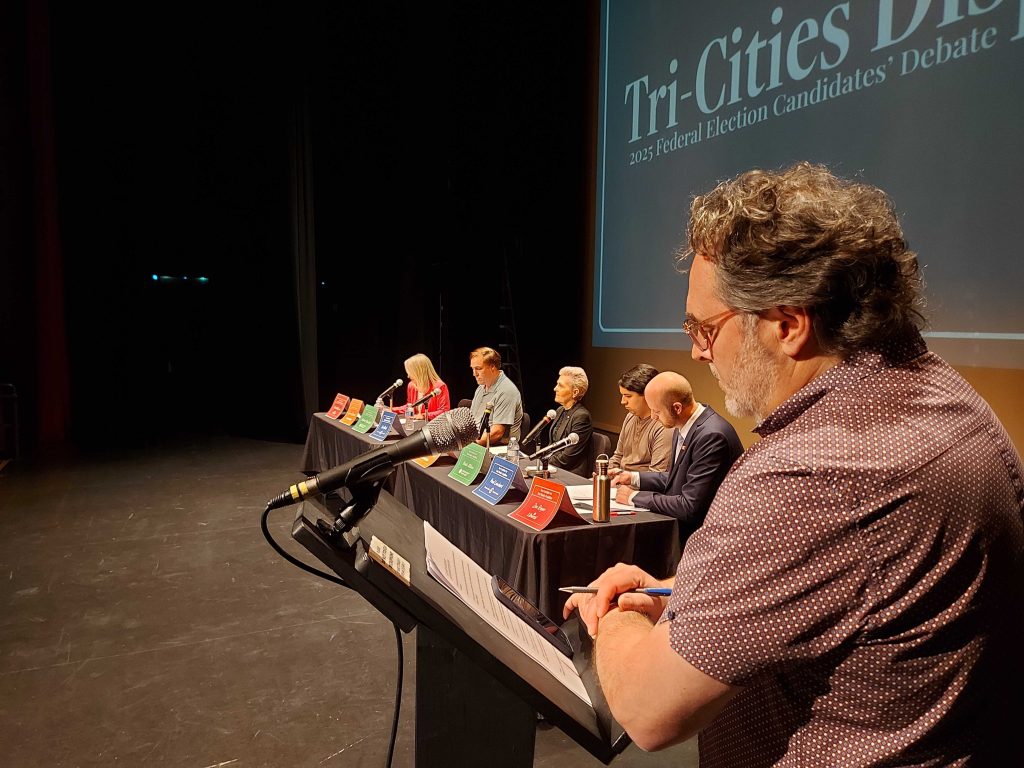
Calling speculators “a huge leach on society,” Milani noted the federal government used to be more involved in the construction of new housing.
“We would bring back the biggest government investment in home-building for the last 50 years,” the Green Party candidate promised.
Zarrillo, who has previously called for an investigation into landlords colluding to fix rental rates, pledged to hold CEOs accountable.
“We know that speculators are driving up the cost of housing in our community,” Zarrillo said. “The Conservatives and the Liberals will continue with this speculation greed, basically, because it’s helping them.”
While increasing housing supply is critical, that approach needs to be balanced with immigration reform, Lambert said.
“If we don’t bring the demand for housing down by lowering population growth, we will be in a perpetual crisis in housing and health care,” he said, noting he considered himself pro-immigration.
If elected, the Green Party would make a major investment in social housing and eliminate the GST on construction materials used for non-market housing, Glenister said.
The future of the CBC
While there are many things to appreciate about the CBC, Lambert characterized the broadcaster as biased and insufficiently focused on generating revenue.
“We don’t want to shut down the CBC,” he said. “We want them to stand on their own two feet.”
While a timeline hasn’t been finalized, Lambert said his party’s plan was to remove CBC’s government funding over time.
Maintaining CBC is crucial, particularly amid recent threats to Canada’s sovereignty, responded Port Moody-Coquitlam NDP incumbent Bonita Zarrillo.
“We know that more and more and more Canadians are watching American news and they need to be able to have access to Canadian news,” Zarrillo said. “We need to invest in the CBC, we need to keep the CBC.”
CBC is a “cultural icon,” said Coquitlam-Port Coquitlam Green Party candidate Michael Glenister.
“I would like to see that CBC’s news is a bit more balanced, I’ve noted that under Trudeau they tended to be a bit more favourable toward him, but on the whole I think that it’s an important cultural heritage,” he said.
CBC is part of democracy in Canada, Dupont said.
“We need more Canadian media, not less, and a public broadcaster is extremely important to Canadians.”
Noting the broadcaster’s ability to serve remote parts of the country, Milani said he supported saving the CBC.
Milani appeared to misstate CBC’s finances, saying: “just eight percent of its budget is from the federal government.”
Government funding has accounted for about 70 percent of CBC/Radio-Canada’s budget. The broadcaster received $1.24 billion in federal funds in 2022.
Climate change
Candidates were asked to give a strictly yes or no answer to the question: Do you believe human activity is causing climate change?
While he later stated that human emissions are causing climate change, Lambert said he didn’t appreciate the question.
“I’m sorry, I’m not going to answer gotcha questions,” he said.
The other candidates each answered “yes,” with Glenister replying: “Yes, I’m a science teacher.”
Dental care
Lambert and Milani offered differing philosophies on the issue of dental care.
While Lambert said the Conservatives would keep the dental plan “as is,” he explained that his party’s previous opposition was rooted in concerns over driving inflation.
“The only reason we voted against it is because we didn’t have the money,” he said, adding that he preferred to pay for programs with cash, not debt.
Stipulating that he understood concerns about the deficit, Milani argued against running a country like a company. Essentially, the budget can be balanced and health care can be provided by taxing the wealthiest companies, he contended.
“That’s what government was made to do,” Milani said.
Failing to fund dental care would be shortsighted, Dupont said.
“The Conservatives won’t grow the program,” she said. “I think that leaves Canadians a lot less healthy, it does not save us money for our health care system, and it doesn’t do right by people.”
Glenister also advocated an expansion of dental care, calling it a “medical right.”
The program needs to be expanded so all adults are covered, Zarrillo said.
“It’s a fantastic program and I want to see it expanded and I want everyone to have access to universal health care, through dental care and mental health and pharmacare as well.”
Author

Related Articles
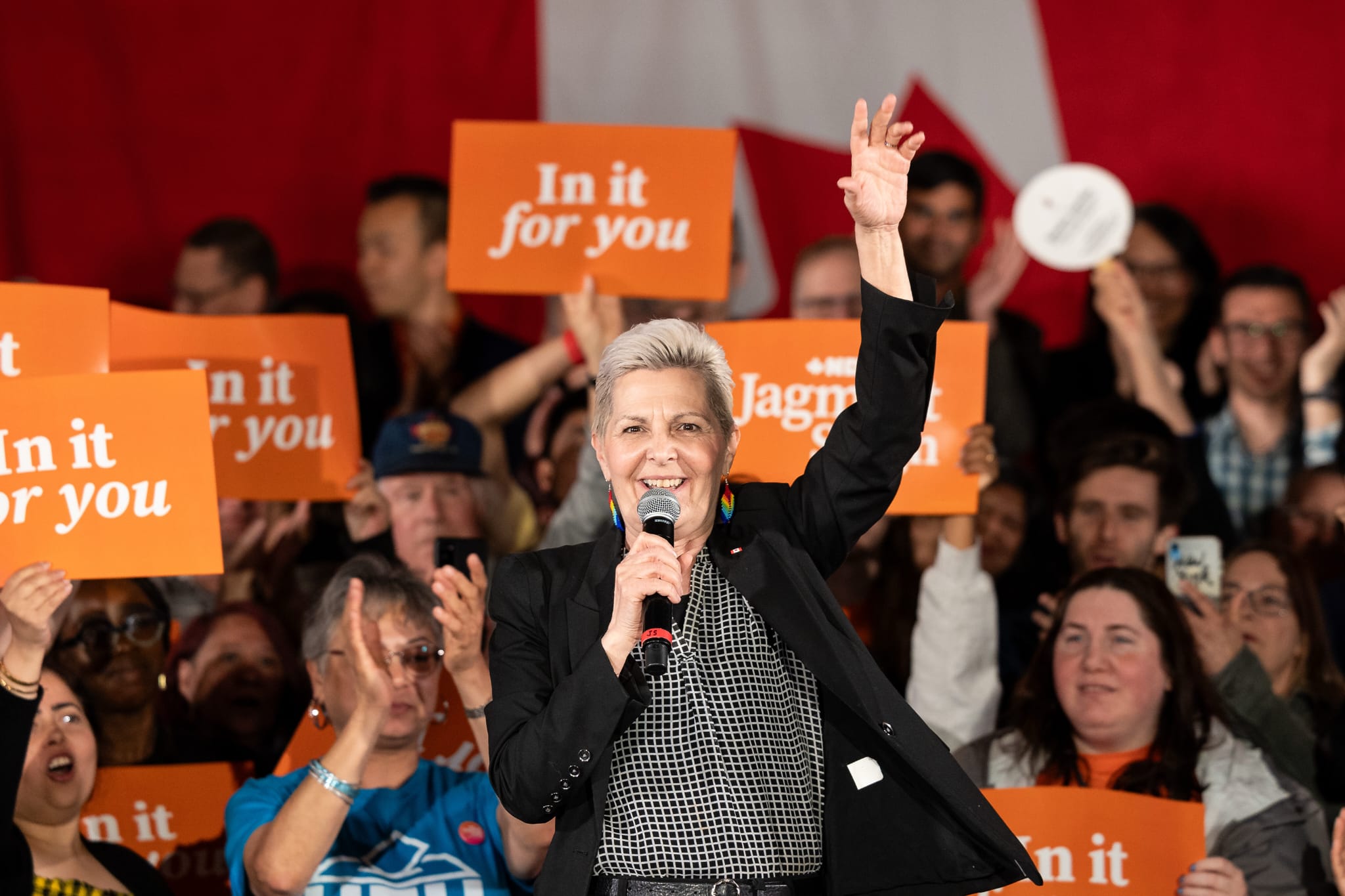
‘Sideswiped by history’ A closer look at incumbent Bonita Zarrillo’s loss in Port Moody-Coquitlam and the fall of the NDP
Bonita Zarrillo, NDP candidate and incumbent for Port Moody-Coquitlam, was one of the many in the party who lost their seat in the 2025 election