Port Moody backs modular daycare plan outside city hall
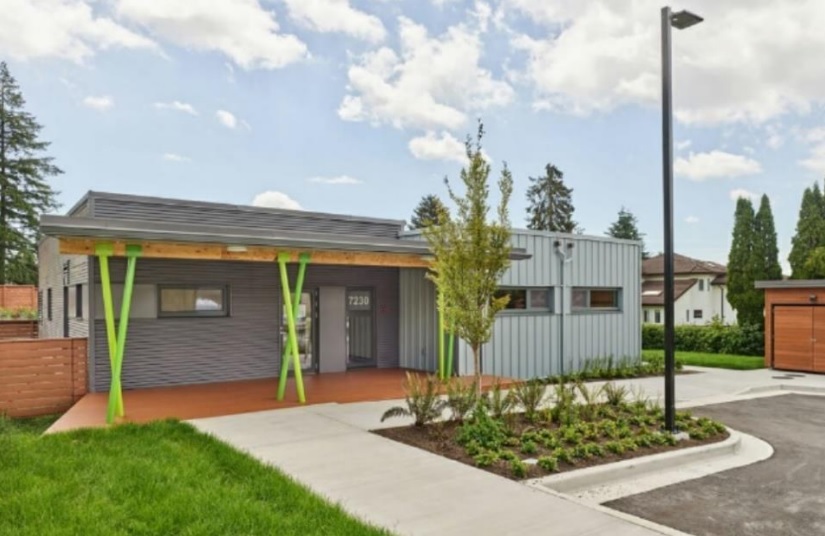
A daycare for municipal employees is in the works for Port Moody.
Port Moody council unanimously voted on Sept. 9 to move forward with a feasibility study for a new onsite childcare facility outside city hall, selecting a modular design that staff say is the least disruptive and most cost-effective option.
Mayor Meghan Lahti, who first introduced the city hall daycare idea back in 2023, said the option strikes the right balance between cost, efficiency, and practicality.
Local news that matters to you
No one covers the Tri-Cities like we do. But we need your help to keep our community journalism sustainable.
She noted council’s endorsed option is the least disruptive to the busy area.
“I think that this is something that will be a positive addition to the city hall precinct,” Lahti said.
Port Moody suffers from a significant deficit of daycare spaces, an issue recognized by both the city and province. Council has frequently pushed developers to include new spaces in project, as well as temporary use permits for daycares.
For the municipal daycare, staff and consultants looked at six possibilities across the civic complex and recreation centre.
Council’s choice, option 2A, would place modular modular daycare units in the staff parking lot at the southwest corner of the civic complex, with adjacent outdoor space in the public amphitheatre. The plan calls for 37 licensed spaces – 12 for infants and toddlers and 25 for children aged three to five.
Other options ranged from a new standalone building at the amphitheatre, to modular units at different parking lots, to an addition on top of the physiotherapy office and skate shop:
- Options 1A and 1B would have replaced the outdoor amphitheatre with a permanent daycare building. While this would provide a dedicated structure, staff warned of high construction costs due to ground conditions and the loss of the amphitheatre for public use.
- Option 2B suggested putting modular units in the parking lot near the ice arena and converting the children’s playground into the daycare’s play area. Councillors flagged that this would eliminate a heavily used public amenity.
- Option 2C considered closing part of Knowle Street for modular units and outdoor space, but staff noted major challenges, including relocating underground utilities and altering traffic circulation.
- Option 3 proposed building an addition on the roof of the physiotherapy office and skate shop at the rec centre. Structural limits and disruption to services made this option less feasible
Balancing short-term needs and long-term growth
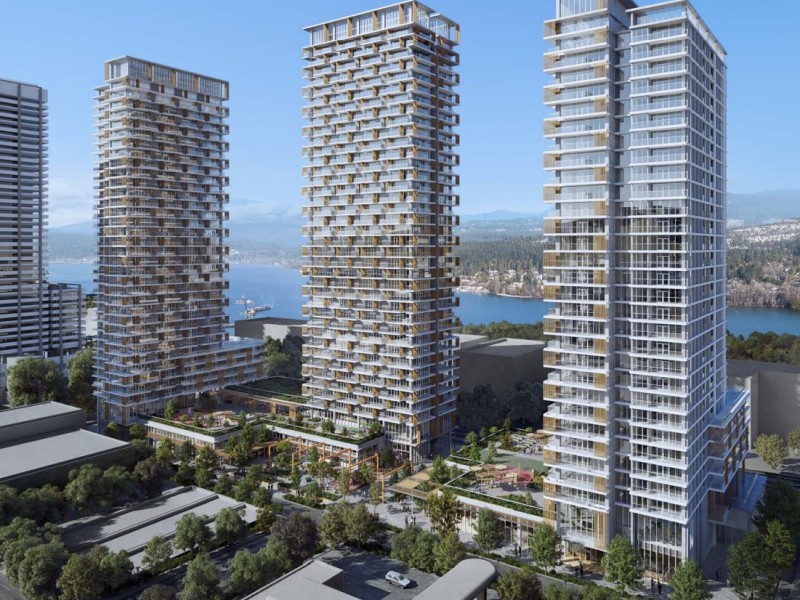
While voting in favour, Coun. Kyla Knowles questioned whether the city should be thinking bigger, given the rapid growth expected from high-density developments close to city hall, such as Polygon Home’s nine-tower project just across the border in Coquitlam, and Wesgroup Properties’ six tower project at Coronation Park.
She suggested council look into option C, noting they are currently considering a road map for civic and community facilities, and the city may be looking to renovate the recreation centre in the future.
“We all know that with added population and a massive block of towers going in . . . we’re going to need additional amenities and recreation services for the number of people that are going to be added before 2030,” Knowles said. “Shouldn’t we be looking at something a little more permanent?”
Coun. Diana Dilworth, however, countered that Option 2A provides much-needed spaces now without ruling out future upgrades.
“Option 2A and 3 don’t need to be mutually exclusive. 2A, as a temporary modular facility, can be picked up and relocated, but it gets us the needed daycare space in the very short term for the lowest expense, and that’s what’s needed right now.”
She also opposed reassigning the rec centre playground under Option 2B, calling it “always busy” and warning of “considerable pushback” from the public.
Questions about space and revenue
Coun. Haven Lurbiecki pressed staff on the adequacy of the outdoor play area.
Acting general manager of engineering and operations, Kim Law, said the design goes beyond provincial minimums.
“We’re trying to maximize the space that makes sense in the area, knowing that there are obviously competing interests,” he said.
Lurbiecki also questioned whether free space would be opened up to the general public, referencing legal issues causing delays to recently a approved project on St. Johns Street.
Mayor Lahti confirmed it was always the intention that unused seats would be open to the public, not just civic staff.
“It would be first-come-first-serve for staff, and then any other spaces would be made available to the public,” she said. “We would seek to make sure that all the seats were taken up.”
Knowles added that public access could generate revenue for the city.
Law noted that financial modelling, including payback calculations, would be part of phase two.
Employee benefit and recruitment tool
Coun. Callan Morrison highlighted the workplace benefits of onsite childcare.
“I do realize this is providing a benefit to our staff and a reason to want to work here to perhaps overcome some of those challenges of finding childcare, especially if it’s coming at little or no cost to those employees,” he said.
He also praised the modular design for preserving the amphitheatre and offering flexibility to expand or relocate in the future.
Next steps
Phase two of the feasibility study will develop a concept plan, refine cost estimates, and examine financial models for the facility. No budget commitments have yet been made
Author