Coquitlam looks to cut carbon in new buildings by 2028
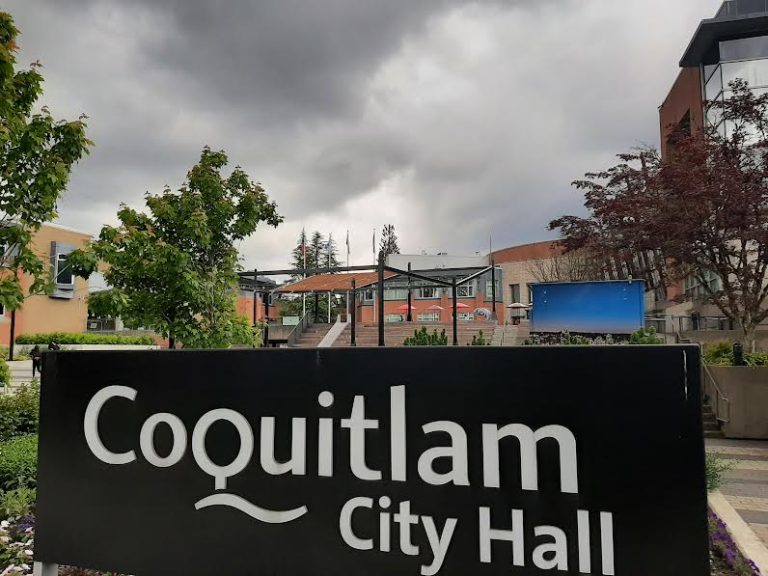
That’s one small step for Coquitlam council, one larger step for environmentally-friendly building standards.
While moving at a slightly slower pace than some of its neighbours, Coquitlam is moving to join Richmond, Burnaby, New Westminster and Port Moody in mandating greater energy efficiency and a dramatic reduction in greenhouse gas emissions in new buildings.
The rules cover both the BC Energy Step Code and the Zero Carbon Step Code, two different but overlapping building standards which aim to boost efficiency and cut GHGs by the “decarbonization” of equipment used for heat, air conditioning, and hot water.
Local news that matters to you
No one covers the Tri-Cities like we do. But we need your help to keep our community journalism sustainable.
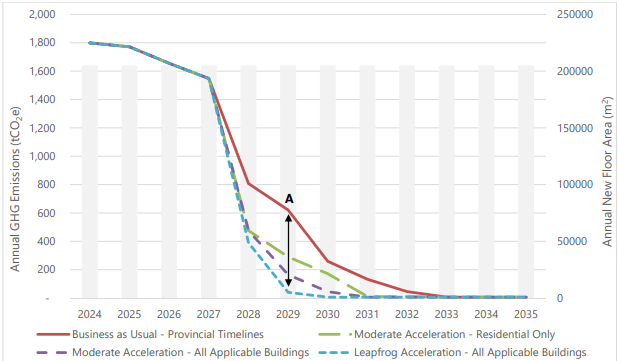
Under the current proposal, which still requires formal approval from council, the new rules would kick in at the beginning of 2026 before reaching its most stringent standard by 2028 – two years ahead of provincial requirements. However, that seemed a little slow for some councillors.
“We could have a major heat dome next summer,” said Coun. Craig Hodge. “We may not be able to wait until 2028.”
The B.C. Building Code now requires new builds to ensure there’s at least one room per home that can be kept to a maximum temperature of 26 C. Those rules likely mean new highrise units will be equipped with mini split heat pumps which will likely cool the entire home, explained Doug Vance, the city’s manager of building permits.
Coun. Steve Kim said he wasn’t sure if Coquitlam was taking a balanced approach or lagging behind.
“The industry has a remarkable way of suddenly adapting and using it as a competitive advantage for their projects,” Kim said.
The impact on construction costs is fairly negligible, topping out at two percent. However, the development industry generally needs a longer runway to adapt to architectural changes, explained city planning manager Andrew Merrill.
While Coun. Matt Djonlic acknowledged those challenges, he suggested the city might be able to bump its final deadline from 2028 to 2027.
“The winds are blowing in this direction and I think everybody realizes that,” he said. “If we’re hearing from our development community that they’re ready for this . . . . then that’s something we could certainly consider advancing.”
Staff are set to meet with the Urban Development Institute about the new building standards, explained the city’s environment manager Caresse Selk.
“If we’re hearing from our development community that they’re ready for this . . . . then that’s something we could certainly consider advancing,” Selk told council.
But while some on council were worried about lagging behind, a few asked if the city might be moving too quickly.
Explaining that she didn’t want to exacerbate the housing crisis by slowing construction, Coun. Teri Towner asked about possible supply chain challenges.
While heat pumps generally solve the problem of space heating, bringing hot water to every dishwasher in each unit in a skyscraper can be a challenge, Vance explained.
Mayor Richard Stewart agreed.
“That will never be a selling point that your water is going to come much slower because it’s heated electrically,” Stewart said.
In a discussion that touched on Coquitlam’s role amid the global climate crisis, Stewart noted B.C.s interests in fracking and natural gas exploration.
“We just don’t want to burn it here. We want it burned in other countries,” the mayor said. “The carbon will end up in the same atmosphere that we’re in.”
Stewart suggested staff consider making solar power part of its framework, noting his water is partly heated seasonally by solar.
Coquitlam has a small role to play in a global problem, said Coun. Brent Asmundson, noting that a handful of countries produce an outsized quantity of GHGs.
“We’ll do our part but don’t tell me that we’re going to stop heat domes and atmospheric rivers,” he said.
Buildings account for about 42 percent of Coquitlam’s GHG emissions. Unless or until they’re retrofitted, buildings that primarily use fossil fuels “further contribute to these emissions in perpetuity,” according to a city staff report.
While the building standards would impact the electrical grid, a city staff report noted BC Hydro is planning to invest $360 million to support infrastructure in the Tri-Cities over the next decade.
Council’s move toward new building standards garnered praise from environmental group Tri-Cities Force of Nature. However, the group questioned the decision to consult with the Urban Development Institute which has offered programs sponsored by FortisBC.
“The emphasis on UDI’s involvement raises questions about potential conflicts of interest, given that FortisBC is a for-profit natural gas company,” Tri-Cities Force of Nature stated in a release.
A total of 29 municipalities and First Nations across the province are at some stage of implementing the new building standards.
Author