Port Moody-Burquitlam candidates answer your questions
Candidates were given five days to answer these questions. Three of the four candidates in the riding responded by deadline.
Candidates were asked to limit their responses to 100 words.
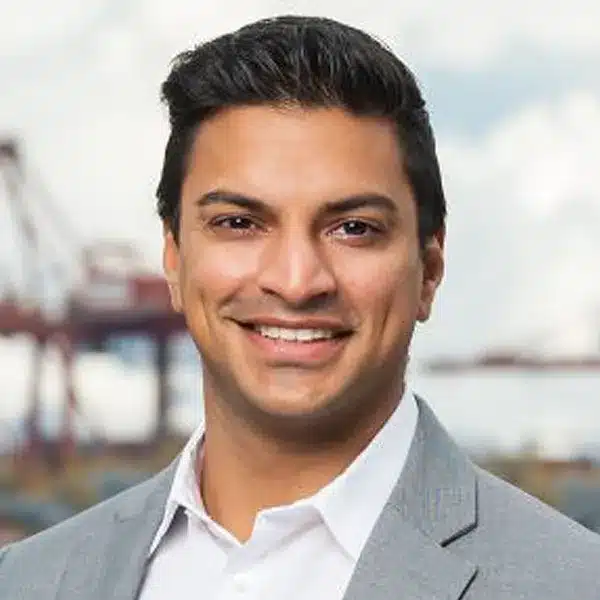
Freddy Rawji, CentreBC
Local news that matters to you
No one covers the Tri-Cities like we do. But we need your help to keep our community journalism sustainable.
How long have you lived in the riding?
Port Moody has always been home to me. I grew up in Port Moody and moved back this summer with my wife to be closer to family.
How will you create more good jobs in your riding?
We will simplify permitting and approval processes, so businesses and events can be set up faster. We will boost investment in skilled trades training by $60 million a year, creating about 3,500 more training seats and apprenticeship spots a year. We will align BC qualifications with global standards so skilled workers trained abroad can get to work faster, starting with electricians, engineers, nurses, early childhood educators, and heavy-duty mechanics by 2028.
Under what conditions, if any, should B.C. welcome AI data centres?
Whether we like it or not, BC will need AI data centres. In our current geopolitical climate, data sovereignty is increasingly important, and data centres can create opportunities for skilled trades, First Nations partnerships and manufacturing. We will keep BC’s limits on how much power data centres can use. From 2027, any data centre that gets new power must pay a rate that covers the full cost of that power. Sites over 10 megawatts will need a plan to reuse their waste heat. Projects with First Nations equity will get priority.
What steps should the province take to mitigate the effects of climate change?
We will tell British Columbians the truth: BC will miss its 2030 target.
We will set an honest milestone in law: 20% below 2007 by 2030, while maintaining the 2040 and 2050 targets. We will also create an independent Climate Accountability Office that reports to the legislature every year. We will put BC’s methane target into law: cutting oil and gas methane 75% below 2014 by 2030. Every year, we will hold a competitive call for at least 3,000 gigawatt-hours of clean power. Every winning project must have First Nations partners.
What measures will you take to protect and restore biodiversity and watersheds?
CentreBC will double the Watershed Security Fund to $200 million. It will support local projects for drinking water, salmon and flood protection. We will set long-term Working Forest zones in law, alongside multiple-use and conservation areas, planned with First Nations, communities, workers and industry. By 2028, we will create a $15 million-a-year trails fund to build and maintain trails. We will share it with local governments, First Nations, and trail groups.
Would you support a change to proportional representation in B.C. elections?
I think we need to change from the first-past-the-post system.
Proportional representation is a better option, but a ranked ballot or single transferable vote may be easier to digest and implement.
What is your stance on micromobility devices and improving first/last kilometre travel?
I think micromobility is great as long as we ensure rider and pedestrian safety. We need stronger regulation on speed, insurance and age restrictions. The number of people getting injured on these devices is alarming, and we need to do a better job of mitigating those risks.
Has the province provided enough funding for the construction of new schools? If not, what should change?
Clearly it hasn’t. We will open 25,000 new school seats by 2031, starting in the fastest-growing districts and those with the most portables, so more students learn in permanent classrooms. We will use standard designs and pre-fabricated additions.
What improvements should be made at Eagle Ridge Hospital?
My mom worked in Eagle Ridge’s Medical Imaging Department – I’m committed to getting the team an MRI machine. Additionally, long-term capacity and seismic resilience are ongoing concerns at Eagle Ridge Hospital. At a minimum, we should explore new locations for outpatient support. We will put trained protection officers in every emergency department to ensure staff and patient safety. We will pass an ER Accountability Act with public reporting of every closure.
Are you in favour of privatizing or partially privatizing medical care in BC? Explain why or why not.
I believe a functioning public system can exist if we do the following: double BC’s assessment program for internationally trained family doctors from 96 to 200 per year by 2028, and add 600 more nurse practitioner positions. We will fund this by merging all health authorities’ back offices into one and cutting senior executive positions in half.
Why should residents vote for you?
Like many of you, I found myself frustrated with the NDP but couldn’t compromise on my values by voting Conservative. Wanting a fiscally conservative government shouldn’t require social policies that leave our friends behind. In this election, I’m running to stand up for our regional needs and values without being subject to big-party politics.
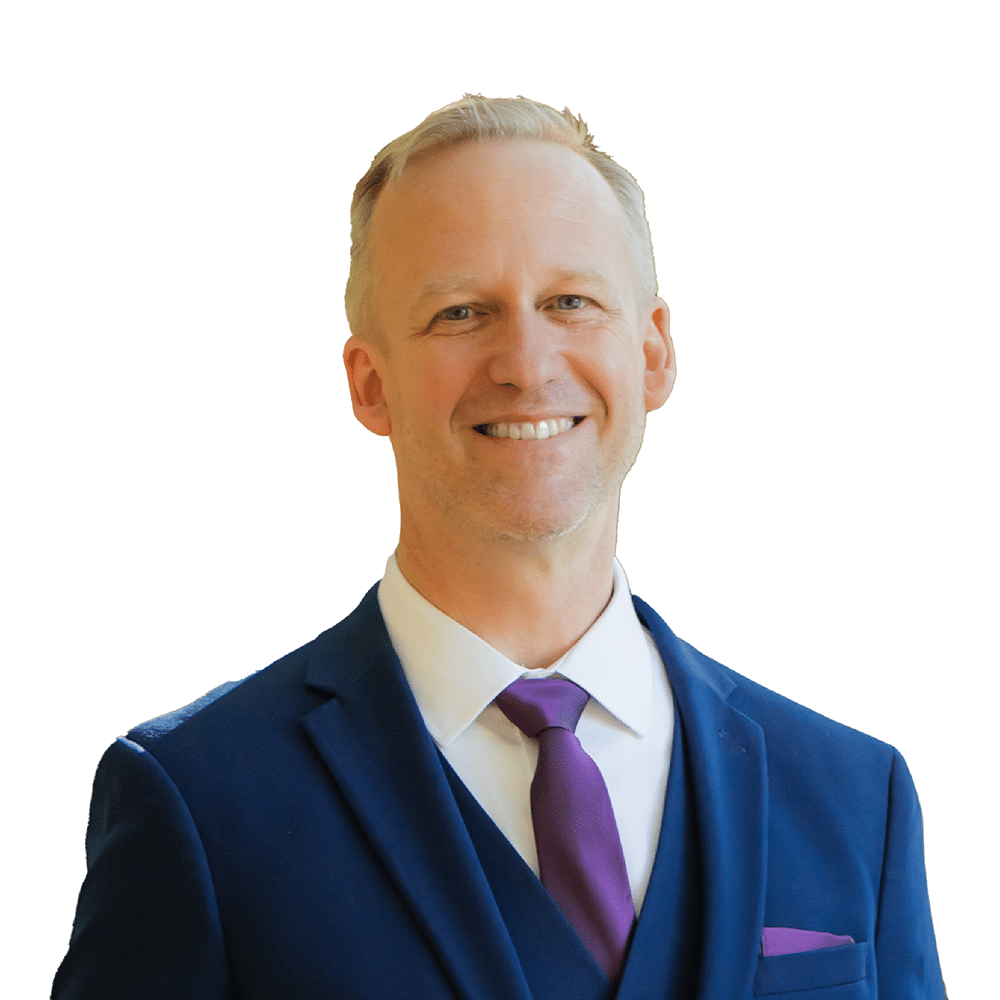
Rick Glumac, BC NDP (incumbent)
How long have you lived in the riding?
I’ve lived in Port Moody for 20 years.
How will you create more good jobs in your riding?
I am excited to announce that our local Burrard Thermal energy facility which was shut down by the previous BC Liberal government is going to be repurposed. We will be building a utility scale battery storage facility on that site. This is something I’ve been working on with the Energy Minister and excited to see come to fruition. This is the start of good local jobs, a stronger local tax base, and a cleaner energy future for our region.
Under what conditions, if any, should B.C. welcome AI data centres?
We all want to protect our communities, our water supply and our power grid. That’s why last fall the BC NDP passed a new law to limit the power available for data centres, safeguard our power grid, and support our climate goals. We’ll also be setting strict new water-efficiency standards, mandated public reporting of water use, and requiring engagement with local communities on conservation and drought planning.
What steps should the province take to mitigate the effects of climate change?
The BC NDP has been taking action to fight climate change while growing our economy.
Under our plan, emissions per dollar of economic activity are down over 30%, and methane emissions are down 48%. Our proposed Clean Futures Fund will dedicate a portion of provincial revenue from oil and gas to fund climate action programs that help families and businesses choose less costly clean energy, and create new jobs, starting with an investment of $50 million. Many Conservative candidates don’t believe in the science behind climate change, and they can’t be trusted to take serious action.
What measures will you take to protect and restore biodiversity and watersheds?
The BC NDP is on track to meet our goal to protect 30% of B.C.’s land by 2030. We are currently at 20% protected, or 18.9 million hectares. We also successfully fought to maintain the North Coast Tanker Ban, protecting an incredibly unique ecosystem. Next, we will invest $30 million per year into the BC Watershed Security Fund, to secure healthy watersheds and thriving communities for generations. The Conservatives oppose our 30×30 goal, and would roll back conservation.
Would you support a change to proportional representation in B.C. elections?
I’m open to a more proportional voting system, but any change needs the confidence of British Columbians. Previous referendums show we haven’t yet found an approach people are ready to support. The all-party committee established last year to examine democratic engagement is another opportunity to work together on strengthening our democracy. I support continuing that work and strengthening our democratic processes.
What is your stance on micromobility devices and improving first/last kilometre travel?
New options that allow people to get around with lower carbon emissions are exciting, but the safety of all road users needs to be paramount. That’s why we launched a detailed study of e-scooters to see how best to safely integrate them into our transportation networks. Local governments know their needs best, which is why municipalities have the choice to opt-in to this study period. Our BC NDP government has invested in active transportation infrastructure projects like cycling lanes and multi-use paths that make it easier for people to get around their community.
Has the province provided enough funding for the construction of new schools? If not, what should change?
We’ve made significant progress, but more is needed to keep pace with growth. Under the previous BC Liberal government, 250 schools closed, including eight in SD43. The BC NDP has 250 school construction and upgrade projects completed or underway provincewide.
Locally, Scott Creek Middle and Moody Elementary have added 365 student spaces. We need to keep investing and coordinate school construction with projected enrolment and housing development, so classrooms are ready when families arrive.
What improvements should be made at Eagle Ridge Hospital?
Our hospital must keep pace with our growing population. I helped bring an Urgent and Primary Care Centre to Port Moody to ease ER pressure and stop the previous government’s sale of hospital lands needed for future expansion. The BC NDP expanded Eagle Ridge’s ER and committed to adding an MRI scanner. I’ll keep advocating for improvements like this. Hospitals also need staff. We’ll triple recruitment of healthcare workers from the U.S., streamline licensing for internationally trained doctors in B.C., and train more doctors at SFU’s new medical school to help meet our community’s healthcare needs.
Are you in favour of privatizing or partially privatizing medical care in BC? Explain why or why not.
Absolutely not. I, along with every single BC NDP candidate, have signed a Public Health Care Guarantee because we believe no matter your income, you should have access to quality care, when you need it. The BC NDP will close loopholes that allow clinics to charge user fees and extra billing for publicly insured, medically necessary services.
In Alberta, the conservative government is creating a two-tier healthcare system, with private-pay options that pull resources from the public system. We cannot let the same thing happen here.
Why should residents vote for you?
I have a record of standing with residents and fighting for our community and always being available and accessible. An MLA’s job is to understand residents’ needs and act on them.
I’ve helped secure healthcare improvements and infrastructure funding, including new schools, an all-weather soccer field and the Anmore Community Hub, while working to bring jobs and a clean energy future to Burrard Thermal. I would never take a controversial position such as putting a road through Bert Flinn Park. If given the opportunity to continue serving, I’ll keep fighting for our community and the priorities that matter to you.
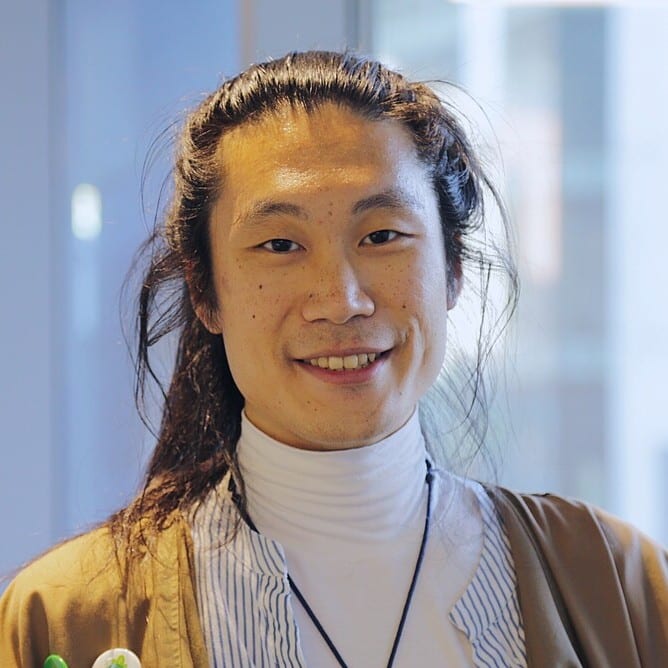
Wei Chou, BC Green Party
How long have you lived in the riding?
I lived in Port Moody and Coquitlam for over 8 years, and I grew up on East Hill after immigrating from Taiwan. My parents enrolled me in the local scouting community shortly after settling in Port Moody.
How will you create more good jobs in your riding?
Both myself and the BC Greens will reform public procurement to ensure that contracts consider more than the lowest bid. We will get our government to adopt a ‘Buy BC’ approach where opportunities for local apprenticeships, worker training, export potential, and regional supply chains give weight in the buying process. If a contract is beyond the capacity of a single business, then small to medium businesses will be able to bid as a consortium. We will also implement commercial rent control that limits increases during tenancies, at renewal, and between tenants to address turnover concerns.
Under what conditions, if any, should B.C. welcome AI data centres?
AI has the potential to provide significant public value from improving health care to increasing productivity and reducing administrative work. However, it raises serious questions about jobs, privacy, surveillance, misinformation (especially generative AI), concentration of economic power, energy consumption, and water depletion. Major AI infrastructure such as data centres will be subject to a moratorium until a detailed public-interest audit is developed that considers the impacts on electricity, public resources (ie. water), economic value, working conditions, human oversight, security, and demands on public infrastructure. Most importantly, the BC Greens WILL NOT pass this responsibility to municipalities in a manner that the current government has undertaken.
What steps should the province take to mitigate the effects of climate change?
I will tackle the effects of climate change at its roots by replacing the demand for fossil fuels with clean energy. We will apply industrial policy and direct ecological restoration:
The BC Greens will create a clear legal framework for community ownership of clean energy assets and build interoperable grids with BC Hydro.
- Community Energy Project offices to coordinate, identify, and develop such opportunities with First Nations, Crown agencies, and local governments.
- End clear-cutting across public forests and commit to forest restoration.
- Develop a circular economy by investing in entrepreneurship and innovation for biomaterials and higher-value uses of BC fibre to get more value from every tree we harvest.
- To better prepare communities for natural disasters exacerbated by the climate crisis, from wildfires, floods, droughts, heat waves, and other hazards, I’d personally push for and advocate for education, investment, and training in civil defence (both civilian and military reserves).
What measures will you take to protect and restore biodiversity and watersheds?
The BC Greens will protect all old growth and ban clear-cutting. We will support Indigenous-led conservation with financing and replace lost forestry revenues where needed with an industrial policy focused on innovation through biomaterials. We will protect water resources for the benefit of people and the environment and not allow data centres to displace our water supply. We will work with First Nations and local governments to coordinate watershed planning, monitoring, and restoration.
Would you support a change to proportional representation in B.C. elections?
ABSOLUTELY. 100%. The BC Greens have a history of advocating for proportional representation, and I stand by our beliefs.
What is your stance on micromobility devices and improving first/last kilometre travel?
Micromobility devices are essential to encourage greater use of public transportation infrastructure in a flexible manner that connects neighbourhoods with major transit hubs. The concerns towards micromobility are often around safety, enforcement and regulation. By working with local governments, we can support policies such as parking stations and safety enforcement. In addition, I’m personally supportive of having competitive markets for micromobility services and will support policies that welcome both private-sector and community-owned operators (ie, co-operatives) of micro-mobility devices.
Has the province provided enough funding for the construction of new schools? If not, what should change?
Research by the British Columbia Teachers Federation found that provincial education funding covered only 75% of what BC school districts actually spent in the last 18 years. The BC Greens will close this gap with tax proceeds on the ultra-wealthy from the Fair Share Act. We will develop a detailed improvement plan to ensure school facilities meet high standards of safety, functionality, and climate resilience. We will also review per-pupil funding to develop a new needs-based model to fund the costs of each school district.
What improvements should be made at Eagle Ridge Hospital?
First, Eagle Ridge Hospital is in need of an MRI machine (I personally think they need two, but they asked for one). I will push for and support the procurement of at least one MRI to address service concerns in our health care, given that it is infeasible for many residents to transfer to Royal Columbian Hospital. Additionally, the BC Greens are committed to expanding our development of Community Health Centres and Urgent and Primary Care Centres to reduce the burden on hospital ERs.
Are you in favour of privatizing or partially privatizing medical care in BC? Explain why or why not.
NO. 100% ABSOLUTELY NOT. Healthcare is a universal right. The BC Greens will keep public dollars focused on health care to ensure that all British Columbians can access the care they need, regardless of income. We have a plan to reduce the burden on our hospitals and increase service levels by expanding Community Health Centres and Urgent and Primary Care Centres. These facilities are less expensive to operate on a per-patient basis while ensuring timely and consistent care quality.
Why should residents vote for you?
Many candidates talk about success, but I want to talk about starting over. I’m an entrepreneur, community organizer, and startup mentor, and I’m running to address our cost of living and a fair economy. In 2019, I founded a Vancouver-based technology startup, and I grew it from zero to $1.9 million in revenue, leading a 14-person team with supply chain partnerships across Asia and N. America. I decided to close it down when the risks became too great, while ensuring all my employees were paid. During the COVID-19 PPE shortage, I volunteered to coordinate the supply of 20,000 surgical masks and gowns for frontline healthcare workers. That experience, and periods working multiple jobs and relying on community supports (eg, food banks), have shaped my belief that economic policy should put people and communities ahead of short-term profits. The BC Greens are here to hold the balance of power, and I’m here to provide you with a third option that stands out from the rest.
Author