Port Moody council pushes for affordable seniors housing plan, but debate flares over use of public land
On the heels of rejecting a pricey 12-storey private seniors housing facility near Kyle Park, Port Moody council backed a new initiative aimed at fostering negotiations around affordable seniors facilities.
However, debate stirred over whether the city should offer up its own public land in these negotiations with the province.
Council had rejected Avenir Senior Living’s proposal on Oct. 14, with many councillors arguing it lacked affordability components that had previously been requested.
Local news that matters to you
No one covers the Tri-Cities like we do. But we need your help to keep our community journalism sustainable.
Immediately following the vote, Coun. Amy Lubik introduced a motion directing staff to explore new partnerships, funding tools, and policy options for creating affordable seniors housing, and to work with the Tri-Cities’ MLAs, the Ministry of Housing, Metro Vancouver, and Fraser Health on a coordinated strategy.
The motion calls for staff to investigate ways the province could rent or subsidize units in new Port Moody rental projects to make them attainable with SAFER (Shelter Aid For Elderly Residents) or other top-up programs, and to look at whether Metro Vancouver could waive development cost charges (DCCs) in exchange for guaranteed affordable units.
It also directs continued discussions on potential long-term care facilities on both public and private land.
‘This is a slow-moving emergency’
Lubik framed the motion as a necessary pivot following council’s rejection of the Avenir Senior Living proposal, saying it was clear the region needed “innovative solutions” beyond the private market.
“We all know there is a dire need for seniors housing in Port Moody, the Tri-Cities and across the province,” she said. “We’ve been supportive of rentals and below-markets . . . but somehow we’re seeing more people, including seniors, ending up on the streets or in precarious housing. This is an emergency — a slow-moving emergency.”
Lubik said provincial officials, including Housing Minister Ravi Kahlon and Transportation Minister Mike Farnworth, had signaled a willingness to collaborate.
“At UBCM, Minister Farnworth said, ‘bring us ideas,’” she noted. “I think we should include all MLAs in this conversation.”
Coun. Samantha Agtarap supported the motion, calling for a “frank conversation” with senior governments about changing how housing programs are designed.
“The status quo isn’t working,” Agtarap said. “We need creative solutions, and we need the province and ministries to be flexible. I hope partners can come to this table with that in mind and be ready to make significant changes to the programs – or at least try and pilot something that’s different than what we’ve currently been doing.”
Coun. Kyla Knowles also backed the broader thrust of the motion, particularly the call for Metro Vancouver to contribute more. “If the province is asking us to waive fees so things can get built, that should also include Metro Vancouver,” she said, criticizing the regional government’s recent DCC increases that have complicated major developments such as Coronation Park.
Disagreement over public land
The most contentious debate centred on a clause encouraging staff to work with partners on long-term care opportunities “on public and private land.”
Coun. Callan Morrison opposed including municipal land in those discussions, saying the province already controls “dozens of acres” of unused land near Eagle Ridge Hospital and Riverview Hospital and should start there.
“They fail every single time to address the fact that they have a huge abundance of land that they refuse to use,” he said, adding that handing over municipal land would mean losing millions in potential amenity value.
Knowles echoed those concerns, calling the city’s land base “precious” and warning against committing public parcels without public engagement. She introduced an amendment to limit the motion to provincial and federal land — but it was defeated, with only Morrison supporting it.
“I don’t think it’s appropriate for this council to be making decisions about giving away public land without the robust participation of our community,” Knowles said.
‘We need to be open to all possibilities’
Several councillors pushed back against narrowing the scope of the motion.
Coun. Haven Lurbiecki said the amendment would “limit” the city’s ability to negotiate.
“We’re not talking about decisions — we’re talking about exploring options,” she said. “It doesn’t work to ask other governments for something if we’re not willing to be open with them about what we have.”
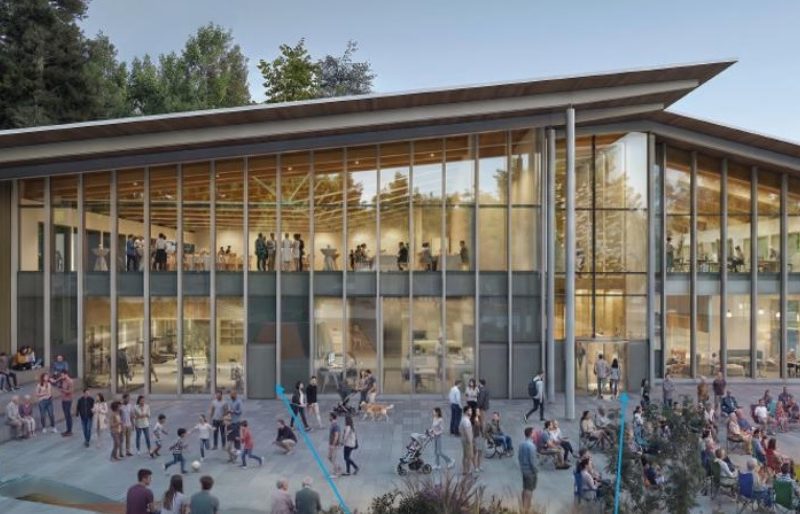
Lubik clarified that the intent was not to give away city land outright, but to consider partnerships — for example, integrating care facilities into future civic redevelopment projects like a new library or Kyle Centre renewal.
Mayor Meghan Lahti agreed, saying public land should remain part of the discussion.
“We keep talking about seniors housing or affordable housing as a community amenity,” she said. “We’re getting something back if we can get this type of housing in our community.”
In the end, Knowles’ amendment failed, and she and Morrison also opposed the specific clause referencing public land. But the remainder of Lubik’s motion passed with broad support, setting the stage for city staff to report back with new strategies and partnership proposals in the coming months.
Author