How a Port Moody student received a $50K grant for an overdose awareness program
Chloe Goodison, NaloxHome founder, is hoping to grow her training beyond the Tri-Cities
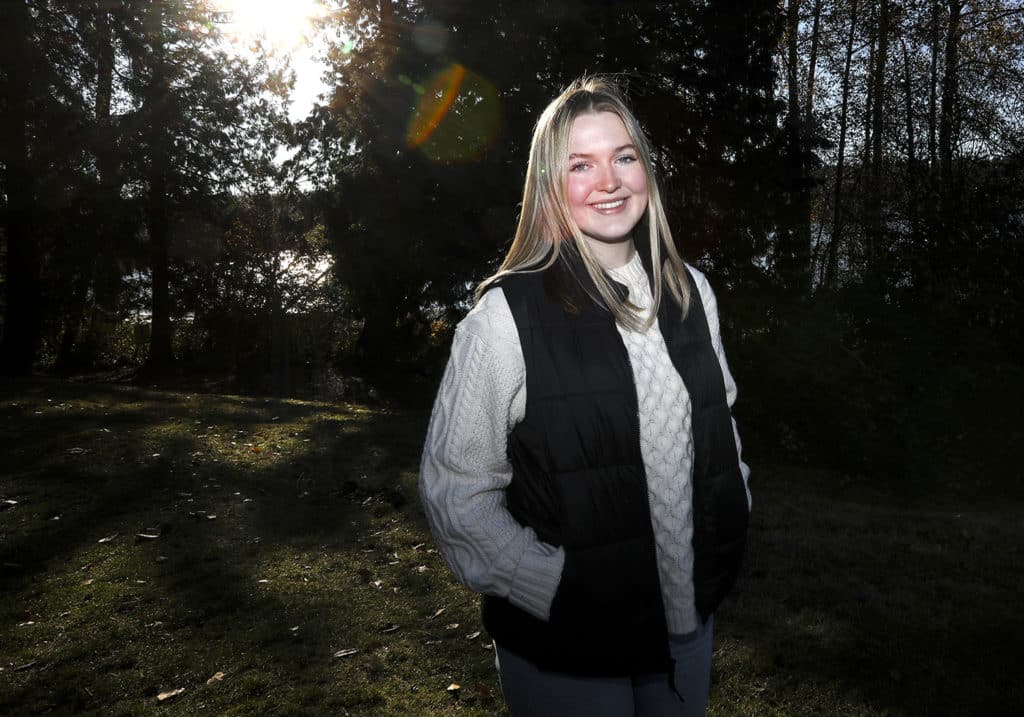
Chloe Goodison tried ignoring the buzz in her pocket.
On an early morning in December, Goodison declined multiple calls from an unknown number.
It’s definitely spam, she thought to herself. The call came from a different area code. At the time, Goodison, a Port Moody student studying science and health at Simon Fraser University, was researching reproductive infectious diseases at the B.C. Women’s Hospital in Vancouver.
Local news that matters to you
No one covers the Tri-Cities like we do. But we need your help to keep our community journalism sustainable.
As she was leaving the hospital at the end of the day, Goodison checked her email.
The top message in her inbox immediately jogged her memory. One month earlier, she entered a contest at the suggestion of a friend but didn’t think anything of it.
But now, the promising message would go a long way in growing her grassroots organization, NaloxHome, a non-profit that provides community overdose presentations to high school students.
“It was somebody from Mazda [Canada],” she said.
The automotive company had recently closed applications for a nation-wide contest, Rising Legends, that supported 15 to 25-year-olds who were making positive changes in their community.
“They were like, ‘We were trying to call you! You’re a finalist for the Rising Legends award, we just need to collect a bit more information,’” Goodison said.
Last month, Goodison was one of five young Canadians who received $50,000 in funding to support a community-based initiative.
In 2021, Goodison, then a first-year student at SFU, launched NaloxHome. After graduating from Heritage Woods Secondary School, Goodison felt like there was a lack of knowledge about the province’s ongoing overdose crisis, which was initially declared a public health emergency in April 2016.
Specifically, Goodison wanted to give students proper education about overdoses as they left high school in the midst of a major health epidemic.
Drug use is so deeply stigmatized, she said, that many schools will only advise students to not take drugs.
“My parents, and some youth who had talks about the overdose crisis in their schools, it was always [centred around] a ‘Just Say No’ approach. Looking at the overdose numbers, it’s just not working,” she said.
More than 13,000 people in B.C. have died of toxic drugs since the health emergency was declared, according to a report published in the fall.
Although B.C. is entering its eighth year of the overdose crisis, it’s still relatively unknown to many young people.
At the end of every presentation, for example, Goodison provides an email for students to send feedback.
One of the questions asks students what they learned.
“Almost all of the responses say, ‘I learned that we’re in an overdose crisis,’” Goodison said. “It’s scary, the amount of youth who are about to set into the world, probably be exposed to drug use, and they didn’t know that our drug supply is poisoned.”
NaloxHome has made presentations to more than 7,500 School District #43 students since 2021, Goodison said.
The 60-minute training program, led by a team of 55 youth volunteers, focuses on educating students about why the stigma exists, harm reduction and Naloxone training.
The cycle of stigma can start when people point fingers at drug users to cope with some sort of underlying issue. Many people who start using drugs are either addressing some sort of psychological trauma, were peer pressured into it and got addicted, or were born into a cycle of addiction, Goodison said.
“So often, people are quick to be like, ‘you made one bad choice, this is your fault, you’re not a good person,’” she said. “As soon as we have that attitude, that’s exactly what prevents people who use drugs from accessing health care treatment and mental health resources.”
The presentation also includes tips on how to become an active bystander, such as basic first aid skills.
“Harm reduction is not anti-police, harm reduction is not pro-addiction,” Goodison said. “It is simply a tool that keeps people alive.”
With the $50,000 in funding, Goodison hopes to spread that message beyond the Tri-Cities, reaching pockets of the province — the Interior, Vancouver Island, or northern communities — that don’t have any drug education or a youth-led group focusing on that issue.
She also is looking to hold larger events in the Tri-Cities that are open to anyone.
“We want to do widespread community education events: a panel event or a big open presentation for anyone who wants Naloxone training,” she said.
“It’s nice to have the financial flexibility to do that … It’s $50,000, that’s a lot of money.”
Author