Coquitlam woman mostly at fault in crash with ambulance running red light, B.C. judge rules
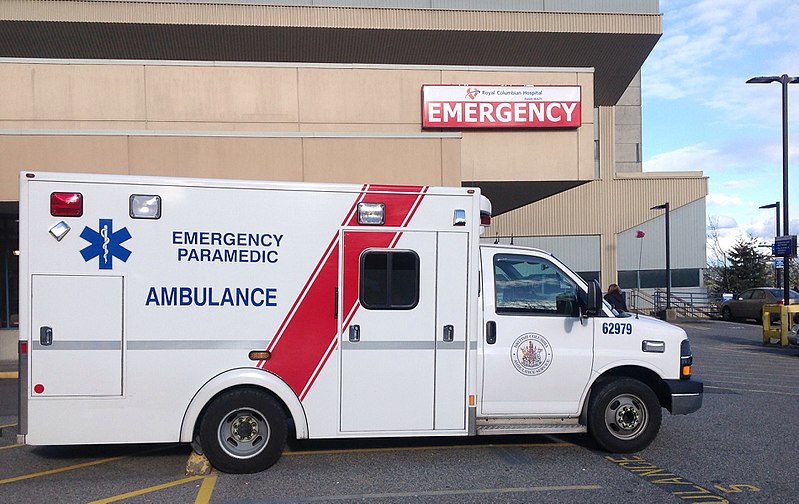
A Coquitlam woman has been found largely responsible for a 2019 collision with an ambulance that was transporting a critically ill patient to Vancouver General Hospital.
Nicole Ploss failed to respond to an approaching emergency vehicle despite its lights and siren sounding, according to a recent decision from B.C. Supreme Court Justice Christopher Giaschi.
Ploss took BC Emergency Health Services (BCEHS) and the Provincial Health Services Authority to court over the crash, but the ruling found she was 80 percent responsible, while the defendants were 20 percent liable.
Local news that matters to you
No one covers the Tri-Cities like we do. But we need your help to keep our community journalism sustainable.
“The plaintiff could have and should have heard the siren before the ambulance was visible to her,” Giaschi said, rejecting her testimony that she did not hear the emergency vehicle until moments before the collision. “She had more than 1.85 seconds to react to its presence.”
The crash occurred at the intersection of West 12th Avenue and Oak Street in Vancouver, shortly before 11 p.m., while paramedic Marcus Heyes was driving an ambulance northbound on Oak Street with emergency lights and siren activated while transporting a critically ill patient to Vancouver General Hospital (VGH).
Ploss’ Honda Civic struck the driver’s side as the ambulance entered the intersection against a red light without stopping.
Although the judge found the ambulance driver failed to properly check for eastbound traffic before proceeding through the red light, he concluded Ploss bore the greater responsibility because she was speeding on wet roads, failed to hear or respond to the ambulance’s siren, and entered the intersection despite several westbound vehicles remaining stopped.
Ploss was determined to be travelling approximately 56 kilometres an hour in a 50 zone as she entered the intersection. An accident reconstruction expert acknowledged during cross-examination that, had she been travelling at the speed limit, she likely would have been able to avoid the crash.
At trial, Ploss argued she had a green light and could not see the ambulance because a building and hedge on the southwest corner of the intersection obstructed her view. Her expert testified the collision was unavoidable because she had less than two seconds to react after the ambulance became visible.
The judge accepted there was limited visibility at the intersection but rejected the expert’s conclusion that Ploss could not have heard the ambulance’s siren, noting every other witness testified they heard it and many first noticed reflections from its emergency lights before seeing the vehicle itself.
The court also questioned Ploss’s credibility, citing inconsistencies in her testimony about the weather, road conditions, her familiarity with the area around VGH and the colour of the traffic signal. Giaschi noted he generally accepted only those portions of her evidence that were corroborated by independent witnesses.
While assigning most of the blame to Ploss, the judge found Heyes was also negligent because he entered the intersection against a red light without ensuring eastbound traffic had stopped.
BCEHS policies require ambulance drivers approaching a red light under emergency conditions to come to a complete stop, check the intersection is clear and then proceed cautiously, although witnesses testified paramedics do not always stop if conditions appear safe and the patient’s condition requires an urgent response.
The ruling deals only with liability. The amount of any damages to be awarded to Ploss will be determined at a later proceeding and reduced to reflect her share of responsibility.
Author