Voluntary decal project spotlighting neurodiversity and autism coming to Port Moody
The British Columbia Association of Chiefs of Police-led initiative may make it easier for officers in interactions with folks who are neurodiverse or autistic. But some people have concerns.
Port Moody Police are participating in a project that will allow people who are neurodivergent or have autism to voluntarily identify themselves to officers. However, at least one neurodiverse community member voiced questions about the program’s effectiveness.
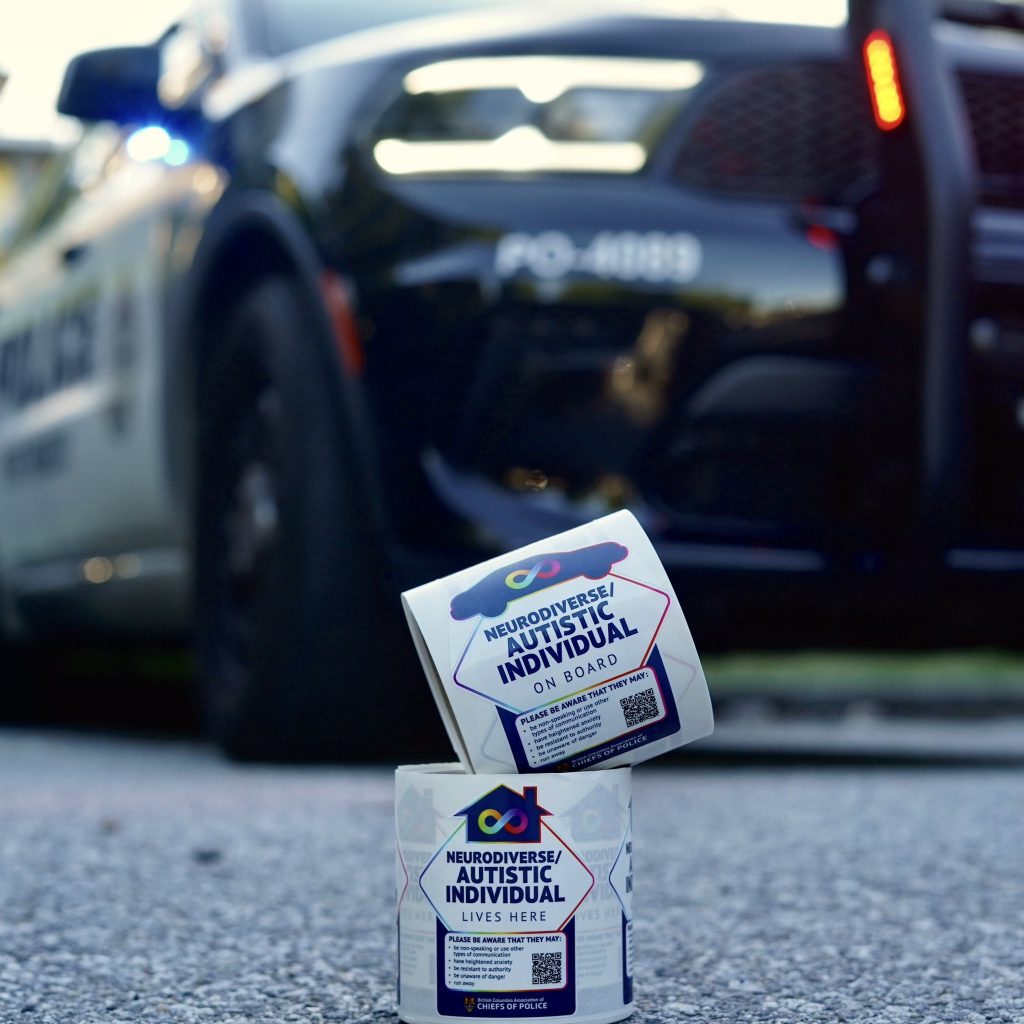
Earlier this week, the department announced they are joining the British Columbia Association of Chiefs of Police’s “Decal Project,” an initiative where residents can voluntarily pick up a decal from a police station that alerts first responders when they may be interacting with someone who is neurodiverse or autistic.
The aim of the decal — which can be placed on a car or outside a home — is to help officers adapt their interactions with those individuals, if needed.
Local news that matters to you
No one covers the Tri-Cities like we do. But we need your help to keep our community journalism sustainable.
“Upon seeing the decal, officers are immediately informed that someone with neurodiversity is present. This allows them to adjust their approach and communication style accordingly,” the B.C. Association of Chiefs of Police wrote on social media.
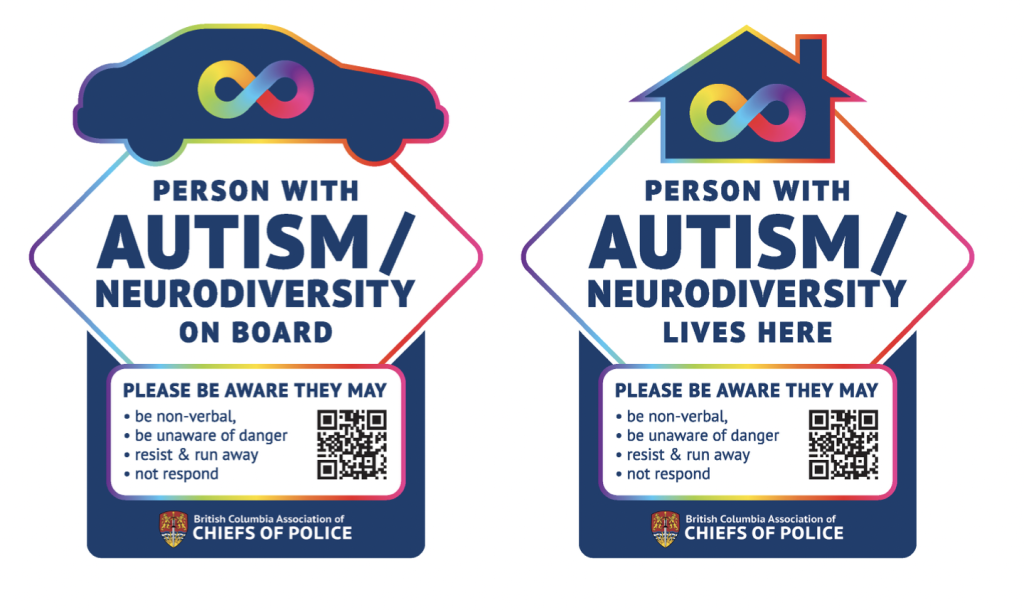
Officers will also receive training on neurodiversity to better respond during certain interactions as part of the decal project.
However, some said the decals may make folks in that community vulnerable to thefts or otherwise uncomfortable. There was also a mixed reaction to Port Moody Police Department’s announcement on Facebook.
“I’m glad that they are doing something, but then I started thinking not everyone is going to want to advertise that,” said Megan Füszeres, a Port Moody resident who is neurodiverse.
Many people also may be in the process of finding out they are neurodiverse, Füszeres said, and unsure of whether they should put a sticker on their car or home to notify the police.
“It puts a lot of the onus to do something on the neurodivergent community,” Füszeres said.
The decal project, which officially launched on June 13, was first announced by the B.C. Association of Chiefs of Police at the end of 2023.
It’s an initiative that was made in conjunction with the B.C. Law Enforcement Diversity Network, a group of agencies that include the Port Moody Police, the Canada Border Services Agency and Metro Vancouver Transit Police, among many other local forces.
The decals, which can also be picked up at Pacific Autism Family Network buildings and other community groups that support neurodiversity, identify that someone with autism or neurodiversity may be “non-verbal, unaware of danger, resist and run away or not respond.”
Wendy Lisogar-Cocchia, co-founder and director of the Pacific Autism Family Network, called the project a “win-win” for officers and the neurodiverse community in a Global News story that came out in December.
However, the project may find difficulties picking up steam because not everyone knows that they are neurodivergent, Füszeres said.
“There is a whole generation where there’s definitely undiagnosed ADHD, autistic, all sorts of stuff, but they will never admit it,” Füszeres said.
Füszeres said a more effective path will be developing stronger education resources for officers, both in the historical understanding of neurodiversity and autism and ways to communicate with folks from that community.
Specifically, Füszeres said de-escalation techniques would be helpful for neurodiverse folks in police interactions. It’s also important to understand that some people have different audio processing styles and physical tendencies — repeatedly tapping the steering wheel — that others might not.
“Maybe they’re slower to respond because they’re thinking about what they’re saying,” Füszeres said. “They might ask for clarification, not to be insubordinate or to be challenging, but to get clarification.”
In nervous situations, Füszeres added, some people may avoid eye contact and ask multiple questions to ensure they understand certain questions.
“I process information very literally,” Füszeres said. “Even if someone’s being straight to me, I will repeat back to them, ‘so you’re saying this, this and this’ to make sure we’re both on the same page.”
Author