Two Coquitlam intersections among most crash-prone spots in the Lower Mainland, ICBC reports
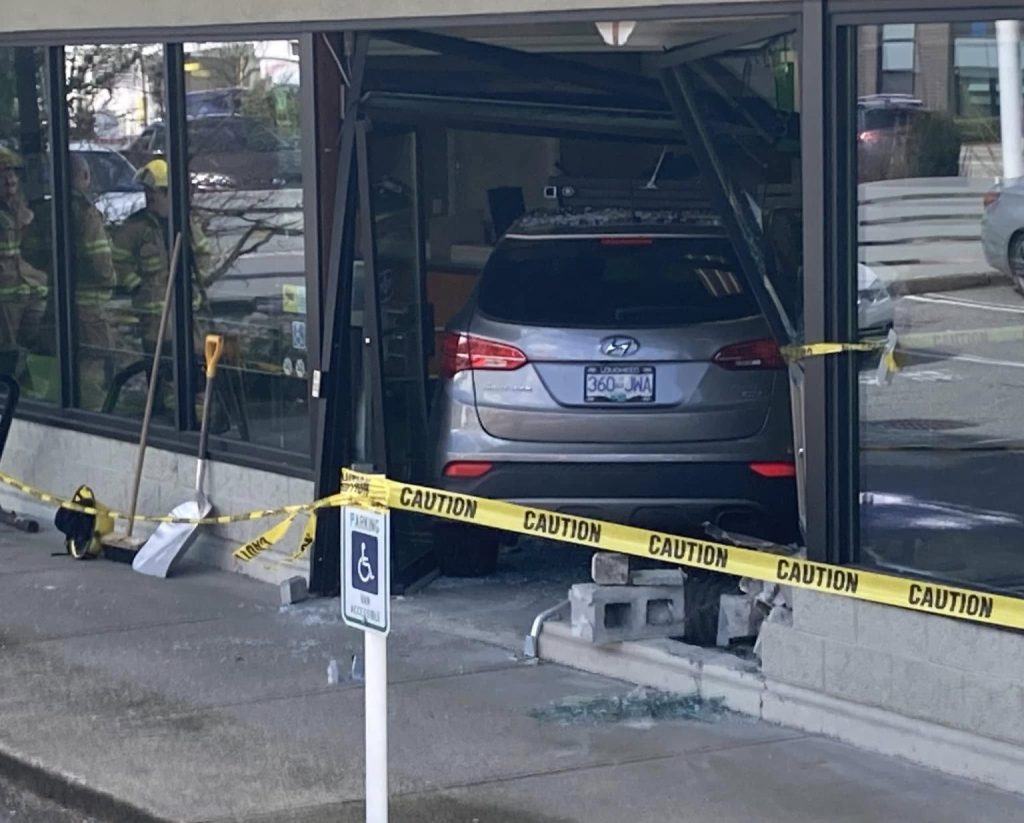
With more drivers on the road and the pandemic in the rearview mirror, there was a slight increase in crashes in B.C. in 2024, according to a recently released ICBC report.
Two Coquitlam intersections were listed among the most crash-ridden crossroads in the Lower Mainland.
There were 331 crashes at the Brunette Avenue off- and on-ramps to Highway 1, making the Coquitlam-New Westminster area the fourth most dangerous intersection in the region.
Local news that matters to you
No one covers the Tri-Cities like we do. But we need your help to keep our community journalism sustainable.
The area between Coleman Avenue and Leeder Street and along Highway 7B, the Mary Hill Bypass and United Boulevard in the southern reaches of Coquitlam were counted as one intersection. There were 245 collisions in that area east of the casino, the seventh highest total in the Lower Mainland.
There were 481 crashes at the Alex Fraser Bridge off-ramp at Cliveden Avenue – more than any other intersection in the region.
“Crashes in B.C. have steadily increased over the last five years to 303,593 in 2024 since the significant reduction in crashes that occurred during the COVID-19 pandemic,” ICBC stated in a release.
Other problem intersections in the Tri-Cities include Broadway Street and Mary Hill Bypass, where ICBC documented 150 crashes last year. There were 109 crashes at Barnet and Lougheed highways and Pinetree Way and 107 crashes at the Mary Hill Bypass on-ramp to the Port Mann Bridge and Highway 1 and United Boulevard.
In Port Moody, the intersection with the most crashes was Barnet Highway and Ioco, with 56 collisions.
ICBC recorded 25 crashes in Port Moody’s second most dangerous intersection, Moray Street and St. Johns Street.
There were a total of 13,349 crashes in the Tri-Cities in 2024. That figure represents a 2.5 percent increase from 2023 and a 41 percent jump from 2020.
Coquitlam collisions were up 4.3 percent last year compared to 2023. Over the same period crash rates dipped 5.6 percent in Port Moody and rose 1.3 percent in Port Coquitlam.
Dangerous spots for cyclists
The two most dangerous intersections for cyclists were Falcon Drive and Guildford Way, as well as Guildford Way and Pinetree Way. There were three crashes involving cyclists at each intersection in 2024.
There were two crashes each at Barnet Highway and Lansdowne Drive, Bernatchey Street and Lougheed Highway, as well as Brunette Avenue and King Edward Street.
While there wasn’t one Port Coquitlam intersection with more than one crash, Coast Meridian Road was the most dangerous stretch for cyclists in the city. ICBC recorded three collisions along Coast Meridian Road last year: one at Lougheed Highway, one Prairie Avenue and another at Salisbury Avenue.
There were five crashes involving cyclists in Port Moody in 2024. Collisions were recorded at Clarke and Moody streets, Hugh and Murray Streets, Guildford Way, Ioco Road and Murray Street, Heritage Mountain Boulevard and Ioco Road, as well as Heritage Mountain Boulevard and Parkside Drive and Turner Creek Drive.
Over the last five years
Falcon Drive and Guildford Way was the worst spot in the Tri-Cities for cyclists, with nine crashes between 2020 and 2024.
The junction where Barnet and Lougheed highways meet up with Pinetree Way remained a troubling spot for cyclists over the past five years with seven crashes between 2020 and 2024 – the same total as between 2016 and 2020.
Wider trends
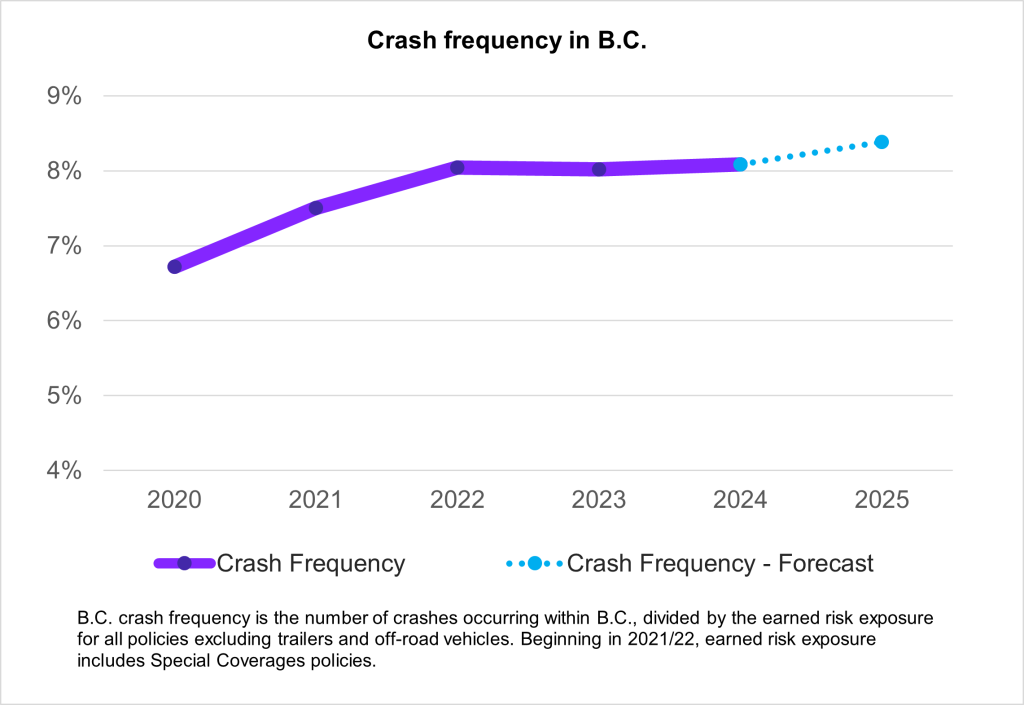
ICBC is predicting the rate of collisions will continue to rise in 2025 before levelling off.
There were 3.99 million licensed drivers in B.C. in 2024.
The rate of crashes causing injury or death declined slightly, dipping from 8.9 per 1,000 crashes in 2023 to 8.8 per 1,000 in 2024.
Author