The end of the walk? Horticulture society considers the future of səmiq̓ʷəʔelə tree tours
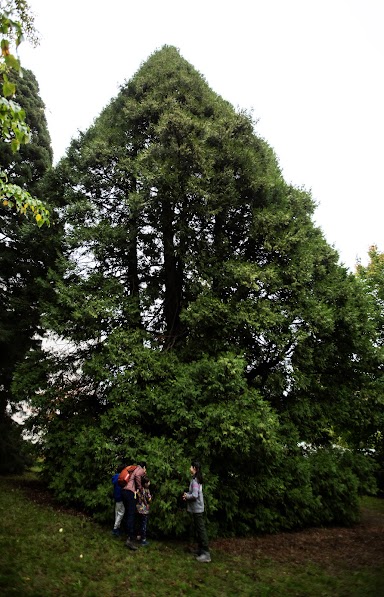
It’s a Saturday in October and hundreds of nature lovers are gathered around an incense cedar.
More than 80 years old, the towering conifer is the only representative of its species at səmiq̓ʷəʔelə ((suh-Mee-kwuh-El-uh), previously known as the Riverview Lands.
Native to the pacific northwest, the cedar’s wood has been used for bows by Indigenous people, as well as for siding, decking, panelling and the HB pencils nibbled on by nervous students.
Local news that matters to you
No one covers the Tri-Cities like we do. But we need your help to keep our community journalism sustainable.
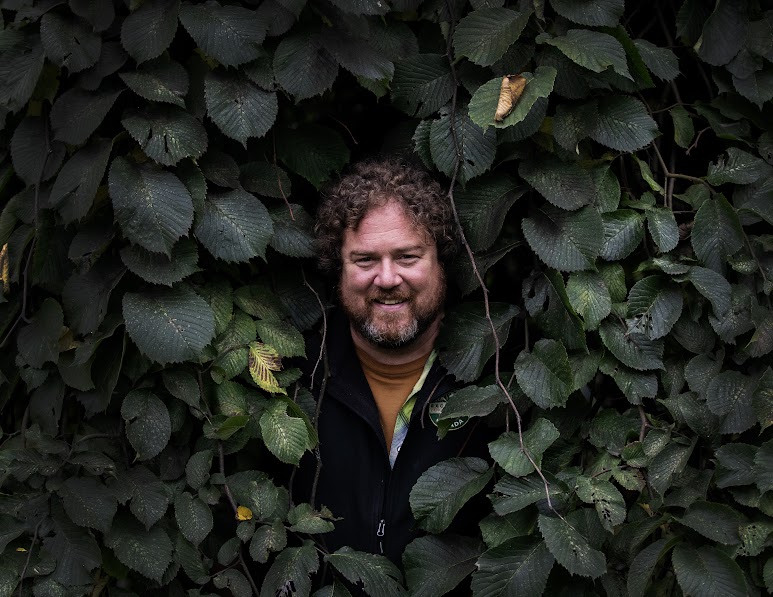
We’re participating in a free educational tour offered by the Riverview Horticultural Centre Society (RHCS) and led by urban forestry professional Egan Davis. The cedar is just the first stop and a rather small taste of the more than 1,800 species of trees on the land.
After introducing the tree to the group, Davis, a gregarious speaker, encourages those closest to the cedar to smell and report.
“Smells sour,” someone says.
“Celery!” declares another.
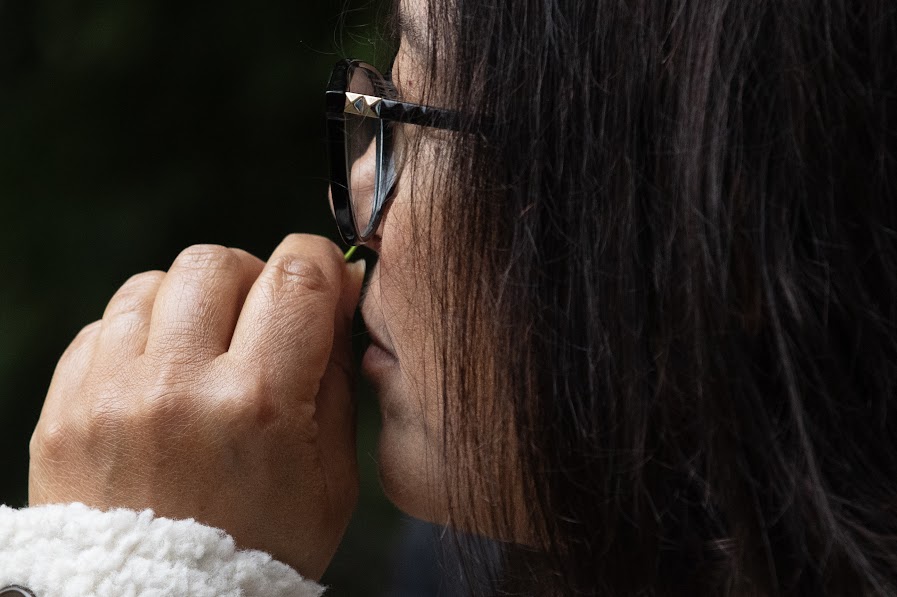
Davis is surprised. “Never heard that,” he says, “but I get it.”
The horticulture expert loves learning new ways to communicate about trees. He still recalls someone mentioning the branches of a Garry oak resembled party sparklers.
“I’ve never been able to unsee that,” he says. “Now I can see a Garry oak from 200 metres away and I know it’s a Garry oak because someone made this weird connection with party sparklers.”
The two-hour walking tour is an opportunity for Davis to help participants see trees — and their world — a little differently.
At səmiq̓ʷəʔelə, it’s not so much the species of trees that make the collection special, as the sheer number of mature trees in one area.
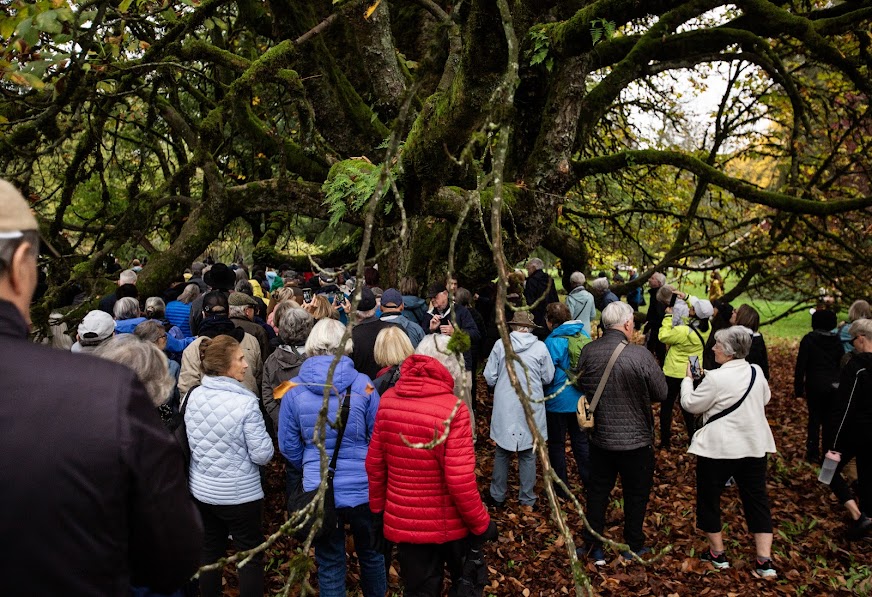
Walking the walk
Future tree walks are going to cost the RHCS a lot more money. BC Housing, who now owns the land, has notified the society that they’ll be expected to pay for a special events permit starting in 2024. BC Housing has said the society always needed this permit for the free educational walking tours they provide, but that the cost for them had been waived.
Last month, Coquitlam–Maillardville MLA Selina Robinson told the Tri-City News it was “about equity.”
However, RHCS board member Jamie MacQuarrie isn’t sure why the society is being put on the same ground as the film productions who also make use of the grounds.
The permit for this walk costs $825, plus the cost of a Port-A-Potty rental, another requirement by BC Housing.
There are also concerns that with BC Housing managing the land, it could be developed and lost as an arboretum and public park.
Also in the equation is Kwikwetlem First Nation, who asserted their land rights in 2016 and are working in partnership with BC Housing in the management of the land.
The park was renamed səmiq̓ʷəʔelə two years ago, as an act of reconciliation. It means “The Place of the Great Blue Heron” and was based on stories of the site as a heron nesting area.
At the same time, a master planning process was started into the redevelopment of the lands. It’s still quite early in the process.
Branching out
The trees were initially collected by John Davidson, B.C’s first provincial botanist. When he got the job in 1912, he was given two tasks: conduct a provincial botanical survey and create a botanical garden.
Land for the garden was designated at the Provincial Colony Farm at Essondale, which would later become Riverview. Around 600 native species were gathered and subsequently moved to the University of BC in 1916. But the arboretum stayed, located on the grounds of the new mental hospital.
“It’s been a centre of mental health for over 100 years” MacQuarrie says.
The Riverview Horticultural Centre Society was established in 1992, after the closure of the facility. Its mission is to: “preserve and protect the lands and trees of Riverview Hospital site.”
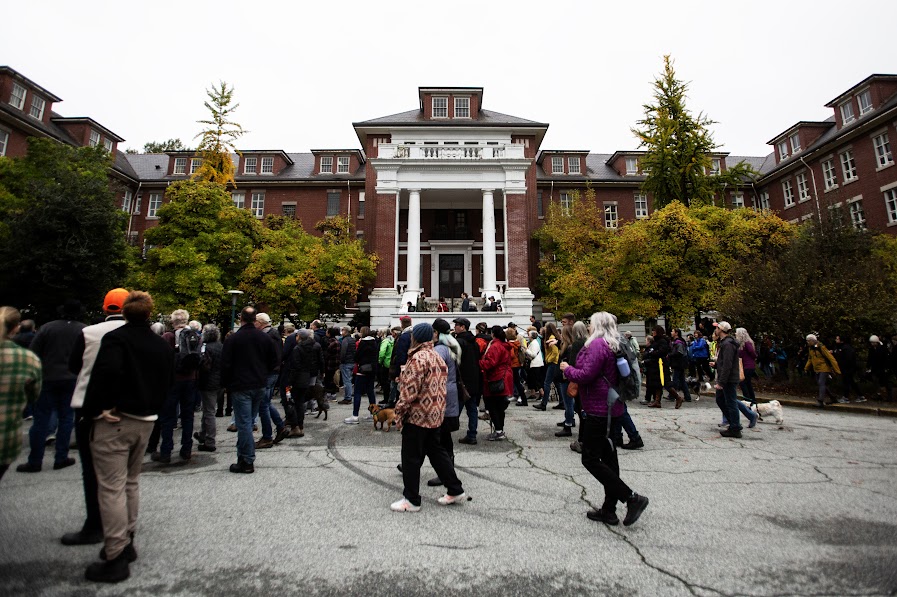
They also offered tree tours and, according to writer Val Adolph, weren’t sure how many people would show up for the initial tour.
When hundreds did, “We had to borrow a bullhorn from the RCMP,” Adolph wrote.
Three decades later, the tree tours continue. Walking among the mature giants, it’s easy to see how they’re different from many of the trees we see in our daily lives. For a start, the trees of the arboretum were planted with plenty of space to grow and not much competition. They’ve used that space.
Back at the tour, Davis declines a microphone. He grew up working outside, doing yard work out of his pickup truck and learned to project his voice on noisy job sites. The horticulture expert was used to speaking in front of people—comes with the teaching territory—but he wasn’t expecting quite so many people to show up for his first RHCS-hosted tour.
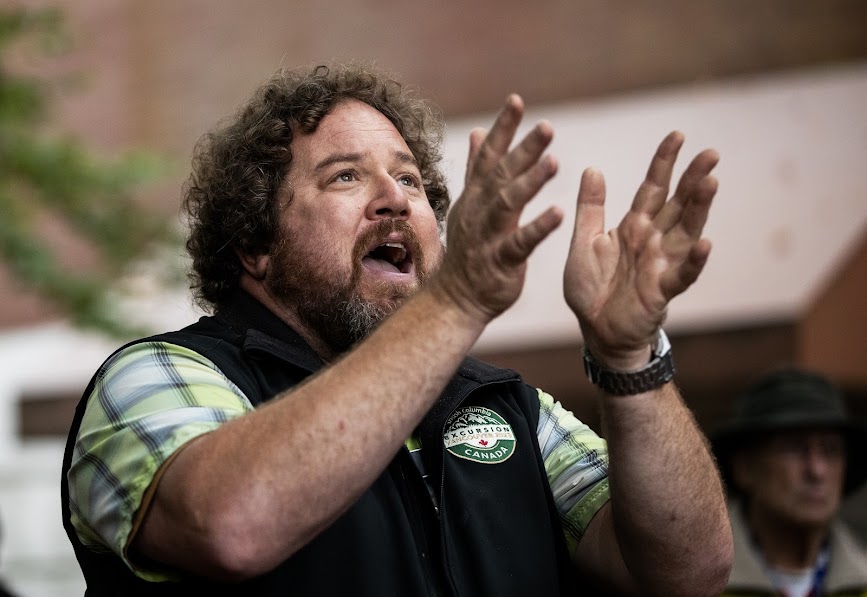
“I was expecting 30, 40, 50 people max,” he says. “I wouldn’t have been surprised if there were like 10.”
There were more than 300 people from all over the Lower Mainland there to hear Davis talk about trees.
Rather than focusing too much on specific tree facts, Davis encourages attendees to examine the shape and growth patterns at different ages.
“Young trees tend to shoot straight up and can be a little gangly,” he says. As they age, they’re curvy or pointy. When a tree gets really old, past 100, “they can’t grow up anymore. So the top tends to flatten out a little bit and they start to fit out with age.”
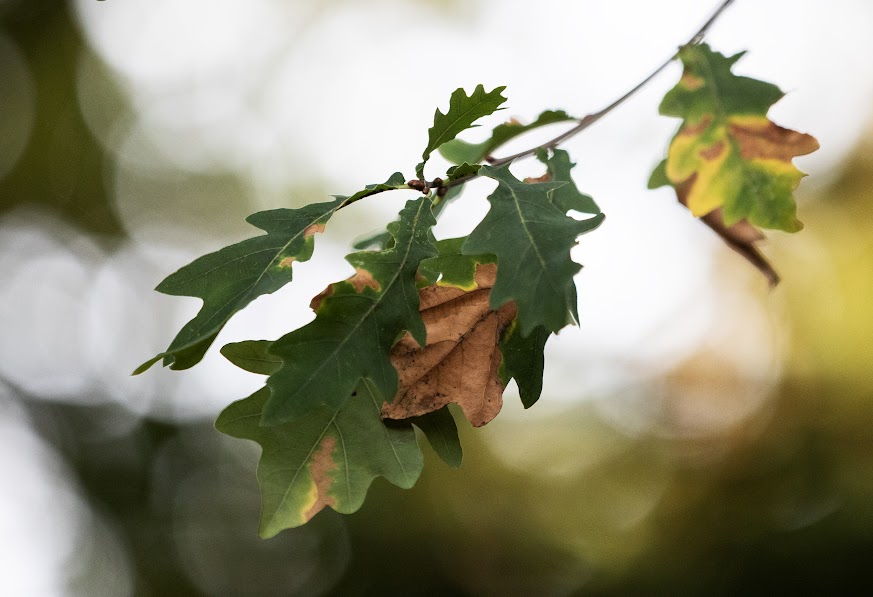
The arboretum is among the oldest in Canada, second only to Ottawa’s Central Experimental Farm, which was established in 1886. Today, we’re seeing the fruits of Davidson’s vision. He had wanted to collect trees “from all over the temperate world,” according to a report compiled by the Burke Mountain Naturalists.
“There’s Gingko trees from China, a fir from southern Spain, maples from the Himalayas, and a Sweet Chestnut tree from Turkey,” the report stated.
The report also references a common tree for the Lower Mainland: a Douglas fir. However, in the arboretum, the Douglas fir “is hardly recognizable,” since it has been allowed to grow with so much space, its “boughs form a dense skirt that sweeps the ground.”
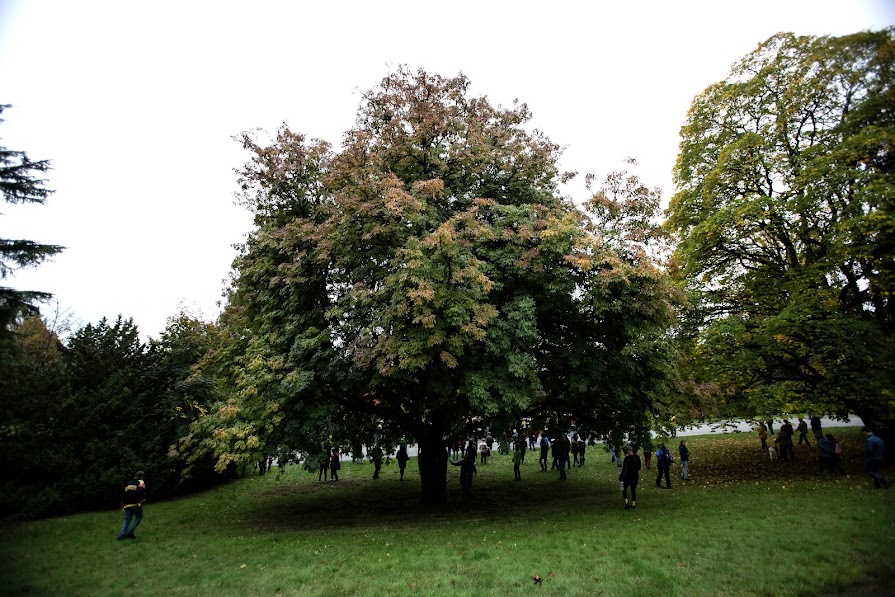
Under a cluster of beech trees next to a gothic-looking building, Davis talks about how the different colours of light filter through leaves and give the tree important information. Blue-green light means growth, while red light means flowers.
To the left of the Centre Lawn Building, Davis directs the crowd’s attention to a silver linden tree. This one, he figures, is over 100 feet tall. That’s because he accompanied his friend, also named Linden, here years ago and had him stand at the base of the tree. Then he calculated the height.
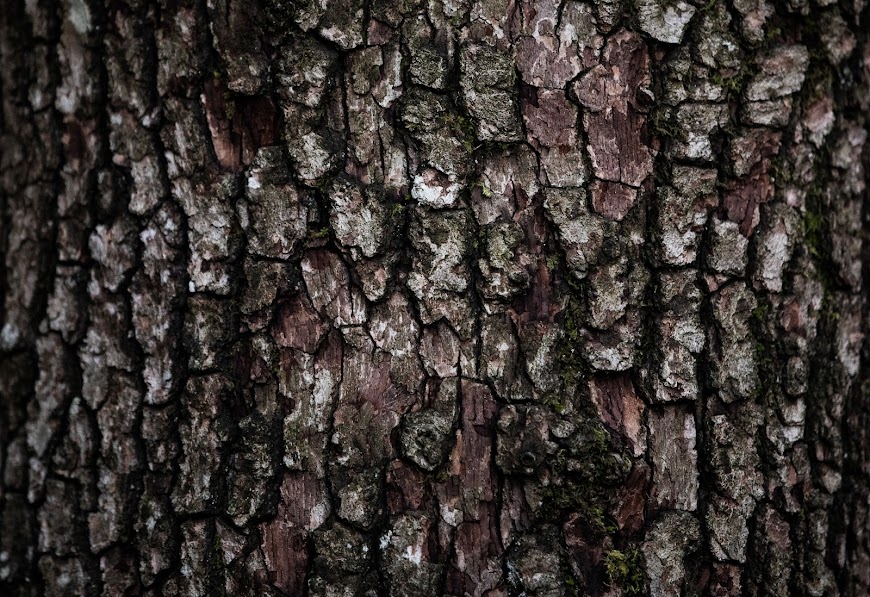
The silver linden isn’t actually his favourite tree, Davis later tells me. But it’s his favourite tree in the Riverview Lands collection.
“When you ask somebody why do you really like that park, or why do you like that tree? I think it’s the relationship we have with them and the memories that we have. That’s what makes the space,” he says.
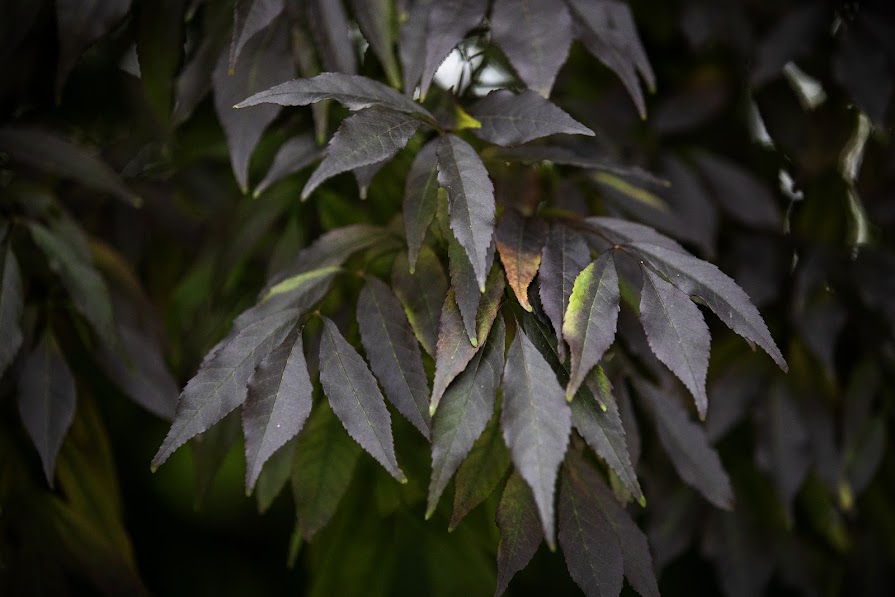
Back at the tour, Davis has brought the group to an ash tree. Looking down on it from the top of a hill, the leaves are mostly green, with a smattering of orange and yellow. At the bottom of the hill, the tree looks quite different. From this angle, its leaves are a browny-purple, almost like chocolate.
“If you get cold,” Davis explains, “you get great fall colours.”
He motions to another specimen further away whose leaves were already shares of orange and yellow.
“That’s still early. In a couple weeks, that tree will look like it’s on fire,” he says.
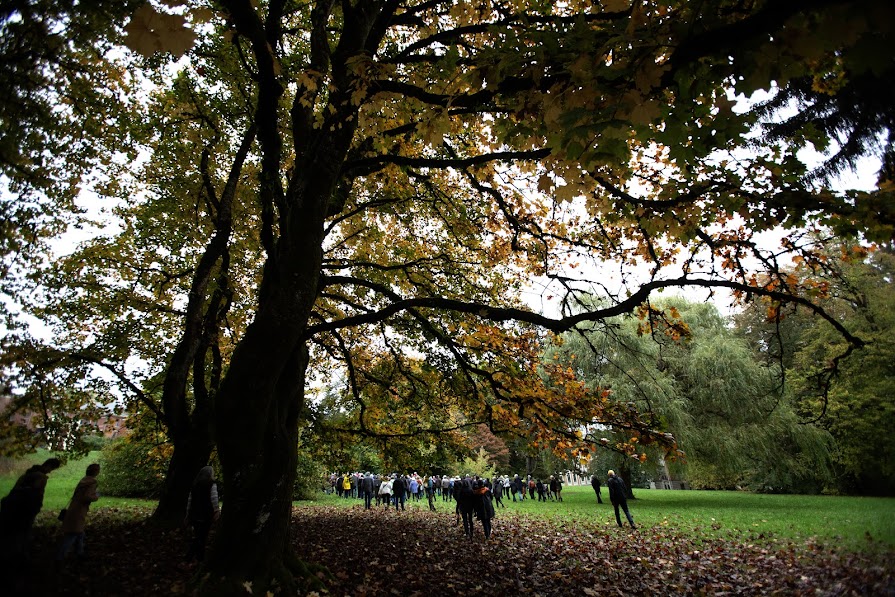
Passing under the winding branches of another mature tree, the group makes its way back to where we started. We’ve learned some facts about trees: how they smell, and grow, and change colour.
Perhaps now we’ll all see the world a little bit differently, our very own party sparklers.