Port Coquitlam looks to improve flood preparedness heading into 2025
After last year’s devastating floods the city is trying to be better prepared for future events. But one expert says it isn’t enough.
After a record-breaking storm last year, Port Coquitlam is gearing up for the 2025 rainy season.
In October 2024, the Tri-Cities were hit with a once-in-200-year storm — a three-day atmospheric river that claimed the lives of two residents and resulted in more than 100 property owners reporting flood damage.
“We hadn’t seen this amount of rainfall before,” said Dave Kidd, the manager of public works for Port Coquitlam. “It overwhelmed our drainage infrastructure, and as a result, created some localized flooding.”
Local news that matters to you
No one covers the Tri-Cities like we do. But we need your help to keep our community journalism sustainable.
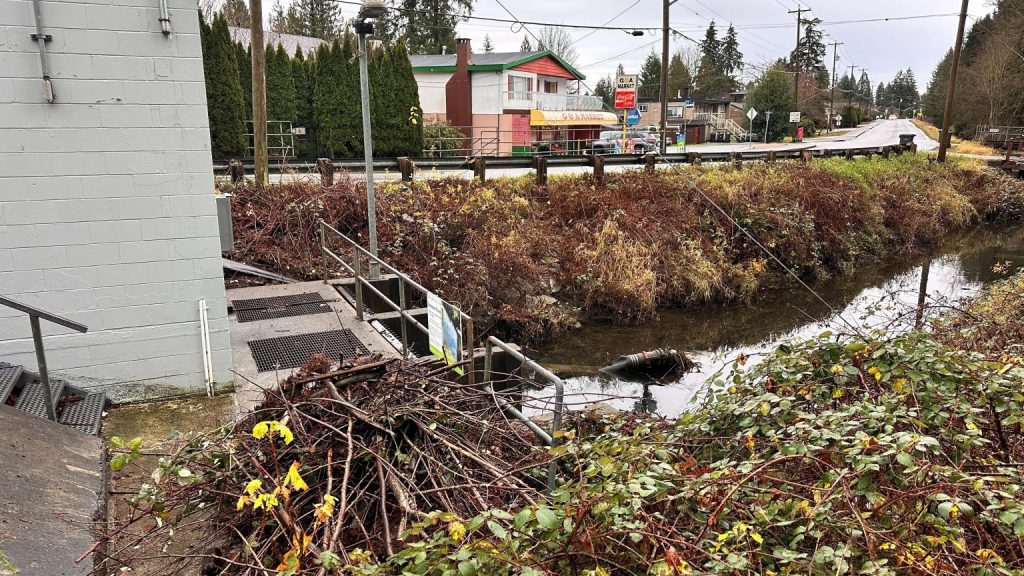
The catch basins leading into Hyde Creek were “overwhelmed,” he said. “Everything was backed up and couldn’t handle the volumes of water we were experiencing.”
The city recorded nearly 185 millimeters of rainfall in a 24-hour period, and about 30 Port Coquitlam homes experienced property damage from the floods.
In response, Port Coquitlam recently announced it is “taking proactive steps to strengthen local flood protection and storm preparedness.”
Kidd said they’ve taken lessons from this event — namely, the importance of pre-planning and proactive maintenance on the city’s drainage infrastructure, including cleaning drainage systems, ditching, dredging creeks, checking the dikes for structural integrity, making sure pump stations are maintained, and cleaning culverts and catch basins.
Port Coquitlam is also working on upgrading two of its pump stations. The Maple Creek Pump Station is set to be finished by the end of 2026. Construction for the Cedar Ditch Pump Station (which supports the Hyde Creek watershed) will start next year.
These pump stations are in the lowest-lying area of their respective watersheds. For example, the Cedar Ditch Pump station pumps runoff from Hyde Creek into the Pitt River.
While Kidd said Port Coquitlam’s pipes are engineered for the one-in-200 year storm, the challenge is that they’re now seeing “more and more of these weather events.”
To prepare for this, Kidd said they are working on integrated stormwater management plans, which is a review, evaluation and analysis of their drainage infrastructure.
No longer ‘one-in-200-year’ storms
Younes Alila, a professor in UBC’s department of forest resources management, said framing floods as ‘one-in-200-year storms’ is outdated.
It’s based on past rainfall data, which doesn’t account for two factors that exacerbate floods: climate change and human-induced land use changes (like urbanization, forestry, mining, and agriculture).
“We are now being subject to a double whammy,” Alila said.
Climate change is increasing the amount and intensity of rainstorms, and urbanized cities aren’t able to soak up all that rain.
Alila’s recent research argues there’s a need to shift flood management from a focus on large flood events (like one-in-200-year events) to flood frequency, since they are happening much more often.
While a city’s infrastructure might be big enough to handle a large flood, they might still fail because “they’re going to be battered by so many events,”Alila explained.
About half of Port Coquitlam sits in a flood plain at the bottom of watersheds, making the city particularly vulnerable to water runoff.
It’s the small to medium flood events that carry sediment downstream, which eventually settles at the bottom of water channels. Alila said this “chokes” its ability to handle further runoff.
What does Port Coquitlam need to do?
Alila said that the actions Port Coquitlam is taking — like improving pumps — is needed, but said it is like “treating the symptom and not the root cause of the problem.”
Cities tend to be built with pavement and roofs — surfaces that rainwater runs off. Instead, they should focus on creating more permeable surfaces that can actually absorb rain, Alila said.