Port Coquitlam candidates answer your questions
Candidates were given five days to answer these questions. Three of five candidates responded by deadline. We were not able to contact independent candidate Lee-Ann Bates.
Candidates were asked to limit their responses to 100 words.
Mike Farnworth, BC NDP (incumbent)
Local news that matters to you
No one covers the Tri-Cities like we do. But we need your help to keep our community journalism sustainable.

How long have you lived in the riding?
I was raised in Port Coquitlam and have called this community home since 1969. My longstanding connection to PoCo has given me a deep appreciation for what makes our community special. In my spare time, I enjoy birding, exploring the nature trails, and spending time in our parks.
How will you create more good jobs in your riding?
Working with the federal government, we’ll open new markets for BC products, and help BC businesses to grow and trade with the world. We’ll provide direct relief for small businesses impacted by US tariffs, and create a hiring incentive credit for businesses who hire young people for their first full-time job.
Under what conditions, if any, should B.C. welcome AI data centres?
We all want to protect our communities, our water supply and our power grid. That’s why last fall the BC NDP passed a new law to limit the power available for data centres, safeguard our power grid, and support our climate goals. We’ll also be setting strict new water-efficiency standards, mandated public reporting of water use, and requiring engagement with local communities on conservation and drought planning.
What steps should the province take to mitigate the effects of climate change?
The BC NDP has been taking action to fight climate change while growing our economy.
Under our plan, emissions per dollar of economic activity are down over 30%, and methane emissions are down 48%. Our proposed Clean Futures Fund will dedicate a portion of provincial revenue from oil and gas to fund climate action programs that help families and businesses choose less costly clean energy, and create new jobs, starting with an investment of $50 million. Many Conservative candidates don’t believe in the science behind climate change, and they can’t be trusted to take serious action.
What measures will you take to protect and restore biodiversity and watersheds?
The BC NDP is on track to meet our goal to protect 30% of B.C.’s land by 2030. We are currently at 20% protected, or 18.9 million hectares. We also successfully fought to maintain the North Coast Tanker Ban, protecting an incredibly unique ecosystem. Next, we will invest $30 million per year into the BC Watershed Security Fund, to secure healthy watersheds and thriving communities for generations. The Conservatives oppose our 30×30 goal, and would roll back conservation.
Would you support a change to proportional representation in B.C. elections?
It’s crucial that our democracy is strong and that we have the tools to adapt to changing pressures on our democratic system. In 2018, we held a referendum in which British Columbians indicated that the current voting system was where they wanted to stay. But there is still work to be done to make sure our political system reflects the needs of British Columbians. In 2025 we struck an all-party committee to examine democratic engagement, and we’ll continue to work together with all parties to ensure the integrity of our democracy.
What is your stance on micromobility devices and improving first/last kilometre travel?
New options that allow people to get around with lower carbon emissions are exciting, but the safety of all road users needs to be paramount. That’s why we launched a detailed study of e-scooters to see how best to safely integrate them into our transportation networks. Local governments know their needs best, which is why municipalities have the choice to opt-in to this study period. Our BC NDP government has invested in active transportation infrastructure projects like cycling lanes and multi-use paths that make it easier for people to get around their community.
Has the province provided enough funding for the construction of new schools? If not, what should change?
Funding must keep pace with population growth. In SD 43, the rebuild of Hazel Trembath Elementary has been a priority of mine. Students deserve to go to school close to home, and parents and families deserve the convenience that having a nearby school brings.
Other investments the BCNDP have made in the Tri-Cities include seismic replacements at Moody Elementary, Montgomery Middle, and Irvine Elementary; additions at Charles Best Secondary and Scott Creek Middle; and new elementary and secondary schools on Burke Mountain, as well as the recently announced middle school to serve that growing community.
The last time conservative politicians were in government, they closed 250 schools including eight in SD 43. The BC NDP has 250 new or upgraded schools complete or underway across the province.
How will you improve traffic and transit in Port Coquitlam?
We are investing millions into continuous improvements for road safety and highway maintenance in Port Coquitlam. Upgrades to the Coquitlam River Bridge are currently underway to ease local congestion and improve walkability. Working alongside TransLink and the federal government, we are upgrading the Port Coquitlam Transit Centre to support electric buses and double deckers to expand service frequency and reliability across PoCo.
Are you in favour of privatizing or partially privatizing medical care in BC? Explain why or why not.
Absolutely not. I, along with every single BC NDP candidate, have signed a Public Health Care Guarantee because we believe no matter your income, you should have access to quality care, when you need it. The BC NDP will close loopholes that allow clinics to charge user fees and extra billing for publicly insured, medically necessary services.
In Alberta, the conservative government is creating a two-tier healthcare system, with private-pay options that pull resources from the public system. We cannot let the same thing happen here.
Why should residents vote for you?
The BC NDP has a track record of delivering results for families in Port Coquitlam. As your MLA, I’ve worked to make life more affordable, strengthen healthcare, and improve our schools. Our community has seen important recent investments, including the rebuilding of Hazel Trembath Elementary, the opening of the Urgent and Primary Care Centre, the establishment of Foundry’s youth mental health services, funding for new multi-purpose sports fields, and the $6.7 million investments into Gates Park. We cannot risk this progress by electing the chaotic conservatives who have instead stated they will make cuts to education and healthcare.
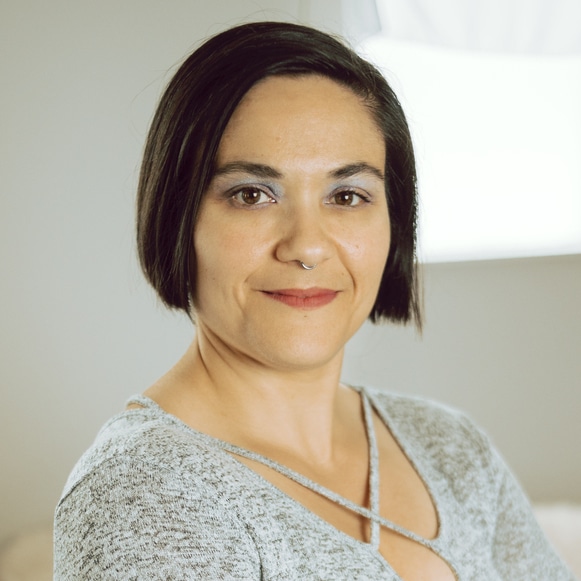
Stephanie Hendy, BC Green Party
How long have you lived in the riding?
I don’t live in the riding.
I lived in Vancouver most of my life and moved to the Okanagan from 2021-2025.
I moved in with my mom to save money to buy my first residence. It was my only chance at transitioning away from being a lifelong renter. I want stability in my life and I love Port Coquitlam for its trails, its wooded areas, its cute downtown main street, and the laid back vibe.
It’s quiet and calm which helps keep me quiet and calm!
How will you create more good jobs in your riding?
I want the SkyTrain to expand the Evergreen Line from Coquitlam Central station to Port Coquitlam. There was already a switch installed at Coquitlam Central station for future expansion, the line just has to be laid.
I want the West Coast Express to run more often, at least once per hour in each direction in the middle of the day and weekday evenings and weekends. There is such potential for that commuter train to be more accessible to riders. The more often it runs, the more people who need to be employed to operate it.
I want the Mountain Valley Express to conduct a feasibility study for building light rail rapid transportation throughout the Lower Mainland. This would involve people of all disciplines in helping to build a better connected community that can be less reliant on vehicles.
Under what conditions, if any, should B.C. welcome AI data centres?
The party position is such that we should put a moratorium on the construction and operation of AI data centres until a detailed public-interest audit is developed and an appropriate regulatory regime is implemented. This will include consideration of access to electricity and other public resources, the economic value created in BC alongside electricity and water use, impacts on communities and the environment, and demands on other public infrastructure.
The BC Greens will also work with the federal government to create an independent AI oversight commission so new AI is properly tested for safety and regulated before it’s used in BC, because even the companies building it now say things are moving too fast.
I personally think it is a tool that currently lacks the regulatory framework and oversight to allow this industry to take hold just yet.
What steps should the province take to mitigate the effects of climate change?
Aside from pushing for more rail-based transportation intra-city, intra-region, and inter-region, we also need to put a moratorium on all clear cut logging.
BC already has a functional forestry management system in place: the Monashee Community Forest in Lumby is cooperated by the Splatsin Development Corporation and the Village of Lumby. Every year, they conduct a survey of the forest to determine which logs are safe to be removed through selective logging. This makes the forest far more fire-resistant. It also means that both the Indigenous and Colonial governments come to the table to make these decisions together, for the forest is the resource, not only the lumber.
Stopping clear cut logging also makes the topsoil more healthy to soak up more rainfall which is a natural flood mitigation strategy.
I was really upset to see all the housing development going up in Burke Mountain near the Port Coquitlam and District Hunting & Fishing club, as so much healthy forest was taken down, and Port Coquitlam is already in a flood plain.
The province must be working in tandem with federal, municipal, regional districts, and Indigenous governments to collaborate on this more effectively.
What measures will you take to protect and restore biodiversity and watersheds?
The BC Greens oppose the NDP’s proposed Working Forest Model. This model starts with a target to increase the annual harvest by over 40% to 45 million cubic metres and seeks to secure the land base needed to meet it. This will lock much of BC’s most productive, lower-elevation forests into industrial logging, including old growth and areas important for ecological health and watersheds. The proposed “no net loss” policy will also limit future conservation by fixing the amount of land available for timber production. Protecting additional areas will then require other land areas to be opened up into working forest zones. This starts in the wrong place. We should not decide how much timber we want to cut and then organize our public forests around supplying it. Instead, regional forest planning should begin by identifying what each landscape needs to sustain ecosystem health, biodiversity, cultural values, watersheds, wildfire resilience and healthy communities. A sustainable fibre supply can then emerge from those plans, providing workers and businesses with long-term forest-economy based within ecological limits.
Would you support a change to proportional representation in B.C. elections?
Absolutely. The BC Greens have always supported proportional representation. The current system rewards money and privilege ahead of grassroots power.
Even after we worked with the NDP in 2017 under the Confidence and Supply agreement to ban all union and corporation donations, there is more money in protecting the status quo rather than those seeking to build a better system that works for more British Columbians.
We, as a society, need to learn to be more collaborative than competitive.
We all run as candidates to help build better lives for British Columbians. We disagree on how to get there.
How will you improve traffic and transit in Port Coquitlam?
Improving transit is personally important to me. While I own a car, a motorcycle, and a bicycle, my mom takes transit and it needs to be easy for her to visit me independently. I was raised on transit as neither of my parents drove.
Seniors, youth, and people with disabilities all rely on transit to get around, and not everyone can afford to live in the city centre.
What is your stance on micromobility devices and improving first/last kilometre travel?
The e-scooters and e-bikes for one-way travel have been excellent at improving the first/last kilometre of travel.
However, having lived in a few cities with this option, there needs to be strict guidelines of where the scooters/bicycles can be parked. As they can present as mobility hazards if not controlled adequately.
I would love to get Evo car share to expand to Port Coquitlam!
Has the province provided enough funding for the construction of new schools? If not, what should change?
Better research into where new schools are constructed is needed.
While new schools get proposed, the province appears to do very little engagement with the residents as to where the schools should be constructed.
This ends up with many upset residents opposing the construction of new schools, because they don’t want their favourite park disrupted.
There is also little research into what infrastructure improvements are needed for students to arrive safely.
In addition, more internal review of why teachers are leaving and funding more education assistants is sorely needed.
Are you in favour of privatizing or partially privatizing medical care in BC? Explain why or why not.
Absolutely no privatization. We cannot have a two tiered system.
We need to fix the current system so that access is equal and so that people don’t die waiting for care.
There is too much money in administrative bloat.
The Ministry of Health is the best funded portfolio in the cabinet and that funding needs to be allocated more strategically.
Why should residents vote for you?
I’m not a career politician. I’m a clinical exercise physiologist, which means that I’m a scientist who has been trained in providing health and lifestyle coaching to people with various chronic health conditions. I have been working in third party disability management for over 6 years, I live with a chronic illness, and I grew up with a disabled dependent parent. I was afforded the privilege of having my shelter, food, and medication needs met in my upbringing however, I also incurred a lot of debt to change my situation. I’m the only person in my family on both sides to have graduated university.
I’m a queer mixed race woman and I pass as white and straight, which means I face less violence than my peers.
I want to leverage my privilege to help others. We are not free until we are all free.
Our government is already saturated with enough white rich people who have never been renters, who have never been broke, who find the status quo works for them.
People tend to not vote because they don’t see someone running who understands their experience.
I don’t claim to know everything. I have much to learn and am always open to learning and to strive for continuous improvement.
Keenan Adams, Conservative Party

How long have you lived in the riding?
I’ve proudly called Port Coquitlam home since 2010, where I live with my wife, Florence. Over the years, I’ve built my career in the railway industry and have enjoyed giving back through the PoCo Lions Club, Adopt-A-Spot program and local river cleanups.
What makes Port Coquitlam special isn’t just its beautiful surroundings, it’s the people. The more involved I become in our community, the more I appreciate the hardworking, caring people who make this city such a wonderful place to call home.
How will you create more good jobs in your riding?
As a locomotive engineer and president of my Teamsters local, I understand how important good-paying jobs are to working families.
I believe we need to make it easier for businesses to grow, attract responsible investment and expand opportunities for skilled trades and apprenticeships.
But before making promises, I want to hear directly from local employers and workers about what’s holding them back.
Government doesn’t create every job, but it can certainly create an environment where businesses and workers succeed. My priority would be keeping good jobs and opportunities right here in our community.
Under what conditions, if any, should B.C. welcome AI data centres?
Technology is changing our world, and I believe British Columbia should be open to new opportunities, but not at any cost.
AI data centres can require enormous amounts of electricity and water. Before welcoming them, we need to understand their environmental impact, the infrastructure required and whether they’ll actually create meaningful employment opportunities for British Columbians.
I would want assurances that taxpayers and residential BC Hydro customers aren’t left subsidizing private operations.
Innovation is important, but so is protecting our resources. If the benefits genuinely outweigh the costs, they’re worth considering.
What steps should the province take to mitigate the effects of climate change?
I believe we need to focus on practical solutions that deliver measurable results rather than simply making political promises.
We’re already experiencing wildfires, flooding and extreme weather, so prevention and preparedness need to be priorities. That means better forest management, flood protection, protecting green spaces and investing in reliable transportation and cleaner technologies.
We should also support practical ways to reduce emissions.
I don’t believe protecting the environment and supporting a strong economy have to be opposing goals. With responsible planning and common sense, we can work toward both.
What measures will you take to protect and restore biodiversity and watersheds?
This is something close to my heart. I’ve participated in local river cleanups because I believe protecting our environment starts right in our own backyard.
Port Coquitlam is fortunate to have beautiful natural spaces, including the Coquitlam River and Hyde Creek.
I would support protecting fish habitats, restoring damaged ecosystems and working with local conservation organizations, First Nations and municipalities to preserve our waterways.
As our community grows, responsible development must include protecting the trees, wildlife and natural spaces that make Port Coquitlam special.
Once these natural treasures are gone, they’re not easily replaced.
Would you support a change to proportional representation in B.C. elections?
I believe everyone’s vote matters, and I’m always willing to listen to ideas that could improve how our democracy works.
However, British Columbians voted on proportional representation in 2018, and the majority chose to keep our existing electoral system.
I believe that decision deserves to be respected.
I’m open to thoughtful discussions about electoral reform, but I wouldn’t support changing our voting system without clear public understanding and a renewed democratic mandate.
Regardless of which electoral system we use, my responsibility as an MLA would be to represent everyone in Port Coquitlam, including those who didn’t vote for me.
How will you improve traffic and transit in Port Coquitlam?
One of my priorities is replacing the aging Coquitlam River Bridge. It’s an important piece of infrastructure and a major traffic bottleneck that needs attention.
As a locomotive engineer, I understand the importance of reliable transportation for workers, families and businesses.
I would work with the city and province to prioritize the bridge replacement, improve traffic flow and advocate for better transit connections.
I’m also open to exploring longer-term rapid transit improvements for Port Coquitlam, but I won’t promise projects without understanding their feasibility and cost.
We need practical transportation solutions that actually make people’s lives easier.
What is your stance on micromobility devices and improving first/last kilometre travel?
I support giving people more transportation choices, particularly when they make getting to work, school or public transit easier.
E-bikes, safer cycling connections, accessible sidewalks and secure bicycle parking can help reduce short car trips.
I also recognize the importance of pedestrian safety, particularly for seniors, children and people with mobility challenges.
E-scooters currently aren’t permitted in Port Coquitlam. I would be open to reviewing the experiences of neighbouring communities before considering any changes, while respecting the City’s concerns.
Innovation and convenience are great, but public safety needs to come first.
Has the province provided enough funding for the construction of new schools? If not, what should change?
I believe school construction needs to keep pace with population growth, and that hasn’t always happened quickly enough.
While funding has been provided for new schools and expansions, we need better long-term planning so families aren’t moving into growing neighbourhoods without adequate classroom space.
I would work with School District 43, local trustees, parents and municipalities to identify priorities and advocate for timely investment.
We also need accountability when projects experience delays.
Our children deserve safe, properly equipped schools, and teachers deserve classrooms where they can do their jobs effectively.
Education should be a priority, not an afterthought.
Are you in favour of privatizing or partially privatizing medical care in BC? Explain why or why not.
I believe healthcare should remain universally accessible and publicly funded. However, I’m open to exploring whether private healthcare providers could help reduce pressure on our public system and shorten wait times.
Any approach needs to be carefully considered to ensure it improves access without taking essential resources away from public healthcare.
The priority must be getting people the care they need, when they need it, regardless of their income.
Locally, I have committed to advocating for the promised MRI at Eagle Ridge Hospital.
Why should residents vote for you?
I’m not a career politician. I’m a locomotive engineer, a union president and someone who genuinely cares about this community.
I’ve spent my career working alongside everyday people, listening to their concerns and standing up for their interests.
I won’t pretend to have all the answers, and I’m certainly not going to promise things I don’t know I can deliver.
What I can promise is to listen, work hard, treat everyone with respect and never forget why I want to go to Victoria in the first place: to represent all residents of Port Coquitlam, regardless of whether they voted for me.
I believe good leadership starts with being a good human being, and that means knowing how to listen. Not just to people who agree with you, but also to those who see things differently. After all, a good idea is a good idea, regardless of who it comes from, and it just might help make Port Coquitlam an even better place to live.
Author