Letterbox: Coquitlam mayoral candidate reflects on ‘the incumbency fortress’
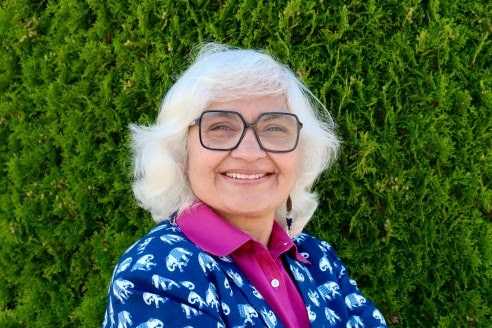
Written by Madhavee Inamdar, this opinion piece focuses on the challenges faced by political newcomers.
Losing a mayoral race is not just an electoral outcome. It is an education. When you run for office in Coquitlam and come up short, you gain a vantage point that incumbents never see.
You begin to understand how our local democratic structures actually function, who they serve, and who they quietly leave behind.
Local news that matters to you
No one covers the Tri-Cities like we do. But we need your help to keep our community journalism sustainable.
What I learned is simple, and uncomfortable: Coquitlam’s municipal system is structurally designed to protect incumbents, and the data shows it.
The turnout problem: a system running on 24 percent participation
Municipal turnout in Coquitlam has hovered around 20–25 percent for multiple election cycles. That means three out of every four eligible voters do not participate.
Low turnout is often interpreted as satisfaction. But after going through this election myself, I don’t believe that. Low turnout is not contentment, it is disconnection. And disconnection has consequences:
- With only 24 percent voting, a councillor often needs just 8-9 percent of the city’s eligible voters to secure a seat.
- That small slice tends to be older, longterm residents, many of whom have voted the
same way for decades. - Meanwhile, Coquitlam’s actual population is more than 45 percent racialized, with large immigrant, multilingual, and newcomer communities who rarely appear in municipal turnout data.
The result is a democratic mismatch: the people who vote do not necessarily reflect the majority people who live here or the issues they face.
Twenty years of incumbent dominance
Looking back over two decades of Coquitlam elections, the pattern is unmistakable:
- Incumbent councillors almost never lose, except 2014 municipal election when sitting
councillor Neal Nicholson lost his re-election. - When seats change hands, it is usually because an incumbent retires or seeks
higher/different office. - Competitive races are rare, and structural barriers make them even rarer.
This is not a criticism of any individual councillor. It is a reflection of a system where
institutional advantage compounds over time.
During my campaign, I saw this firsthand:
- Incumbents have years of voter lists, built through multiple elections.
- New candidates wait for nomination paperwork before accessing basic voter data losing weeks of outreach time.
- Established networks activate quickly; newcomers must build from scratch.
By the time a challenger enters the race, the incumbency fortress is already standing.
Representation vs. Reality: the civic gap
Coquitlam is a modern, diverse, multilingual city. But the active municipal electorate remains narrow. According to Statistics Canada:
- 45 percent+ of Coquitlam residents are racialized.
- The city has one of the fastest growing immigrant populations in Metro Vancouver.
- Young families, renters, and newcomers make up a large share of the population.
Yet these groups are dramatically underrepresented in municipal voting patterns.
During the campaign, I met countless residents who told me:
- “I didn’t know municipal elections mattered.”
- “I’ve lived here for years but never voted locally.”
- “I don’t think my vote changes anything.”
- “I don’t know how to participate.”
These conversations stayed with me. They were emotional, sometimes painful. They revealed a truth I felt deeply as a candidate: people are not disengaged because they don’t care. They are disengaged because the system has not invited them in.
The emotional reality of losing
There is a quiet moment after election night, after the numbers settle, after the signs come down when you sit with the weight of the experience. For me, that moment was filled with two emotions:
Loss for Residents: Not for the electoral loss itself, but for the residents who told me they wanted change but didn’t feel connected enough to vote. I felt the loss for the communities who remain unseen in local decision-making and loss for the democratic potential that sits dormant in our city which was almost 76 percent of the eligible voters this election.
Clarity about how the system works is important. Clarity about why new candidates who are independent of political parties’ baggage or support and endorsements of outgoing incumbents struggle to break through. Clarity for voters is equally needed to make municipal democracy truly representative.
Losing didn’t discourage me. It sharpened my understanding.
What needs to change systemically, not politically
This is not about parties or personalities. It is about democratic infrastructure. To strengthen local democracy in Coquitlam, we need year-round civic outreach
It is needed not just during election season. Multilingual, culturally aware, community-based voter education is needed that meets people where they are.
Equal access to voter information
New candidates should not start weeks behind. Data access should be standardized and timely.
Engagement of underrepresented communities
Immigrants, renters, youth, and newcomers must be included intentionally and not incidentally.
A cultural shift in civic participation
Voting must become a shared norm, not a niche activity for a small demographic.
A Final Reflection: Running for mayor taught me that local democracy does not change from the top down. It changes when residents and all residents see themselves as part of the civic fabric.
The incumbency fortress is not permanent. But it will not fall through conflict or criticism. It will shift when participation expands, when new voices enter the conversation, and when the 76 percent who stay home begin to see their own power. Coquitlam deserves a democracy that reflects everyone who calls this city home. I lost the race, but I gained a purpose: to help build that future.