$1.3 million in federal funding announced for multi-use path project along 1.2 km of Lougheed Highway in Port Coquitlam
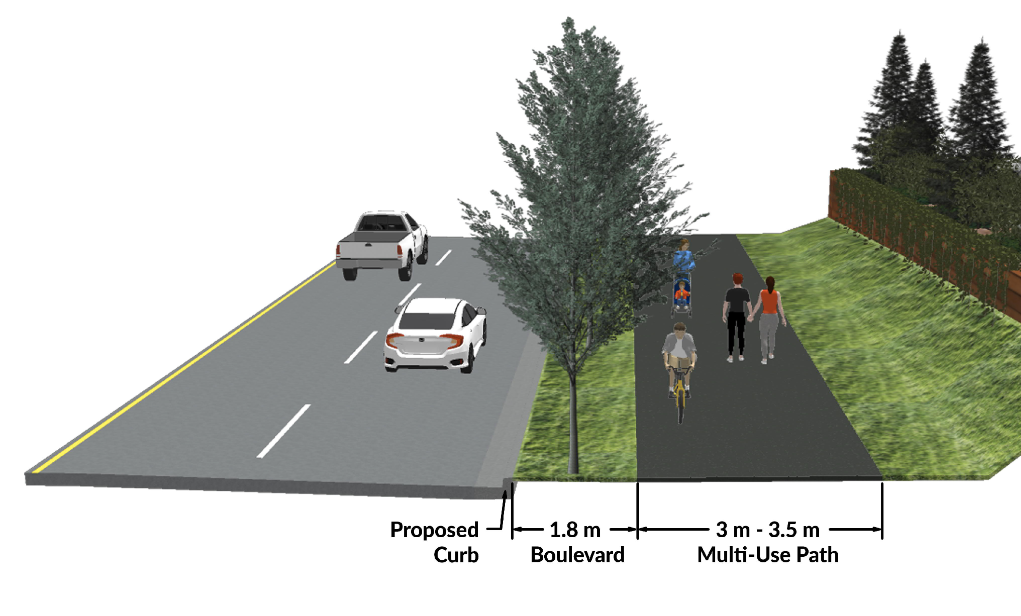
Port Coquitlam has received nearly $1.3 million from the federal government to build enhanced multi-use paths on either side of its section of Lougheed Highway.
Coquitlam–Port Coquitlam MP Ron McKinnon made a joint announcement with Federal Minister of Emergency Preparedness Harjit S. Sajjan on March 14.
McKinnon said the projects that result from the funding will make it easier and safer for local residents to navigate their communities, while creating more cost-effective transit options.
Local news that matters to you
No one covers the Tri-Cities like we do. But we need your help to keep our community journalism sustainable.
“As an advocate for building safer communities, where people can access what they need through more affordable means, I’m proud to celebrate today’s investment in active transportation infrastructure,” McKinnon said. “Creating these connections in our municipalities improves quality of life for Canadians.”
A total of $2.1 million has been earmarked for the 1.2-kilometre project, with TransLink and the City of Port Coquitlam each providing $420,000.
It is one of six projects the federal government announced $4.6 million in funding for, all of which relate to active transportation planning and infrastructure upgrades.
The investment is being primarily delivered through the federal Active Transportation Fund (ATF), along with $510,000 through the Canada Community-Building Fund and $10,000 from Canada Summer Jobs Program.
Municipalities and other funding partners are pitching in another $2.9 million for the projects.
The most expensive on the list of projects was Vancouver’s $2.8 million Arbutus Greenway and W 41st Ave. Crossing, which received a $1.7 million federal subsidy.
Other funding items included active transportation projects for the City of Penticton, Trails Society of British Columbia, Whispering Pines/Clinton Indian Band and the Chawathil First Nation.
Sajjan said these projects will be able to provide greener transportation options for B.C. residents.
“Expanding our active transportation networks encourages people to choose lower-emission modes of travel, preserving our natural environment while allowing users to enjoy its beauty,” he said.
The federal government said it plans to pour billions of dollars into transit, starting in 2026 or 2027, on top of the $400 million over five years it committed to the ATF back in 2021.
It is part of a national strategy approaching active transportation through data-driven and evidence-based investments into new or existing path networks, according to the federal government.
Numerous tangible benefits were touted by the government, including job creation, increased economic activity, healthier lifestyles, equity among Canadians, and cutting air and noise pollution along with emissions.
Author