PoCo lacrosse exhibits thinks inside the box
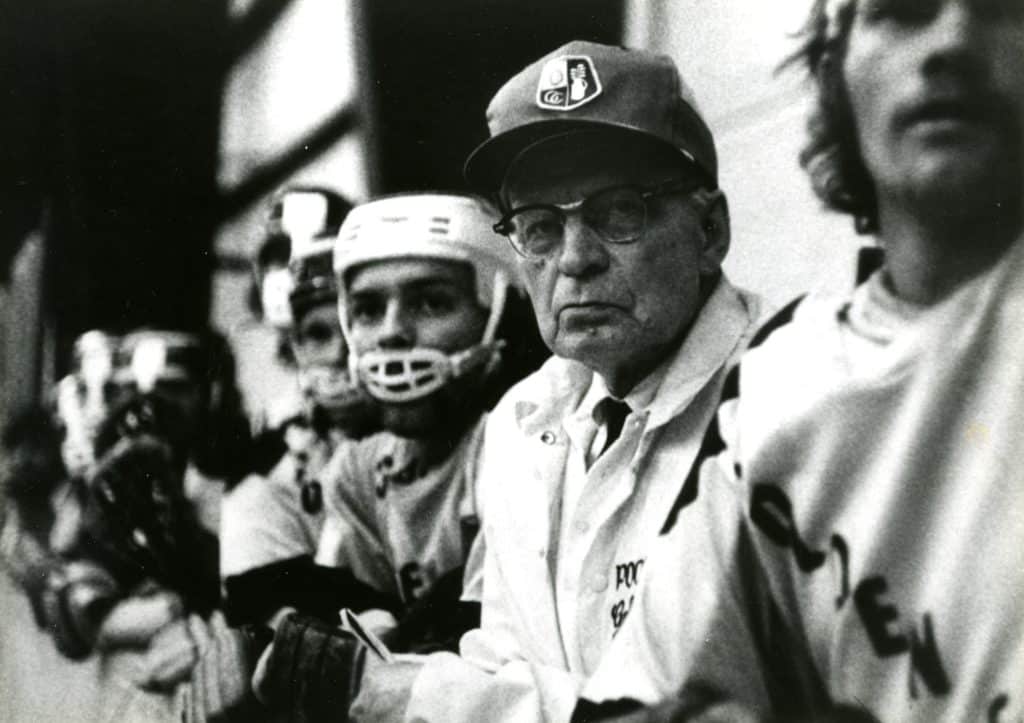
They knew the words “box” and “lacrosse.” They’d just never heard them together.
Lacrosse was a genteel pastime played on a field, a slice of high society on par with finger sandwiches and not knowing your butler’s first name. It was, well, ladylike.
Reflecting on her hall of fame lacrosse career, Port Coquitlam’s Michelle Bowyer smiled as she talked about the people she’d played with and the titles she won. She seemed happiest, however, when recalling an early trip to Stanford University.
Local news that matters to you
No one covers the Tri-Cities like we do. But we need your help to keep our community journalism sustainable.
“The women down there had never seen box lacrosse,” she explained.
As a bit of a cultural exchange, Bowyer and her teammates got in the Stanford University gym for a demonstration.
The checks were hard. Bodies flew. The ball zipped around the court with the velocity of a schoolyard rumour.
Bowyer grinned when she described the sight of the crowd and: “the look of horror on their faces.”
That was box lacrosse.
This Saturday, PoCo Heritage Museum and Archives is set to unveil their exhibit on the history of lacrosse in Port Coquitlam.
“If you have any interest in lacrosse there will be something for you in this exhibit,” promised museum manager and curator Alexander Code.
Name of the game
The word lacrosse goes back to 1636 when Jesuit missionaries watched Iroquoian-speaking athletes using stick that looked like a bishop’s staff, or crozier.
Back then, teams could include 1,000 competitors and the field could be several kilometres.
“Games were social events, a way to give thanks to the creator, and also a method to resolve disputes,” according to the exhibit.
While there many theories about the true origins of lacrosse, the question has “little significance,” according to the book Akwasasne’s Story of Our Indian National Game.
“We do not wonder who invented Lacrosse, or when and where; our ancestors have been playing the game for centuries — for the Creator,” according to the book published by the North American Indian Travelling College.
Before there was a nation, there was a national game
Lacrosse was declared Canada’s national game in 1859, pre-dating confederation by eight years.
“I think early Canada was sort of trying to find its identity and of course sport plays a huge role in a lot of people’s national identity,” Code said.
It was a game that exercised “manly virtues,” according to Montreal dentist William George Beers, who was so enamoured with the game he wrote a definitive lacrosse guide in 1869.
The game would improve men and ensure “genuine pluck” never went out of fashion in Canada, Beers wrote.
Amid the nationalist push to promote lacrosse, there were “what we might call Victorian lacrosse ‘hype songs,’” Code explained.
Slightly less catchy than Stompin’ Tom Connors tribute to the good old hockey game, James Hughes wrote the lyrics to “Lacrosse, Our National Game.”
The song depends heavily on rhyming “boys” with “boys.”
“And if muscle and mettle be wanted to battle, for Canada’s national fame, boys;
No sons will be truer, than we will be to her, who practise our national game, boys.”
That rhyme scheme continues in the chorus.
“Oh, ‘tis a wonderful game, boys
‘Tis a life-giving joy giving game, boys
Then let us unite in singing tonight,
Success to our national game, boys.”
But while lacrosse games drew huge crowds in the late 1800s, it wasn’t until the 1930s that the game took root in Port Coquitlam.
Box office
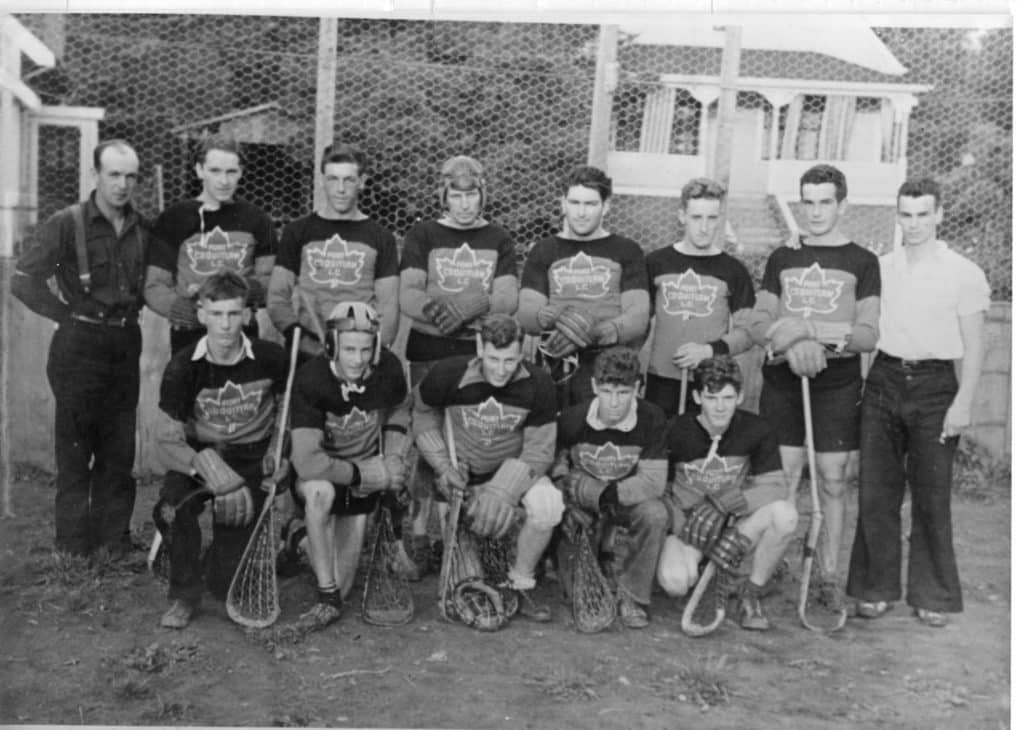
Two years after teenaged Douglas Rowland organized Port Coquitlam’s first boys lacrosse team, the city between rivers and rails opened its first lacrosse box in 1936.
Today, the volunteer-built Rowland lacrosse box is considered a heritage site, in part because of the many outstanding athletes who spent their formative years honing their craft in that box.
“There’s something in the water here,” Code said, noting the lineage of outstanding Port Coquitlam lacrosse players.
With team names like the PoCo Piledrivers and Esco Midgets, Port Coquitlam produced several outstanding players but no one with as many skills and nicknames as Mike Gates.
There were nicknames that played on his name, like Mike ‘the Pearly Gates’ Gates, but the best nicknames referred to his unique physicality.
With legs longer than one of grandpa’s stories and the ability to take more checks than a payday loan shop, Gates was dubbed “Bambi,” “spaghetti man,” and “The Equilibrium Kid.”
His hall of fame posting describes him as appearing: “as unsteady on his feet as a newborn deer on ice.”
“He doesn’t look like the stereotypical athlete. He’s kind of gangly and long but he made it work,” Code explained.
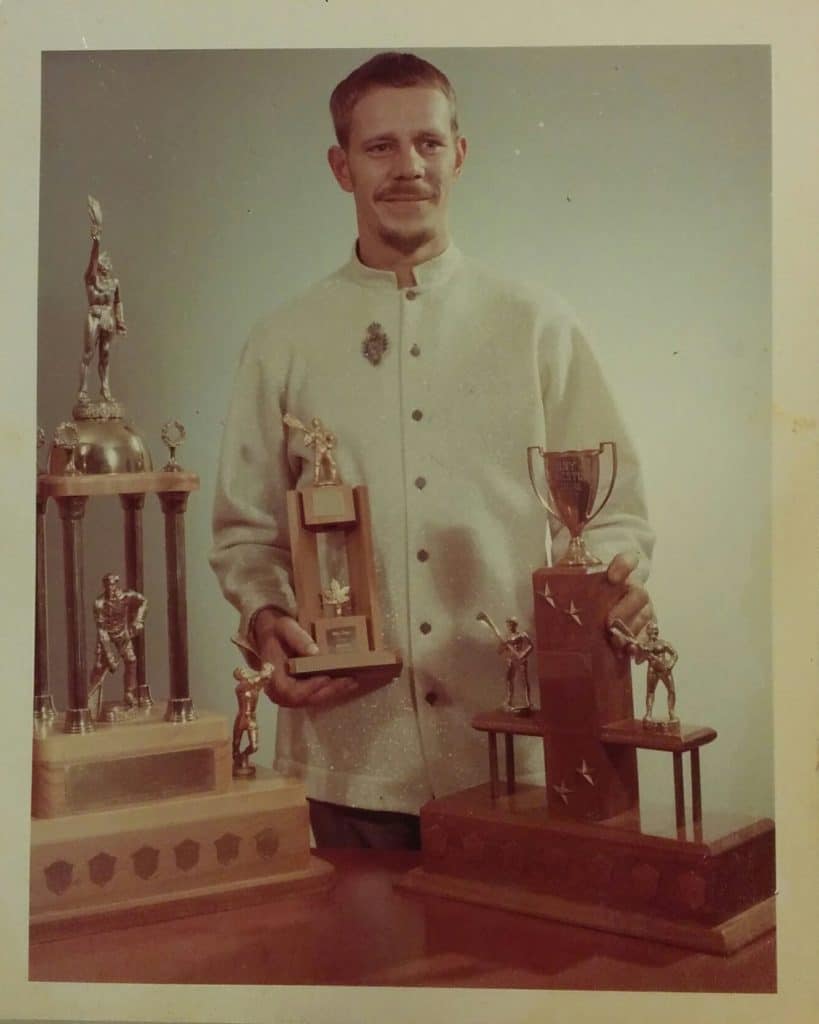
Playing for the Coquitlam Adanacs, Gates was a perennial all-star, three-time scoring champion and two-time league MVP.
Perhaps most remarkably, Gates notched points in 93 straight games from May 1967 to July 1969.
Gates left the box as a player in 1972 after fracturing his leg in a soccer game.
Breaking into the box

Around the time Gates’ career was winding down, Michelle Bowyer was leading a new generation of female athletes into lacrosse.
In 1972, a teenaged Bowyer was part of a group that formed the first girls box lacrosse team in the city.
“I loved the intensity and physicality of the box game and recall feeling like a warrior going into battle every time I suited up to play,” Bowyer said in her Hall of Fame interview.
Between hours at Rowland lacrosse box and practises in Burnaby that ended with a run up a steep trail toward a ravine behind the box, the players paid for team expenses by washing cars and selling raffle tickets.
“The women’s game didn’t have the support of the men’s game at all,” Code explained. “They blazed the trail for the girls today.”
In the early 1980s, just about 10 years after the first time she picked up a stick, Bowyer was playing in the world field hockey championship in Nottingham, England.
The team was “scared to death,” Bowyer recalled.
“All those girls who formed that team had never played field lacrosse before,” Code explained, noting that box lacrosse tends to be a lot more rough and tumble than field hockey.
Prior to the game, the coach set a cork on fire and game the players eye black, Code said.
“They’re hocking loogies on the field and getting called for spitting on the pitch,” Code said, adding that newspapers described the team as: “hooligans from Canada.”
They executed behind-the-back passes and shots that were harder than an organic chemistry class.
The team finished up in third place. There were only medals for first and second place.
But while they didn’t win, they changed the game.
“We brought the box lacrosse game to the field,” Bowyer said.
For more on Saturday’s exhibition, click here.

Author