How can TransLink fill a $600-million funding gap?
The West Coast Express could be in jeopardy
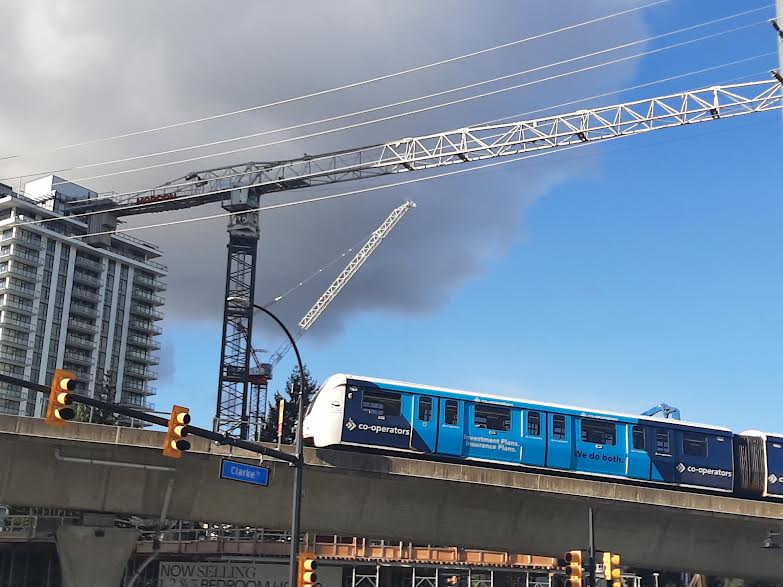
This year, TransLink issued a dire warning: without a new funding model to fill a $600 million yearly deficit, it might have to dramatically cut its services starting in 2026 — including the potential elimination of the West Coast Express.
The TransLink Mayors’ Council, elected officials that oversee transit throughout Metro Vancouver, released a report in July outlining what those cuts could look like. Alongside possibly losing the West Coast Express service, they projected a 45 to 50 percent reduction of transit, eliminating entire routes, lowering frequency and cutting back on the SkyTrain, SeaBus and HandyDART services.
“The transit funding model is broken, and we are facing drastic cuts to service that will devastate our region if new funding is not identified,” said Port Coquitlam Mayor Brad West at the Union of BC Municipalities annual convention this September.
Local news that matters to you
No one covers the Tri-Cities like we do. But we need your help to keep our community journalism sustainable.
What happens if the funding gap isn’t filled?
“That is the six hundred million dollar question,” said Denis Agar, the executive director of Movement YVR, an organization that lobbies for more transit in Metro Vancouver. “I just think that the repercussions of not filling that budget hole are going to be so devastating to the region. And so that’s why I think we’re going to find a solution.”
Around 175,000 jobs would no longer be accessible by transit and approximately 500,000 residents would no longer be within walking distance of bus service or a SkyTrain station, according to the report.
There would also be a drastic reduction to transit service in Langley, White Rock, South Delta, Port Coquitlam, Maple Ridge, Pitt Meadows and much of the North Shore.
This would turn the congestion into “overdrive,” Agar said.
Since the West Coast Express is solely a commuter service, its ridership is “artificially limited”. It runs between downtown Vancouver and Mission City on weekdays, traveling westward in the morning and eastward in the afternoon and evenings. It makes stops at Moody Centre, Coquitlam Central and Port Coquitlam stations.
Agar said residents in the Tri-Cities still have the SkyTrain, and that Port Coquitlam residents would have a short bus to the station. But he said he’s worried folks on the other side of the Pitt River would face delays.
Both the Port Coquitlam and Coquitlam councils could make transit faster by adding more bus lanes — whether or not TransLink closes the West Coast Express, Agar added.
“It would just take a bit of courage in order to take some lanes away from car traffic.”
How did it get to this point?
“It feels like death by 1,000 cuts,” said Agar.
Before COVID, TransLink was doing fine financially, he said. But once the pandemic hit, ridershop dropped and the transit service was delayed in increasing fares to catch up with inflation.
And as people shift to electric vehicles, gas tax revenue has decreased. In 2023, Translink collected $34 million less fuel tax revenue than in 2022.
“There’s all these little pieces,” Agar said. “TransLink’s funding structure is so complex, and a lot of the different pieces of it have become problematic.”
Past attempts at increasing revenue for the agency have also failed. In 2015, Elections BC held a referendum, asking voters if they approved of a Metro Vancouver congestion tax, dedicated to the Mayors’ Council transportation and transit plan. It failed with just over 62 per cent voting no.
“And so there were a lot of opportunities for that kind of funding that didn’t materialize,” said Agar.
Where do we go from here?
Agar said there are two solutions: a level of government could decide to provide operating funding for TransLink, or the provincial government could give TransLink more tools to raise funds.
In an interview with the Canadian Urban Transit Association, Kevin Quinn, the CEO of TransLink, said TransLink has a “broken funding model” amidst a growing population. He’s asking for an acceleration of the federal government’s Canada Public Transit Fund, which is currently set to roll out in 2026 and 2027.
“If we want to encourage transit over personal-vehicle use, we must find a funding solution that allows transit services to grow over time,” Quinn said.
In the ramp-up to the B.C. election, the Mayors’ Council asked political parties to make transit an election issue. All three major parties promised to expand transit. The NDP promised to extend the West Coast Express as far east as Chilliwack.
Agar said the province could also allow TransLink more ways that it can raise money on its own — things like letting it have a sales tax, which he said is common in the U.S.
“I think ultimately, it’s going to be a combination,” he said.
Werner Antweiler, a UBC professor at the Sauder School of Business, wrote in a blog post that a vehicle-kilometres-travelled tax is needed to replace the fuel tax. In other words, the more kilometres you drive, the more tax you pay.
In an email to the Dispatch, TransLink wrote: “TransLink and the Mayors’ Council continue to work towards finding a solution to our funding challenges with senior government partners that would prevent any potential transit service cuts.”