Hershey Chocolate granted appeal against Port Coquitlam man’s class-action suit over child slavery
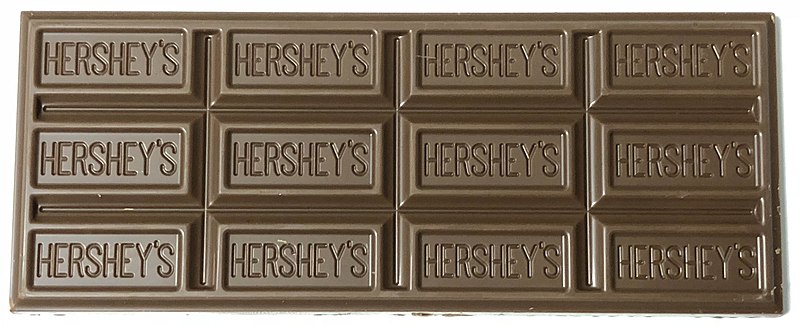
The U.S.-based Hershey Chocolate has been granted an appeal against a Port Coquitlam man’s proposed class-action lawsuit over “negligent misrepresentations” pertaining to alleged use of child-slavery.
On June 28, the B.C. Court of Appeal found that a B.C. Supreme Court judge erred in their 2022 ruling that the court had jurisdiction to hear a case against the foreign company.
“The respondent has not established an arguable case that the facts on which the proceeding against the appellant is based concern a tort committed in British Columbia,” wrote Justice Karen Horsman.
Local news that matters to you
No one covers the Tri-Cities like we do. But we need your help to keep our community journalism sustainable.
The proposed class against the lawsuit is being led by Scott Leaf of Port Coquitlam, and Michael Pucci of Prince Rupert.
Their civil suit against Hershey Chocolate and its Canadian subsidiary, Hershey’s Canada, claim the men were misled by the companies’ marketing and product packaging into believing its products were free of the use of forced child labour.
Their affidavits state the company made public representations that they opposed forced child labour in its supply chain, when in fact, both are prevalent in its sourcing of cocoa in African countries.
Included in their evidence are Hershey’s 2014 corporate social responsibility reports, which reference the company’s “large scale efforts” to root out child slavery, and further affirmations in their supplier code of conduct which prohibit forced labour practices.
The men state the company’s willingness to use of child labour in its supply chain is relevant to the Canadian consumer’s willingness to purchase their products.
Their suit argues the company’s alleged negligent misrepresentation is a breach of Canada’s Competition Act.
“These companies facilitate and profit from child labour and slavery. The respondent says he would not have purchased Hershey products if their marketing and advertisements had disclosed the truth,” said Leaf’s affidavit.
The company applied to dismiss or stay the case against it in 2022, arguing that B.C. courts do not have the territorial competence to hear the case.
Its lawyers argued the parent company does not conduct business, nor purchase advertising space in B.C., and that all decisions relating to Canadian advertising are made independently by Hershey’s Canada.
The parent company is based in Hershey, Pennsylvania.
Hershey Canada “is the only company that manufactures, sells and distributes Hershey chocolate confectionary products within Canada,” the company said.
The company’s 2022 application was dismissed, with the judge ruling a “real and substantial connection” existed between the tort action and B.C.
The judge noted that “negligent misrepresentation occurs in the jurisdiction where that representation is received or relied upon.”
Hershey’s also failed to provide evidence that its advertisements and products manufactured outside of Canada are not available for distribution or sale within the country, according to the judge.
The judge said there was a “good arguable case” that both parent and subsidiary companies operate in joint concert with one another regarding distribution, marketing and manufacture.
Appeal granted
Horsman, however, granted an appeal of that decision on June 28, 2023, finding that none of the affidavits related to specific allegations within the province.
The company’s new appeal was based on two errors it alleges the initial judge made: the absence of any jurisdictional evidence related to operations in B.C.; and a failure to correctly determine whether the company was carrying out businesses within B.C.
Hershey’s lawyers argued that once the judge determined the suit was not claiming any misrepresentation was committed within B.C., she should have determined a connecting factor had not been established.
Horseman found there was merit to this argument, stating that it was “difficult to see how such evidence could establish a real and substantial connection between British Columbia and the facts on which the proceeding against that person is based.”
“The affidavits do not contain a sufficient pleading of material facts, even assuming a claim of negligent misrepresentation could be advanced in this manner,” she said. “The affidavits do not identify: who made the alleged representations, the content of the representations, when they were made, and through what means.”
Furthermore, Horseman said the company’s failure to disclose information regarding child labour practices does not amount to misrepresentation.
Horseman found that the absence of material facts presented in the civil suit means there is no arguable case regarding wrongdoing in B.C.
“Necessarily, there is a weak to non-existent connection between the defendant’s business activities and this claim. No logical connection can be made between the appellant’s business activities and any representations made to the respondent.”
The appeal was granted, with the former judge’s determination on whether the court had territorial competence being aside.
None of the allegations against Hershey Chocolate or Hershey’s Canada have been proven in court.
Author