Staving off major flood requires funding from province, coalition argues
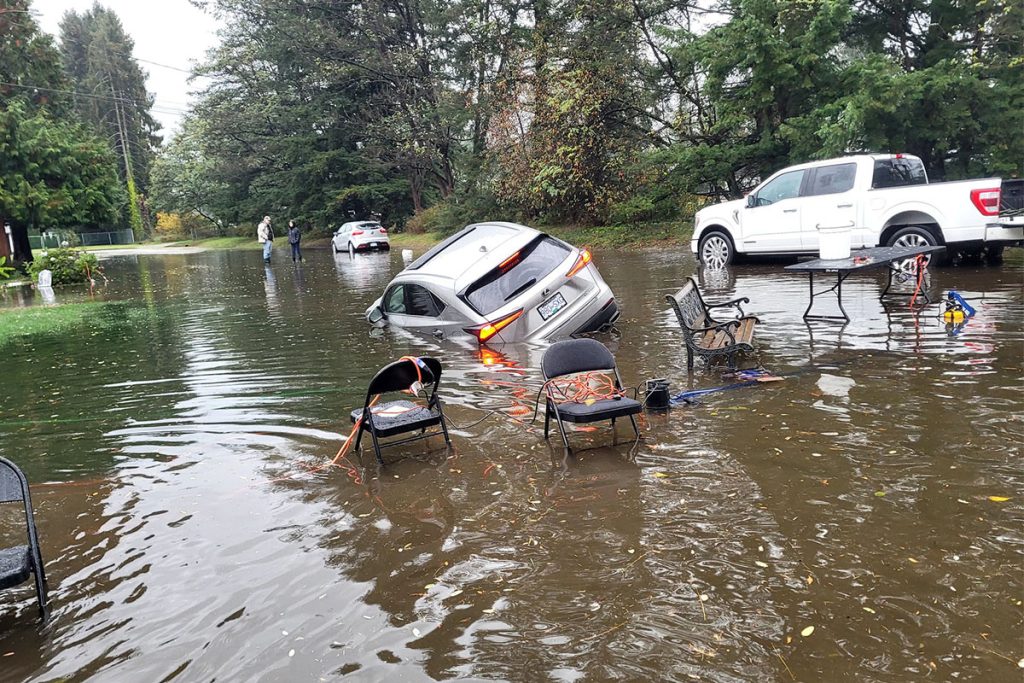
Amid the growing risks of a devastating flood, Coquitlam should join the growing chorus across the region advocating for senior levels of government to provide long-term flood management funding.
That was the message from Lower Fraser Floodplains Coalition representative Lina Azeez during a presentation to Coquitlam council Monday.
“Flood resilience is not discretionary spending. It is prudent financial management,” she said. “Every time we kick the can down the road we are gambling with the lives, homes, food security, infrastructure, and ecosystems of the Lower Mainland.”
Local news that matters to you
No one covers the Tri-Cities like we do. But we need your help to keep our community journalism sustainable.
A major flood in the Lower Fraser could cost billions in economic value by disrupting food supply chains and hampering trade routes, according to a report by the Lower Fraser Floodplains Coalition.
As atmospheric rivers become more frequent and more intense while infrastructure deteriorates, the chances of a major flood are increasing, the report stated.
Across the region, a lack of support from federal and provincial governments has resulted in piecemeal approaches to flood resilience.
“It doesn’t have to be this way,” Azeez emphasized.
Coun. Matt Djonlic seemed to agree, discussing the need have one collective voice speak for the region.
“Water does not follow any municipal border,” he said.
That single voice is crucial, particularly given the cost of the work and the tendency by municipalities to keep tax rates low, noted Coun. Dennis Marsden.
“We cannot look to individual cities to make flood management decisions,” he said.
Marsden suggested city staff write a letter in support of the initiative.
While he acknowledged the issue has been “frustrating for years,” Coun. Brent Asmundson emphasized that any substantial improvements will take time.
“We can dike certain areas and certain areas we may have to allow a flood because water is going to have to go somewhere,” he said.
Coquitlam is currently collaborating with Kwikwetlem First Nation to build a dike along the lower Coquitlam River “toward the mouth of the Fraser,” noted the city’s general manager of engineering and public works Jamie Boan.
The project involves “significant funding” from federal and provincial governments, Boan added.
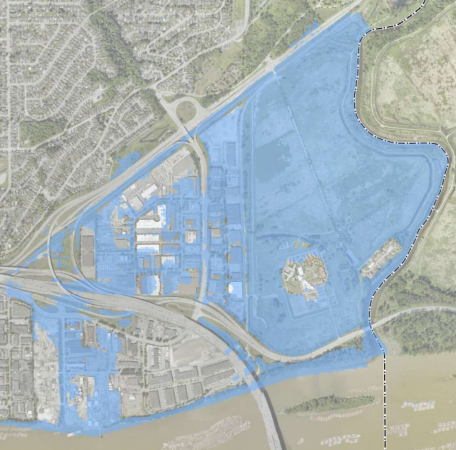
The confluence of the Fraser and Coquitlam rivers may be the most vulnerable spot in Coquitlam, flooding 21 times since 1909, according to the Kwikwetlem First Nation.
A four-year construction project intended to mitigate that risk is tentatively slated to begin in 2027.
A major flood would cost an estimated $370 million solely based on damage to Mayfair Industrial Park, according to a 2018 estimate.
Some of the dikes through Ẳéxətəm (tla-hut-um) Regional Park, formerly Colony Farm, date back to the 1920s, according to a city staff report, which noted: “substandard dike elevations.”
Author