MP’s request for more consultation on flight paths was rejected
The consultation here is terrible. And such small portions.
Port Moody-Coquitlam MP Bonita Zarrillo criticized NAV Canada recently for what she called “inadequate” consultation over a change in flight paths that would put more planes over portions of the Tri-Cities.
Speaking in parliament on Friday, Zarrillo discussed the aviation industry’s “voluntary protocol” for community consultation.
Local news that matters to you
No one covers the Tri-Cities like we do. But we need your help to keep our community journalism sustainable.
“I am here to tell the government that the voluntary protocol did not meet the standards of consultation in my community,” Zarrillo said.
NAV Canada held a poorly publicized community consultation event in Coquitlam earlier this year, according to Zarrillo.
“Even the City of Coquitlam did not know about the consultation event,” Zarrillo said, adding that neighbouring mayors “knew nothing” about the event.
That event was also not set up to be easily accessible for people with disabilities, Zarrillo continued.
“There was not enough staff to answer important questions from residents,” she added.
Zarrillo said she wrote a letter to NAV Canada outlining her concerns and asking for a longer consultation process.
“They did not agree to this,” Zarrillo said.
The new paths
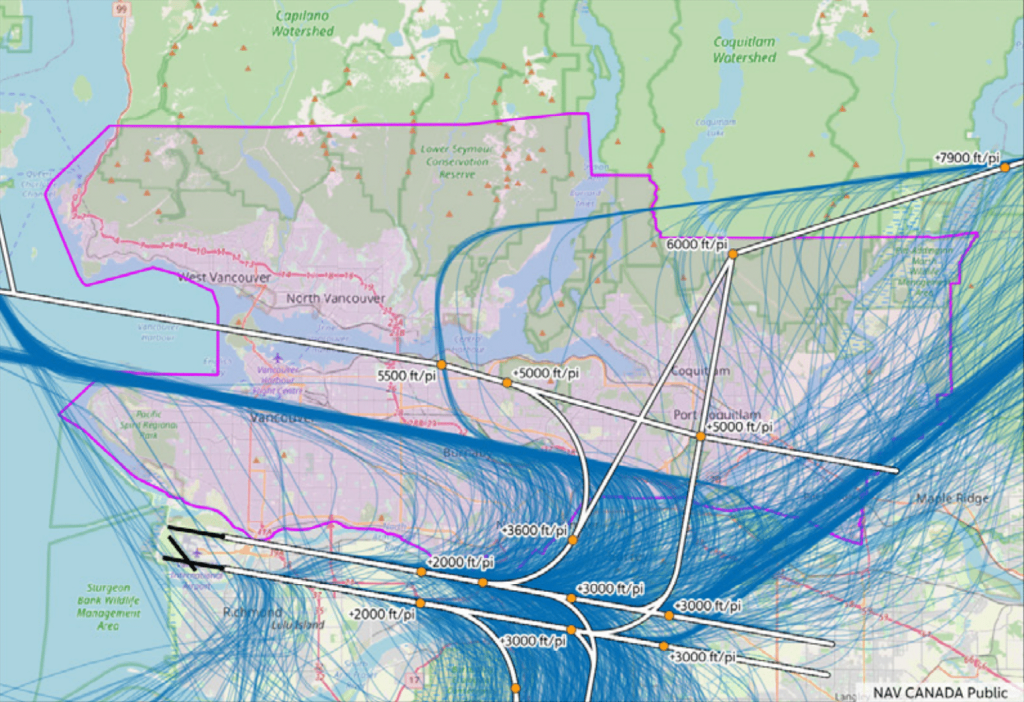
The change to flight paths is meant to make air travel more efficient by having pilots fly shorter distances and having airplanes consume less fuel. Consultation on the changes ended last February. NAV Canada is working alongside YVR on reviewing public feedback, according to a release from the organization.
The initiative, dubbed the Vancouver Airspace Modernization Project, is set to impact areas around Metro Vancouver, with “some places more affected than others,” according to the NAV Canda report.
“Despite incorporating a number of noise mitigation measures into the proposal, it is important to note that entirely avoiding overflight of residentially populated areas is simply not possible and that some residents may observe aircraft operating more regularly in certain areas than they had before,” the report stated.
There haven’t been major changes to Vancouver airspace operations since 2007, according to NAV Canada.
Portions of Coquitlam and Port Coquitlam are already along a flight path but the changes would some flights would descend to 5,000 feet over a large portion of the southern Tri-Cities before turning to land in Richmond.
The noise modelling for Coquitlam was measured with the sound emissions of a Boeing 737-800, which produce approximately 55 decibels at 5,000 feet, compared to ambient community noise ranging from 40 to 55 decibels.
The Boeing 737-800 is a larger, older model, and produces an “above average” amount of noise, said Jonathan Bagg, a communications manager with NAV Canada when discussing the matter earlier this year.
Bagg qualified, however, that NAV Canada does not control what aircraft the various airlines fly, and some planes would be louder.
The future of noise
With economic factors including one-day delivery leading to more air traffic, Canada needs to keep an ear on noise pollution, according to Zarrillo.
Designed to “increase transparency and accountability” in air travel, Bill C-52 needs to do more to “reduce exposure to aircraft noise in residential areas,” Zarrillo said.
“The government needs to expand the representation on their noise management committee to include a local public health official, as noise pollution can affect and impact population health,” she said.
Health effects can include heart problems, hypertension, as well as hearing and cognitive impairments, she added.
Author