18 people have died in Tri-Cities in 2023; half occurred in Coquitlam: BC Coroners report
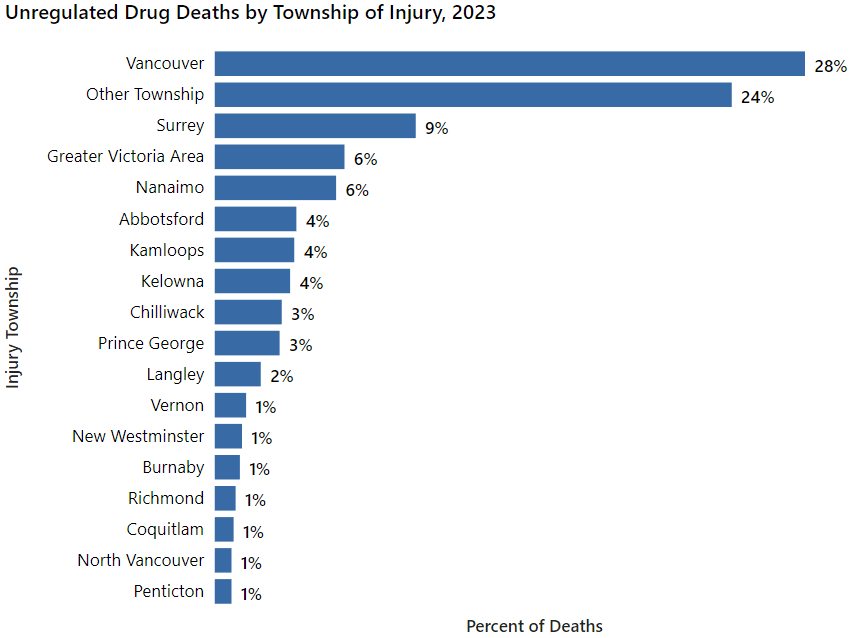
Eighteen people have died in the Tri-Cities this year as B.C.’s toxic drug crisis continues to worsen. Half of those deaths occurred in Coquitlam.
The BC Coroners Service released its quarterly report Monday, showing 1,018 deaths across the province so far in 2023.
Among 10 to 59 year olds, unregulated drug toxicity is now the leading cause of death, outnumbering homicide, suicide, accidents and natural disease combined.
Local news that matters to you
No one covers the Tri-Cities like we do. But we need your help to keep our community journalism sustainable.
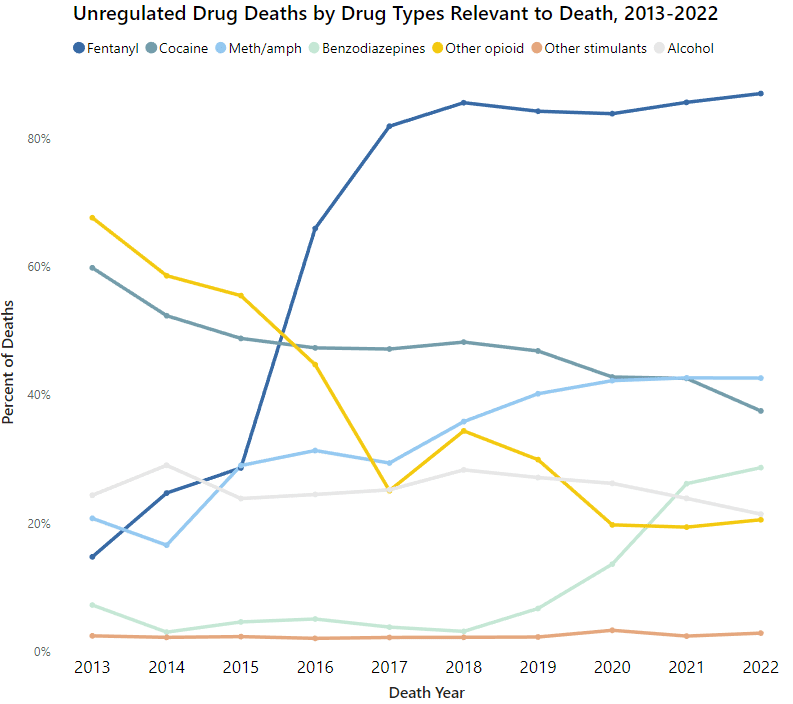
B.C. Chief Coroner Lisa Lapointe reiterated that illicit fentanyl continues to drive the public health crisis.
“Expedited testing in 2023 is positive for fentanyl in almost nine out of every 10 results, nearly double the positivity rate of methamphetamine and cocaine, the next most commonly identified substances,” Lapointe said. “As long as people are reliant on the profit-driven unregulated market to access the substances they need, their lives are at risk.”
The updated statistics show that 2.9 percent more people have died in the first five months of 2023 than 2022, the latter being the deadliest year on record.
In April alone, 218 people across the province died – close to 20 percent higher than 2022’s April death toll.
However, deaths in May have dropped 19 percent from April, equating to approximately 5.7 lives lost a day.
At least 12,264 British Columbians have died from unregulated drugs since the public health emergency was declared in April, 2016.
Three people died in Coquitlam in April. There were no additional deaths recorded in the Tri-Cities in May, according to the latest statistics.
Deaths do not appear to be increasing in the Fraser North health service delivery area (HSDA), which includes the Tri-Cities, New Westminster, Burnaby, and Maple Ridge/Pitt Meadows.
A total of 67 people have died in Fraser North so far in 2023, which is a 23 percent decrease from the 88 deaths recorded in the same time period in 2022.
Fraser North has the least deaths recorded among Fraser Health’s HSDAs – 120 people have died in Fraser South and 86 have died in Fraser East.
A total of 282 people have died in Vancouver so far in 2023.
The BC Coroners Service also released a report on youth deaths alongside its quarterly report.
It shows that 142 youths (under the age of 19) died between the start of 2017 and the end of 2022.
Unregulated drug toxicity was the leading unnatural cause of death among youth.
Out of 10,453 unregulated drug toxicity deaths in that period, 1.4 percent were youths.
Males made up 54 percent of deaths among youth, and 62 percent of the youth deaths occurred in people between 17 and 18-years old.
More than half of the deaths occurred while the youth was using drugs alone, and 70 percent occurred in private residences.
Around 73 percent of the deceased youth had received services from the Ministry of Children and Family Development; 67 percent had, or were suspected of having, some form of mental health disorder.
“We know that young people are not immune from the extreme dangers of the unregulated drug supply,” Lapointe said. “In responding to this health crisis, it is critically important that we heed the recommendations of experts and ensure a robust system of care that includes increased access to timely, evidence-based treatment and recovery services, and to a safer substance supply as an alternative to the toxic black market. A public-health crisis of this magnitude demands a comprehensive response that meets people where they are and provides the services they need to survive.”
Author