Tree canopy cover in Coquitlam not likely to get back to 40% by 2050, report finds
When buildings rise, trees fall.
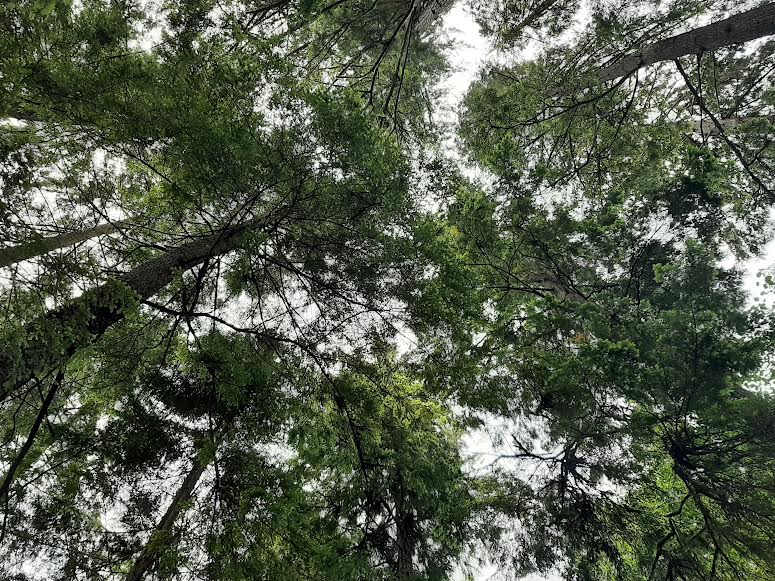
Coquitlam should aspire to have 40 percent of the city shaded by tree canopy by 2050, according to Metro Vancouver. That goal is “unrealistic” given the city’s rate of development, according to a city staff report.
While council affirmed the importance of trees during a discussion Monday, several councillors agreed with staff’s assessment of the 40 percent canopy as “arbitrary.”
Local news that matters to you
No one covers the Tri-Cities like we do. But we need your help to keep our community journalism sustainable.
“We’re not sure where or how Metro Vancouver got that number,” Coun. Robert Mazzarolo said.
According to city staff, the organization American Forests initially established 40 percent tree canopy as a goal but now contends coverage can be adjusted based on climate and region.
Coquitlam has 33 percent canopy within the urban containment boundary and 52 percent city-wide.
Coquitlam had a 40 percent coverage in 2014, according to Metro Vancouver. However, Coquitlam is in a transition period, said Coun. Craig Hodge.
“Because we have one of the more robust tree canopies and a growing community, we’re also losing tree canopy at one of the highest rates,” he said.
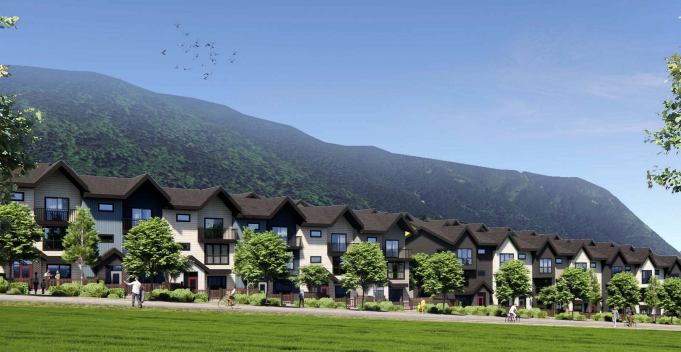
To a large extent, the reduction in tree canopy has been caused by new density on Burke Mountain, “just because there’s significant housing that’s been built up there,” said Coun. Dennis Marsden.
Given provincial housing legislation, there’s a challenge to find a spot to plant those trees, Hodge said.
Certain townhouse developments might be able to be reconfigured to save trees, suggested Coun. Robert Mazzarolo. A harder job is finding out a way to provide trees in high-density areas.
“We are going to have to squeeze every centimetre we can out of boulevards . . . it’s going to have to be a priority for us,” Mazzarolo said.
Allowing developers to pay the city instead of planting trees alongside their project is likely a mistake, according to Marsden.
“Cash in lieu: not a fan unless you have a fully articulated program that you’re going to present to me,” Marsden said. “That’s the easy thing for the developer: ‘I’ll just write you a cheque.’ What are we going to do with it?”
The arrangement needs to increase tree planting rather than allowing a developer to buy their way out of a requirement, Hodge said.
“I’d rather have cash than no trees,” he added.
While some of the land may be under the auspices of Ministry of Transportation and Infrastructure, Mayor Richard Stewart suggested planting some trees on gravel patches adjacent to major transit routes like Lougheed Highway near United Boulevard.
“It really demonstrates that we are serious about trying to make up for the emissions from motor vehicles.”
While the city is doing well in several areas including the protection of parks and trails, the city has a lack of species diversity in street trees, according to the staff report.
That lack of diversity makes Coquitlam’s street trees more susceptible to pests and disease.
Couns. Mazzarolo and Trish Mandewo each suggested re-examining the city’s relationship with tree growers and possibly offering guaranteed sales in exchange for a more diverse range of trees.
A more detailed strategy is set to be submitted for council’s approval in early 2026.
Author