Coquitlam grapples with rising cost of extreme weather

Ice, snow, wind and rain are all taking a piece of Coquitlam’s extreme weather budget.
While the winter of 2024 was relatively mild, October’s atmospheric river and November’s windstorm both resulted in substantial costs to the city.
“Unfortunately . . . this is going to be an annual occurrence,” Coun. Matt Djonlic said Monday.
Local news that matters to you
No one covers the Tri-Cities like we do. But we need your help to keep our community journalism sustainable.
In addition to heavy snow and flooding, Djonlic also underscored the need to boost the city’s resilience to wildfires.
The city has exceeded its extreme weather operating budget for four of the last five years, including a more than $1 million overrun in 2022, according to a Coquitlam staff report.
“At one point, do we actually move this into the base budget?” Coun. Trish Mandewo asked Monday.
While an operating budget is designed to handle typical expenses, the city increasingly needs to balance that approach with the need to prepare for extreme weather, explained the city’s general manager of engineering and public works Jaime Boan.
“If we get a really bad winter, we have money to draw on without affecting the budget negatively,” he said.
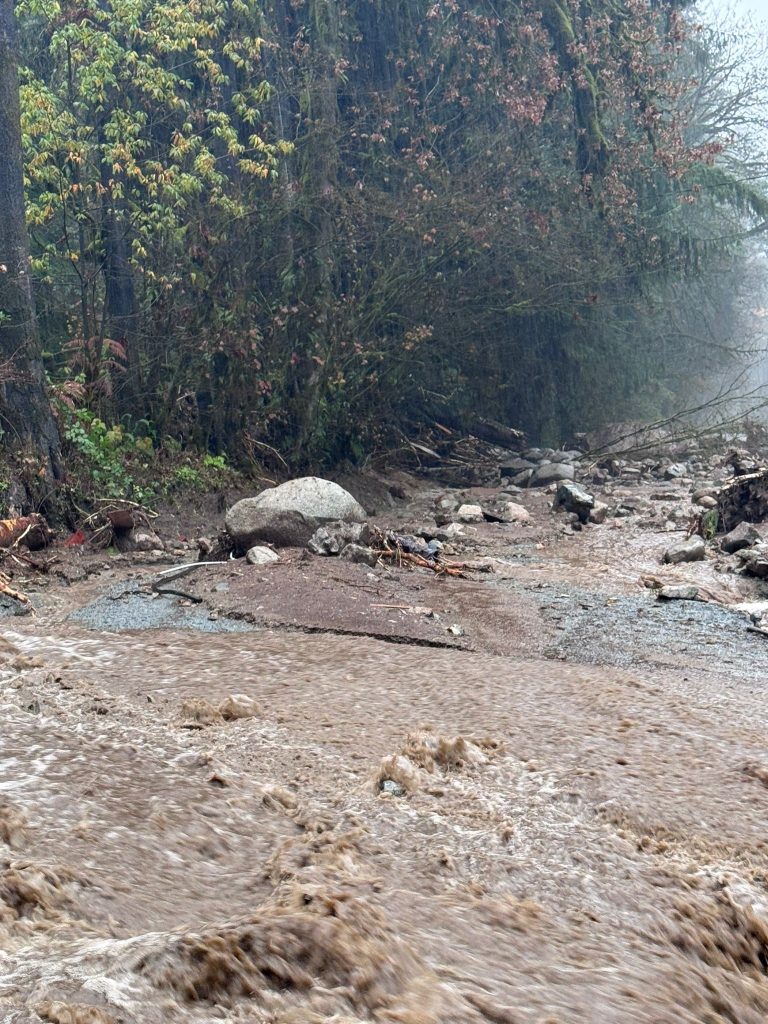
The October atmospheric river was: “close to a 200 year return event,” according to city staff. The city recorded 300 millimetres of rain accumulating in the northeast section of the city during the three-day storm.
In fielding 300 calls from the public, dealing with multiple washouts, down trees, and a sewer overflow “that cascaded through Cape horn Tot Lot,” the city ultimately spent $549,317 dealing with the atmospheric river.
The province may reimburse Coquitlam for a large portion of that money, according to a staff report.
While the atmospheric river was more intense than anticipated, city staff were able to lessen the impact by taking preventive measures. City crews cleared debris from culverts, ditches and catch basins, checked pump stations, fueled generators, and sent four sweeper trucks to remove debris from roads before the rainfall, the report stated.
Two Tri-Cities residents died during the storm.
Aspenwood Elementary teacher Sonia McIntyre was killed after a Quarry Road mudslide overwhelmed her home. She was 57.
Robert Belding, 59, likely died after slipping into the Coquitlam River while trying to save a dog.
Speaking to the Dispatch in 2024, Jonathan Helmus – then serving as general manager of engineering – noted the issues posed by the city’s 300 kilometres of creeks and infrastructure that was sometimes overwhelmed.
Municipal pipe systems can typically only handle a one-in-five-year storm. He said Coquitlam’s residential pipe network is designed to handle a once-in-10-year storm, and its commercial and high-density areas are designed for a one-in-25-year storm. The major drainage system for creeks and culverts, and its diversion sewers which take pressure off other systems, are both capable of weathering a one-in-100-year storm.
More than 100 Tri-Cities property owners reported flooding damage.
Coquitlam’s 2024 budget for snow and ice extreme weather was $1.509 million. Actual costs were $1.766 million, an overrun of $256,816.
The city spent $1.47 million on its extreme weather response in 2023, in part to deal with the biggest one-day snowfall in 15 years and the coldest snap since 1950.

Author