Port Moody maxes utility rates after losing Burrard Thermal tax battle with BC Hydro
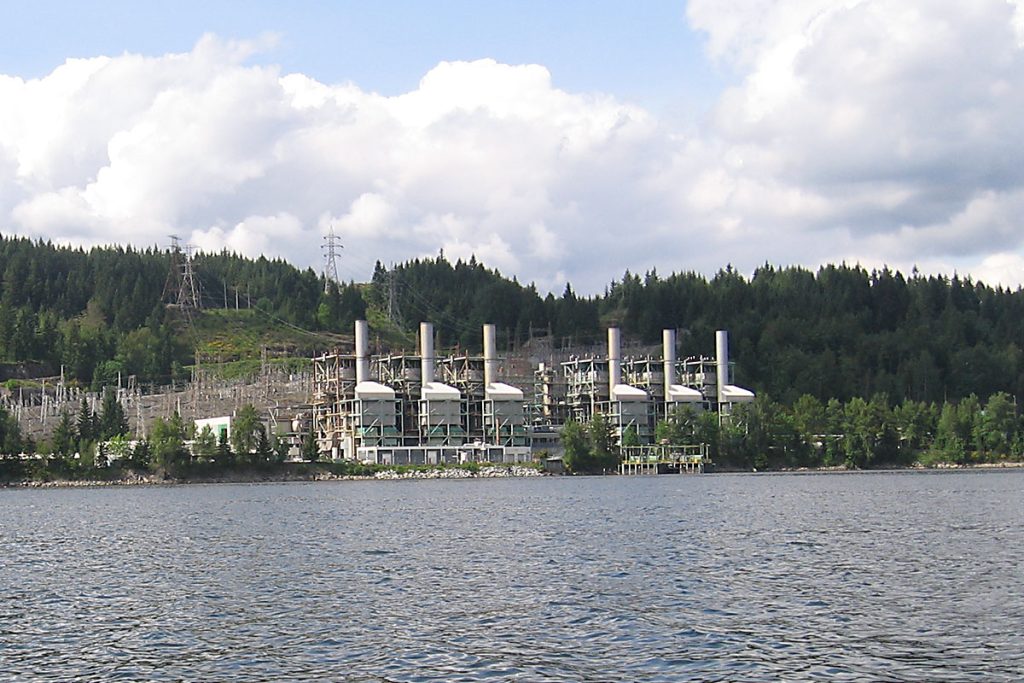
Port Moody city council has moved to shore up its finances after losing a long-running tax battle with BC Hydro over the decommissioned Burrard Thermal Plant site.
On Oct. 28, council voted unanimously to raise the city’s utility tax rate to the provincial cap, a measure meant to recover some of the revenue lost after the province’s power authority succeeded in reclassifying much of its former plant site to a lower-taxed category.
Several councillors expressed frustration over the increasingly diminishing tax roll from the property, and the slow pace of the province to repurpose the site.
Local news that matters to you
No one covers the Tri-Cities like we do. But we need your help to keep our community journalism sustainable.
“We have prime industrial land there – prime. That’s a deep sea port, accessible site, which is on a rail line and has all the services it needs,” said Coun. Callan Morrison. “The fact that the province is not prioritizing being able to utilize that site is a complete failure.”
The tax change comes after a Property Assessment Appeal Board (PAAB) ruling in May stated that 109 acres of the 184-acre Burrard Thermal site were “superfluous and unused” to BC Hydro’s operations and should be assessed as business property rather than utility.
Coun. Kyla Knowles, who chairs the finance committee and introduced the motion, said the city found out its appeal of the decision was unsuccessful in September, meaning it will have to pay $1.15 million in back taxes to the Crown corporation next year, and expects an ongoing annual tax loss of roughly $383,000.
She said while the city had set aside funds in anticipation of the ruling, the long-term revenue impact will be felt for years, noting BC Hydro has informed them future plans for the site are at least five years away.
“This council has taken the brunt of the impact,” Knowles said. “Given the challenges we have faced with this site . . . we believe it is appropriate and in the best interest of our residential taxpayers to cap out the tax rate for this class going forward to offset the loss.”
The higher rate – $40 per $1,000 of assessed value, a $3.25 increase – will apply to the remaining 75 acres still classified as utility lands. Staff said this will yield an estimated $300,000 annually starting in 2027, as tax collections are assessed a year in arrears.
“We won’t see the benefits of this small change . . . in time for 2026 budget calculations,” Knowles said. “But the next council thankfully will.”
In May 2024, BC Hydro announced it had started plans to start dismantling of the Burrard Thermal Plant, which had sat dormant since it was largely shut down in 2016.
Once one of the largest gas-fired generating facilities in B.C., Burrard’s operations had provided about four percent of Port Moody’s municipal revenue at its height. Its closure triggered a steep drop in BC Hydro’s annual taxes to the city – from roughly $1.6 million to under $400,000.
BC Hydro has stated it plans on repurposing the site, and is working on a decommissioning and remediation plan to better understand the levels of contamination.
Port Moody–Burquitlam MLA Rick Glumac said he was pushing for clean energy uses for the site.
However, Morrison said council was informed by BC Hydro representatives at the Union of BC Municipalities convention in September that those plans are still a long way off.
“We’re talking many, many years. Five years is the minimum, in my opinion,” he said. “This is a problem for our residents.”
Morrison said while there are benefits from having provincial or federal sites in the city – specifically mentioning the hospital, rail lines, and port terminal – the lack of tax revenue can be a detriment.
“We provide these spaces, and in a way, are penalized,” Morrison said. “But if you have a casino . . . you’re welcome to get millions upon millions of dollars in funding for that and property taxes.”
Morrison said the rate adjustment, while modest, is meant to send a clear message to the public that the city is doing what it can to recover from the financial losses.
He added that he wants the province to take the issue seriously and expedite the remediation and decommissioning work so the land can be put back into productive use and help rebuild the city’s tax base.
The city has seen a sharp decline in its industrial tax base in recent decades.
Since 1993, residential property owners have seen their share of the roll rise from 48.4 percent to 67 percent, while taxes from major industries have been halved, falling from 33.7 percent to just 16.8 percent in 2024.
Author