Boating costs may swell at Rocky Point boat launch as Port Moody looks to squeeze more fees from recreational activities
With Port Moody looking to stem the tide of rising taxes, Rocky Point boaters may find themselves facing heftier fees.
City staff is investigating subsidized recreational features in the city, following two new motions approved by council March 21,
“With the proposed tax increase, we should be looking at as many different ways to ensure that the tax dollars are being spent on programs that serve the greatest number of residents,” said Coun. Callan Morrison, who introduced both motions.
Local news that matters to you
No one covers the Tri-Cities like we do. But we need your help to keep our community journalism sustainable.
Through budget deliberations over the past months, council is looking for ways to cut down a proposed tax increase of over 11 percent.
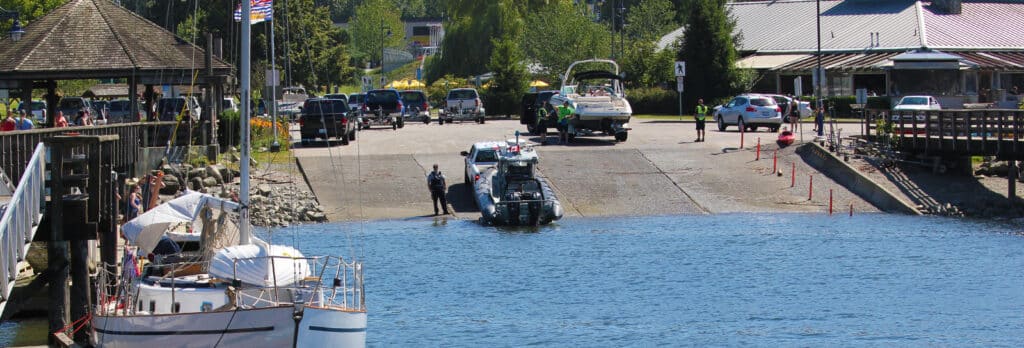
The first motion will look at introducing a 100 percent user-pay model for the operation and maintenance of the Rocky Point boat launch.
The costs associated with dredging the Port Moody Moody Arm – which occurs every five years to remove sediment from around the boat launch’s navigation area – has increased exponentially.
In 2016, the dredging budget was $250,000. Last year, that price tag spiked up to over $750,000 due to the number of toxic contaminants found in the sediment during testing.
The city used to dump the excavated sediment into the ocean, but now it has to be disposed of in a more environmentally friendly manner.
While the boat launch does charge fees for the launch and parking use, they only generate a minimum amount of revenue. In 2021, Port Moody collected approximately $109,000 from boaters.
Morrison said the increasing combined cost of maintenance amounts to nearly a quarter of a percent of the city’s annual tax bill, and it’s their fiscal responsibility to consider adding fees.
“Using our Community Amenity Contribution reserve, in my opinion, is not an acceptable place to be funding this maintenance,” Morrison said, noting it leaves less money for more widely used features like parks, recreation, arts and cultural facilities.
Morrison described the boat launch as a regional service, and many of his fellow councillors agreed.
Coun. Diana Dilworth said moving to a 100 percent user-pay model has become a necessity due to the city’s financial situation
“It’s time has come,” Dilworth said, adding the city may also want to look into more paid parking areas in the future.
Coun. Kyla Knowles said that she thinks it’s time the city looked more closely at what activities it is subsidizing.
She questioned how many people using the boat launch were even local residents, and said rates should be applied if most come from outside the city.
“Personally, I’m not a big fan of subsidizing what I believe are private interests and private hobby costs,” Knowles said. “I’m sure there will be outcry. I would expect no less.”
The second motion passed by council directed staff to report back on the three most heavily subsidized recreational activities, with the number of residents each serves.
Morrison said that the city’s recreation budget continues to increase every year. Council has to examine whether some activities are being too heavily subsidized, and whether tweaks to user fees are in order, he added.
Coun. Haven Lurbiecki, while supporting the motion for the purposes of information gathering, said any decisions need to be made through an equity lens.
“(The motion would) not tell us who exactly are using these services,” Lurbiecki said, adding net benefit to the community cannot be captured through numbers alone. “Unless we can find out the demographics around that, I’d be concerned about making decisions.”
Coun. Samantha Agtarap agreed that any review of user fees would need to take into account equitable access.
She said she hopes the newly formed Inclusion, Diversity, Equity and Accessibility Committee can help inform some of these decisions.
“We still have to make these challenging decisions, while minimizing impact on our most vulnerable citizens,” Agtarap said. “We definitely need to support young families and the children’s programs.”
Additionally, Agtarap expressed concern that just focusing on the top three services would not give council an fulsome picture of what was being subsidized.
In response, staff said they would need to examine all city recreational services, and would come back with a complete picture.
At the suggestion of Coun. Amy Lubik, council added a clause to the motion that directed an equity lens be applied to the report.
Dilworth said she could probably guess which top three services would make the list.
While supportive of the proposal overall, she said they have looked at the services through an equity lens before. Staff confirmed that studies had been conducted in 2012 and 2014.
She said the city already has program relief made discreetly available for families and residents in the community.
“Whether it is a recreation program for toddlers, whether it’s a spin class, whether it is any number of the recreation programs,” Dilworth said. “Our staff recognize where barriers exist, and provide the opportunity for subsidization or alleviation of all costs.”
Furthermore, she said that the city’s non-profit organizations also help vulnerable residents access programs whenever possible.
Dilworth concluded that the study was worth taking another look, noting there was substantial subsidization and fee relaxations during the pandemic, and staff were aware that some residents were taking advantage of this.
Staff said they would consult with recreation and finance department staff to determine what demographic data is possible to retrieve from the city’s programs, but added the report will take significant analysis, and won’t be ready for the 2023 budget.
Author