Inside the bear den
Can Coquitlam reduce human-bear conflicts as the city encroaches on bear territory?
A bright, yellow light flickers to life inside a house and a woman emerges from the door.
It’s 5:58 on a February morning, a few weeks before the wildlife in the surrounding forests wake from their winter slumber.
The rest of the houses in the cul-de-sac are eerily quiet. Light radiates from a streetlamp in the middle of a roundabout, casting a soft orange hue on the evergreen trees that stand behind the homes.
Local news that matters to you
No one covers the Tri-Cities like we do. But we need your help to keep our community journalism sustainable.
Carla Parr-Pearson has been waking up at this time for seven years.
Parr-Pearson, who lives in Port Moody, spends roughly 12 to 18 hours per week — 20 to 30 hours during peak seasons like spring and summer — driving across the Tri-Cities, looking for trash that might attract them to residential areas.
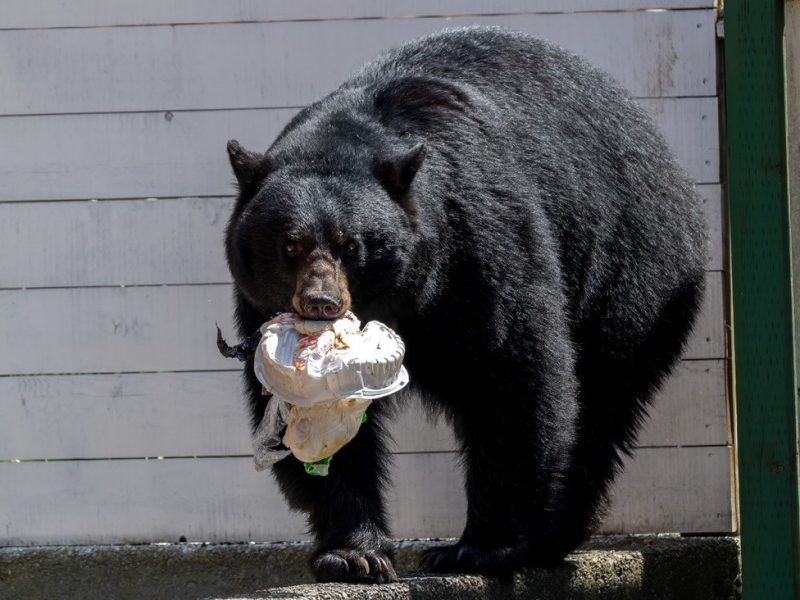
“Garbage is the number one attractant that brings bears into our community,” Parr-Pearson said.
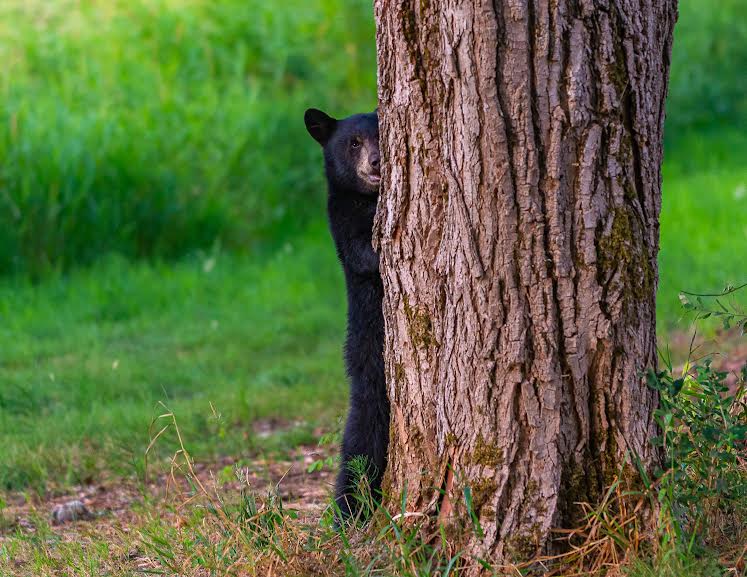
In 2016, a mother bear and two cubs were killed by conservation officers in Port Moody. The bears, who had been roaming around Heritage Mountain since the previous fall, were in search of garbage after a months-long hibernation.
The family of bears were breaking residential structures and getting into trash, according to the province’s South Coast conservation officer at the time. Since the family had a history of finding garbage (the mother bear had already been tagged and relocated once), they were not considered for a second relocation. The animals were killed.
One year before the trio of bears were put down, Parr-Pearson saw them in her backyard.
When she heard they were killed, she wanted to ensure that it would never happen again. At the heart of her work — why she’s inspired to volunteer and wake up at 5 a.m. every morning during retirement — is a desire to help humans coexist with bears.
Because when neighbourhoods leave out trash, it’s the bears who suffer, and in many instances, are relocated or killed.
“I became passionate about helping the community — my community — implement bear smart practices,” she said.
Over the next three years, her work may be tested.
Coquitlam is building a major housing and community development on Burke Mountain. The plan, which does not have a completion date yet, includes 2,000 new townhouse units and 120,000 square feet of commercial space.
An 80,000 square foot community centre is also tentatively scheduled to open in 2027.
As development brings new people with varying knowledge about bear smart practices to the Tri-Cities, Parr-Pearson’s work is paramount to minimize conflict between bears and humans.
A single trash bin left overnight, she said, can introduce a family of bears to a neighbourhood and encourage them to come back for more.
“One mistake can undo everything,” she said.
Why do bears come to human spaces?
Humans and bears are both drawn to the same natural areas.
Bears are omnivores with a strong sense of smell and can habituate easily to new food sources. They hibernate for about five to seven months of the year. When they emerge in the spring, it can be disorienting for them to find their usual sources of food such as fish, other animals and insects gone due to a changed landscape and reduced habitat.
The lack of available natural food sources draws bears to urban spaces with attractants such as garbage bins, fruit trees, gardens, open spaces, and bird feeders which can increase the potential for conflict with humans.
A driving factor behind human-bear conflict is that the places where humans want to live is also where bears call home.
“Everybody wants their house next to the river or the lake,” said Kim Titchener, a bear safety educator in Alberta. “We want to live where the wildlife are. But we then impact their ability to live there.”

The development, the Burke Mountain Village, will be located within a few kilometres of Minnekhada Regional Park, which has been known to have an unusually high population of bears.
From 2017 to 2019, Markus Merkens, a biologist with Metro Vancouver, set up wildlife cameras in Minnekhada to track bear movement in the park.
He found that most of the bears lived in secluded, off-trail areas of the park, so they could mate and nurse their cubs. When they left the forest, they headed towards a 200-hectare berry farm and a salmon creek south of Minnekhada.
There were 143 bear crossings on one section of Oliver Road — which borders the park and berry fields — over a seven day period in 2019, Merkens said, which is the equivalent of 20 crossings per day.

“The bears are strongly influenced by the agricultural area south of the park,” Merkens said. “If it weren’t for the blueberry fields, bear activity wouldn’t be as extensive.”
However, it’s hard to tell exactly how many bears live on Burke Mountain.
There are no reliable estimates of black bear populations in North America, according to the Canadian Wildlife Federation. It’s estimated there are roughly two black bears per 10 square kilometres in the most remote locations.
When bears leave remote areas for cities, it can cause damage to both the bears and the community.
For instance, in 2022 a bear knocked down a fence in the Sun Valley neighbourhood of Port Coquitlam, and a family of bears was caught in Coquitlam’s downtown core.
In total, between May 2022 and December 2023, there were more than 4,700 bear calls in the Tri-Cities that were reported to the province’s wildlife-human interaction hotline. A large portion of the calls were due to bears getting into unsecured attractants, such as garbage, according to Joshua Peters, the province’s Wildlife Safety Response Officer.

Mackenzie Spenrath, a freelance photographer, moved to Coquitlam in his early 20s to be closer to nature and wildlife.
He quickly became enamoured with the bears that would roam around Minnekhada. Spenrath opposes the city’s development beside Partington Creek and Minnekhada Park.
Although there are bear management guidelines for the development, Spenrath said he fears the townhomes will infringe on the creek. He also voiced concerns about how an influx of new people moving into the area would impact the bears’ ability to access food at the berry farms and creek.
Spenrath said he’s seen bears emerge from areas that “are probably going to be townhouses.”
Reducing conflicts when making new developments
Development in bear habitat results in irreversible loss of land for bears. For the bears, this means a loss of natural food sources.
“Quite often, they’ll just avoid that habitat. So you get displacement,” said John Paczowski, a park ecologist with Environment and Parks Alberta.
This displacement is not only bad for bears’ ability to find food but could have damaging effects on our ecosystem. Bears play an important role in enriching forest soil, seed dispersion and population management of prey species such as deer.

When new developments replace bear habitats, good planning is needed to reduce not only the possibility of human-bear conflicts but also the impacts on bears. Creating protected areas to give bears space to roam — such as forest thinning — might help, but Paczowski notes that sometimes, it’s not always possible.
“Loss of habitat is just that. It’s like a cookie cutter,” he said. “So you get a complete loss.”
Educating people on attractant management also plays a big role in reducing human-bear conflict when there are new developments, Titchener explained.
“We need to teach them not to have wildlife attractants around their home, not having garbage outside . . . so then the animals learn there’s no human food available,” she said.
Paczowski has been working in human-wildlife coexistence for more than 20 years and helped develop a report with guidelines and best practices for human-wildlife coexistence in the Bow Valley in Banff, Alberta.
Some of his mitigation strategies included creating wildlife corridors, underpasses or overpasses for the animals to travel safely without moving into urban areas. The strategy also included protecting wildlife habitats by closing off certain areas to residents.
In the summer months, Metro Vancouver biologist Merkens said they observed that bears frequently cross a road south of the park to access berry fields. Since the study concluded four years ago, they’ve begun closing that road from June to September to ensure there’s less of a chance for conflict.
“People would cruise the road in their cars, looking for opportunities to photograph bears,” he said. “It was creating an issue [of people] getting too close to bears, and potentially having them habituate to human presence.”
As development reduces space for wildlife, creating protected areas and connections for wildlife to move between regions is important for the longevity of wildlife, said Titchener.
Equally as important is learning how to live with them.
“The fear of living with wildlife is tolerance,” she said. “It’s understanding that it is us that needs to compromise, not them.”
Parr-Pearson said she hopes to be a friendly face to newcomers that move to the Tri-Cities, teaching them how to avoid attracting bears to keep the community safe.
“I’m all about voluntary compliance [but] you need education and sometimes enforcement to get people to change their behaviour,” she said. “If I can move that individual household to reduce attractants on their property and the bear moves on, that motivates me.”
Mitigation plans
To reduce human-bear conflict and manage any bears that come into the newly developed area, Coquitlam plans to draw on its Bear Aware program.
Its plans for the Burke Mountain Village include a lengthy list of bear risk management policies such as requiring bear-resistant garbage bins and chain link fencing. It also includes plans to design bridges and culverts to facilitate bear and wildlife passage on Burke Mountain.
In 2017, Coquitlam became the eighth city in B.C. to earn Bear Smart community status — a designation from the provincial government that confirms the city has met a series of criteria that aim to reduce human-bear conflict.
The city adopted a variety of bear-friendly measures to earn the honour: the implementation of a morning-only garbage set-out time restriction, a solid waste management system, and the appointment of urban wildlife staff to host education outreach sessions for residents.
Caresse Selk, environment manager at the City of Coquitlam, said a 2021 city-wide audit showed that 99.4 percent of Coquitlam households were abiding by the morning-only garbage restrictions, up from 84 per cent in 2017.
“The vast majority of the community now recognizes that things like unsecured garbage and ripe fruit attract bears and that securing attractants is the best way to avoid human-bear conflicts,” she said.
However, Paczowski noted that having a successful human-bear coexistence model is not an easy feat.
“You sort of have to recognize that, yes, this development will have a deleterious impact on bears and maybe we can mitigate it some other way,” he said.
“But that model of coexistence is really difficult and takes a lot of time and money and effort.”
Parr-Pearson, though, will continue to wake up early, look for garbage, and try to ensure coexistence can be reached in the Tri-Cities.
She said she’s confident that any new developments in Coquitlam, including Burke Mountain, will align with the city’s bear policies.
She noted that Coquitlam won an award in 2022 for its solid-waste management system, and Port Moody followed many of Coquitlam’s bear bylaws on its application to become a Bear Smart community — a designation Parr-Pearson is hoping will be certified this year.
“They’re basically the poster child for other communities looking to become Bear Smart,” she said, adding that many townhouse developers are constructing built-in structures for solid waste bins.
As the Tri-Cities continue to grow in population, Parr-Pearson is striving to make sure those rules are still being followed.
She’s concerned about climate change. Drier summers and longer falls are likely to reduce many food sources — berries and riverbeds — and may force bears to look for garbage or food scraps in residential neighbourhoods.
Although bears are currently looking to hibernate for the winter, Parr-Pearson said that it will be important for Tri-Cities residents to monitor their trash year-round, as she’s reported bear encounters in January and February. Being on top of bear-friendly practices is key to preventing bears from being relocated, or even worse, put down.
Because all it takes is a single street, or a cluster of houses, to attract one bear.
“The responsibility is on us,” Parr-Pearson said. “Everyone has to take a role. Every bear’s fate is in our hands.”
Authors