Salmon experiment may lead hatchery out of ‘this big black hole’
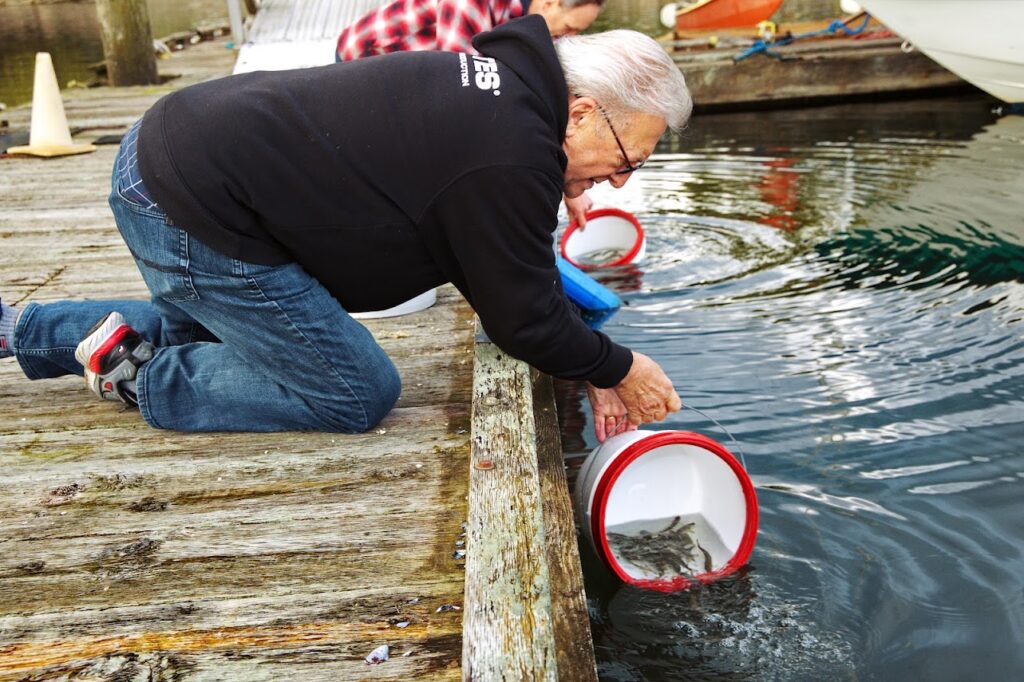
Releasing juvenile fish is a bit like having a child who moves out and never calls home.
“Hatcheries in general do a really good job of taking care of the eggs and raising the fish . . . but when we release the fish it goes into this big black hole,” explains Kevin Ryan, Burrard Inlet Marine Enhancement Society president.
“We call it the black box,” agrees Scott Hinch, who heads the Pacific Salmon Ecology and Conservation Lab at UBC.
Local news that matters to you
No one covers the Tri-Cities like we do. But we need your help to keep our community journalism sustainable.
However, a recent experiment shed some light on what happens to those fish.
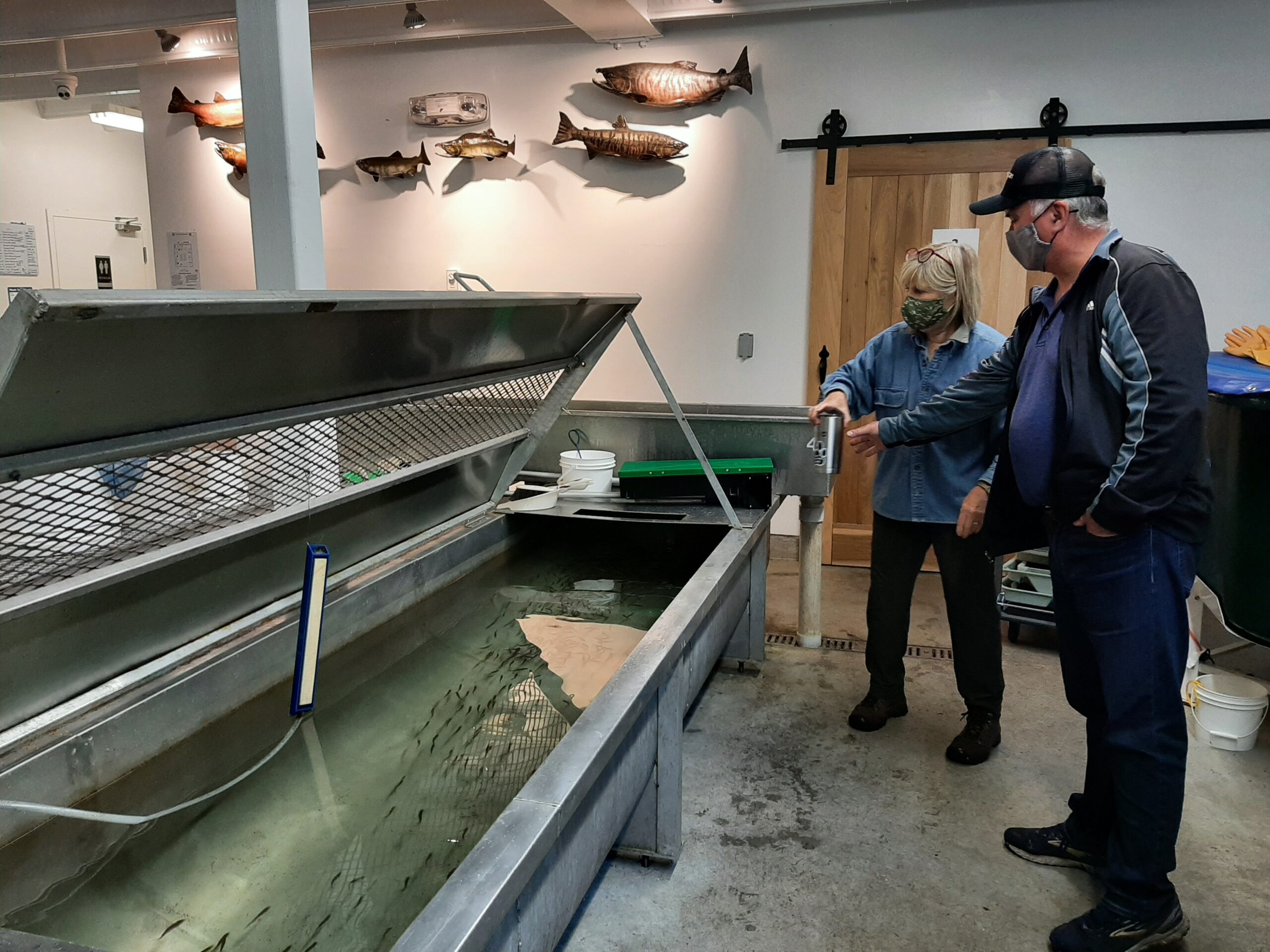
Each year, Mossom Creek Hatchery oversees the release of between 5,000 and 10,000 coho smolts. The 2022 experiment, led by Hinch and supported by the hatchery, was an attempt to determine how many fish were surviving their journey.
This story has been amended to correct a statistical error.
The results were encouraging for seals and cormorants, less so for smolts.
Approximately 60 percent of the fish were picked off before they got three kilometres from the release site. Fewer than 25 percent of the fish made it 20 kilometres to the Lions Gate Bridge.
The spot where the smolts are released is perfect for predatory birds and fish, Hinch notes.
“That’s where I’d go if I was a predator,” he says. “There’s only one way out.”
The study, which was the first of its kind, involved surgically implanting anesthetized smolts with acoustic transmitters.
The transmitters, which are about the size of a Tic Tac, include a battery that lasts for 40 to 50 days.
That battery powers a transmission that connects to receivers placed like goalposts stretching across the inlet.
Between predators, pollution, and industrial activity, Burrard Inlet presents a gauntlet for smolts, Ryan explains.
Generally, the hatchery releases the fish during night’s highest tide.
“That gives them the cover of darkness to get out,” Ryan says.
However, terminal lights can turn the harbour into a hunting ground.
“If you look at that at night, the inlet is completely lit up,” Ryan says. “It’s like daylight for the predators.”
The study also indicated that coho smolts tend to take the scenic route.
Steelhead and sockeye smolts, which are an open ocean species, “fly out like rockets,” Hinch says.
Coho, which are more of a coastal rearing species, tend to meander.
The next experiment
While the experiment was crucial in understanding the mortality rate of the smolts, it also had its shortcomings.
The battery lasts for six or seven weeks, Hinch notes.
“You don’t know their fate after that,” he says.
However, next month is set to mark the beginning of a five-year study that should offer a clear picture of how the hatchery can boost survival rates for its coho smolts.
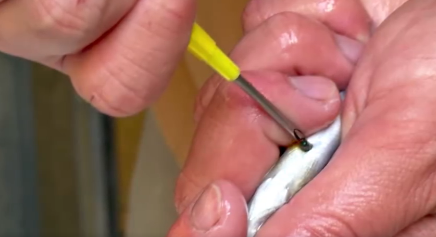
For this experiment, Hinch explains, they’ll use a PIT tag. About the size of a large grain of rice, the tag emits a radio signal when the coho swims through an electromagnetic current.
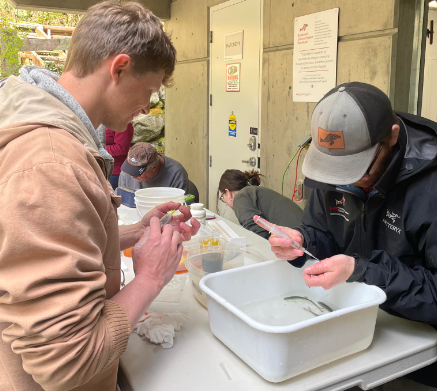
For the previous experiment, the tags cost about $420 each, Ryan says. These ones cost $2.50 each.
All told, the study is expected to cost about $30,000, Ryan says.
The plan, Ryan explains, is to take about 4,000 coho and release them in three groups at three separate locations.
As the adult fish return, the hatchery can assess that data and revise how and where they release the fish.
It’s an experiment that probably wouldn’t be possible without the Mossom Creek Hatchery volunteers, who are already hard at work prepping the smolts, Hinch notes.
“Putting these rice-sized devices into the fish, it requires a little hypodermic needle and a lot of volunteers,” he says. “A lot of volunteers.”
Author