Coquitlam opens bidding for new street safety strategy
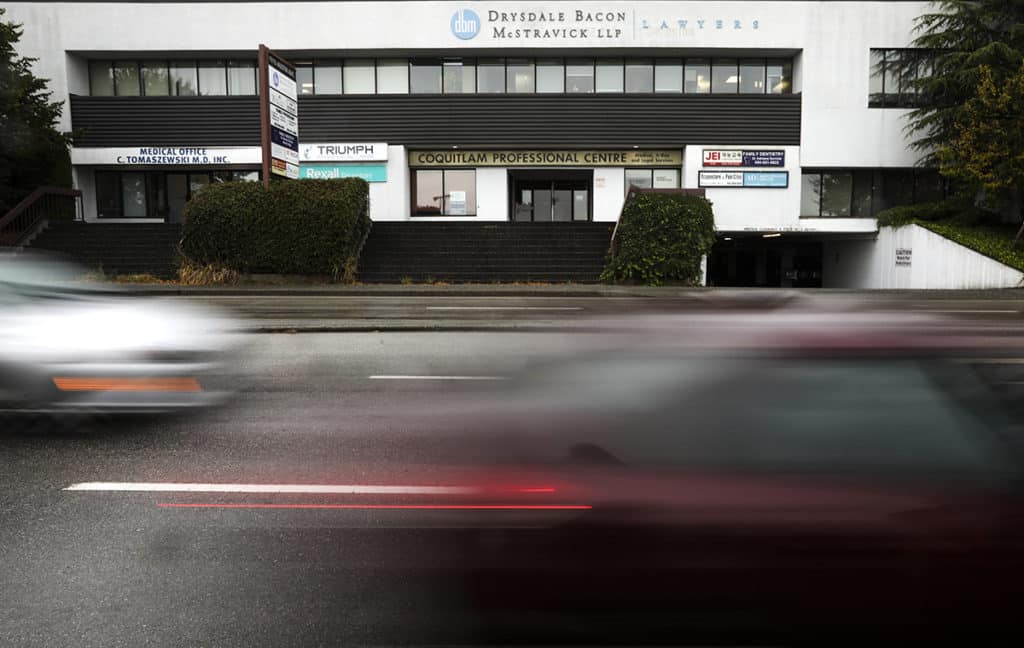
What will it take to Coquitlam streets safer – and how much will it cost?
If all goes according to plan, Coquitlam should have answers to those questions by the end of 2023.
The city recently put out a request for proposals in the hopes of finding a company that can: “Create a roadmap and plan for implementing both short and long-term actions over the next 10 years.”
Local news that matters to you
No one covers the Tri-Cities like we do. But we need your help to keep our community journalism sustainable.
If the strategy is successful, Coquitlam’s roads will be safer and Coquitlam resident will take more trips in safer vehicles and at safer speeds, according to the RFP.
Coquitlam’s current transportation plan fails to account for the Millennium SkyTrain extension, as well as the need to address climate change.
“A lot has changed in our community since the current version of the Plan was last adopted in 2012,” the city stated.
Set to be finalized by Dec. 22, the new strategy is intended to result in Coquitlam residents making more trips by walking, cycling, or using vehicles such as scooters. They should also be taking more of those trips on multi-use paths, protected bike lanes and shared lanes, according to the RFP.
The new strategy is intended to improve the experience of “vulnerable road users,” including pedestrians, cyclists, scooter riders, transit riders, and motorcyclists.
Bidding for the project is slated to close March 9.
While the number of collisions dropped in Coquitlam between 2016 and 2019, a city study found the casualty percentage increased during the same period.
Of the 16 fatal collisions between 2015 and 2019:
- 50 percent occurred at intersections
- 25 percent involved pedestrians
- 19 percent occurred in dark conditions with no or minimal illumination
- 19 percent occurred when roads were wet
Based on 2021 crash data released by ICBC, the two worst intersections in the Tri-Cities were Brunette Avenue and the Trans-Canada Highway, as well as Broadway Street and Mary Hill Bypass.
ICBC recorded 184 crashes at Brunette Avenue and 135 collisions at Broadway and Mary Hill.
Brunette Avenue ranked as the fourth most dangerous intersection in the Lower Mainland. Coquitlam and Surrey shared the No. 5 slot with 164 crashes adjacent to the Port Mann Bridge.
In January, Coquitlam council gave final approval to a pilot project that will let e-scooters to zip up and down city streets at least until April 2024.
Author