Database shows history of Riverview Hospital through 2,500 artifacts
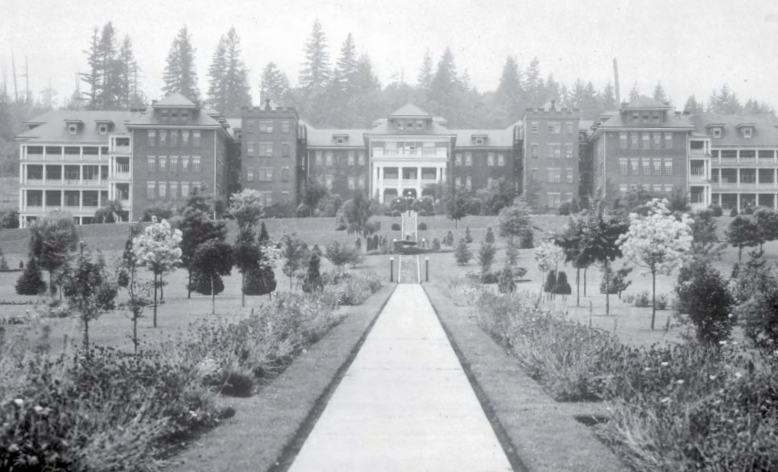
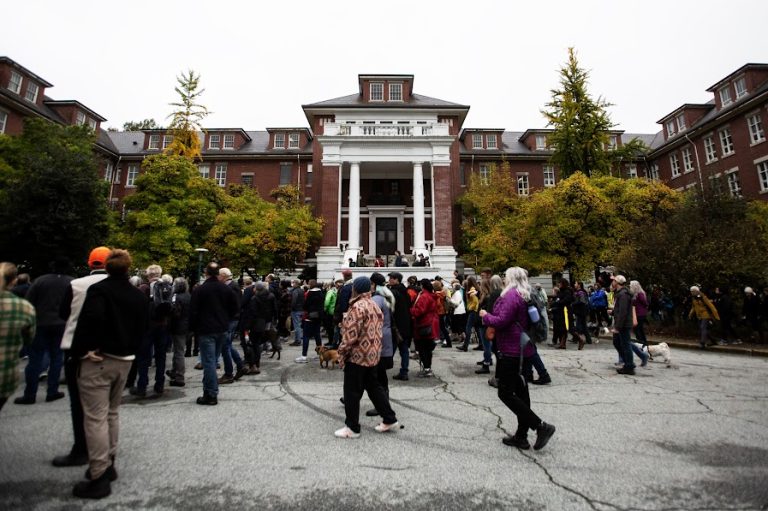
In the summer of 1905, workers trekked out to 1,000 acres on what was then Colony Farm to build a mental hospital.
The “Hospital for the Mind on Mount Coquitlam,” or Essondale, officially opened in 1913 with 453 patients, all of whom were men, and most of whom would double as farmhands.
Before its forced downsizing and eventual closure in 2012, the site would house thousands of patients who would be treated and mistreated; sometimes subjected to lobotomies and forced sterilization. However, particularly after the Second World War, physicians put a newfound emphasis on socialization and community, as well as psychotherapy rather than surgery.
Local news that matters to you
No one covers the Tri-Cities like we do. But we need your help to keep our community journalism sustainable.
Many early treatments would be considered unacceptable, noted Mayor Richard Stewart.
“It is important that we not forget these stories and the people who lived them,” Stewart wrote in the city’s history of the facility. “There are also many stories of care and compassion, of staff who dedicated their careers to helping others, and to countless community volunteers and families who supported patient care over more than 100 years, continuing today,”
The city recently unveiled a searchable online database to offer residents a chance to see the evolution of psychiatric treatment through the Riverview Hospital Artifact Collection.
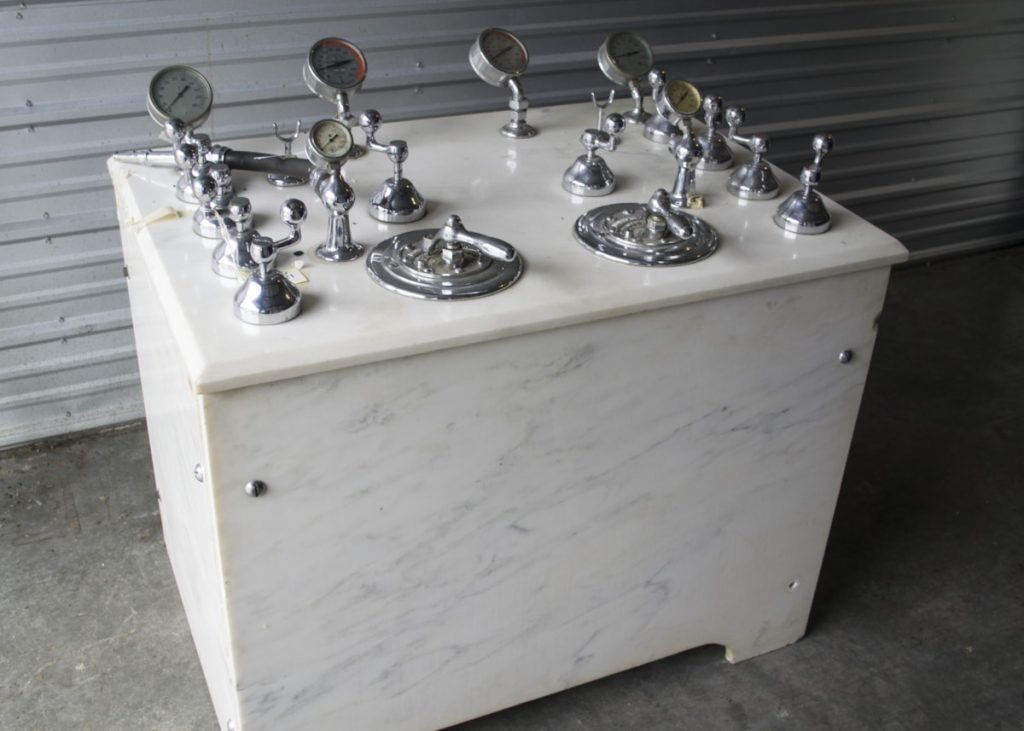
The artifacts range from beds to beakers to gauges and gurneys, as well as instruments for treatment such as hydrotherapy.
Patients, particularly those judged “maniacal cases,” were restrained in hot baths for hours. Other patients were subjected to rain and needle showers and cold baths, according to Coquitlam’s history of the site.
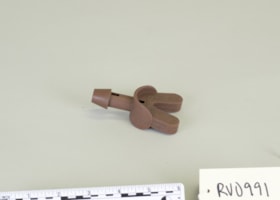
The database features a mouthguard used to prevent injury during electro-convulsive shock therapy, as well as a galvanic skin response machine.
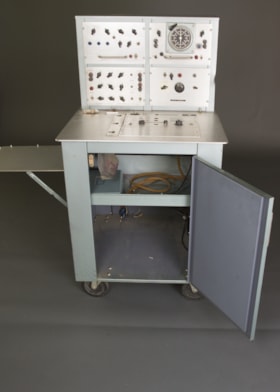
Designed to treat anxiety and phobias, the galvanic skin response machine was part of a procedure that measured muscle tension, heart rate, and moisture levels in a patient’s fingertips. Patients were taken through guided imagery, regulated breathing, or listening to music while hooked up to the machine, allowing for the doctor to determine the most effective treatment for each individual patient.
Eugenics at Essondale
Amid a movement toward eugenics and pseudo-scientific racism based on improving genetics on a broad scale, British Columbia passed the Sexual Sterilization Act in 1933.
That act allowed the B.C. Eugenics Board to decide to sterilize people in government institutions. This could be done without the individual’s consent or knowledge.
“Historians estimate between 200 and 400 people were sterilized in British Columbia, and that many were patients of Essondale,” according to Coquitlam’s history of Riverview.
Sleep therapy also gained popularity in the 1930s, and insulin-induced comas were administered to treat patients with schizophrenia. Patients were repeatedly put into sometimes deeper and deeper comas over weeks, with doctors using a sugar solution to bring patients back to consciousness.
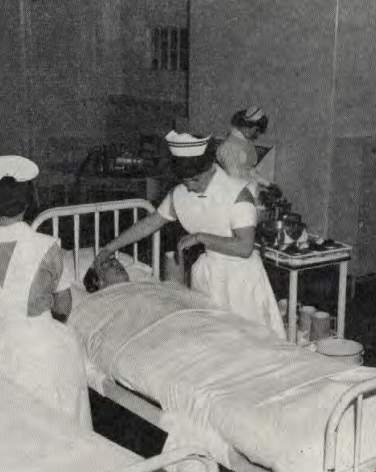
Seizures were also thought to have therapeutic value at the time.
“The first widespread use of convulsive therapy was administration of Metrazol, which was injected into patients and caused convulsions that were so violent they sometimes led to bone fractures or respiratory problems,” according to Coquitlam’s history. “Metrazol was not liked by patients, who were conscious during the violent convulsions.”
The treatment was used less frequently by the early 1940s.
The first lobotomies at Essondale were done in 1945, with the procedure falling out of practice in the 1950s, with many psychiatrists opting to treat patients with anti-psychotic drugs.
A new way of thinking
Rather than treating patients like prisoners, the young physicians who worked at Essondale in the early-1950s advanced the idea of creating a community and inviting family members and volunteers inside the institution.
Staff who returned from working at overseas psychiatric units during the Second World War also found value in integrating family and community into treatment plans, according to Coquitlam’s history.
“After the war, both physical therapy and psychotherapy approaches were used to accelerate the treatment of patients,” according to the city’s history.
The new approach coincided with the construction of Pennington Hall in 1950. The building included a gymnasium, cafeteria and dining room, bowling alleys, and an auditorium that be used for movies or church services.
The closure
By the early 1990s, B.C. was focused on downsizing facilities like Riverview, with closure recommended in 1998.
The centre was officially closed in 2012.
Following the closure, Coquitlam became custodian of the remnants of the hospital, including more than 2,500 artifacts as well as hundreds of photos and documents.
The land is now known as səmiq̓wəʔelə (suh-mee-kwuh el-uh), meaning, Place of the Great Blue Heron. The former Colony Farm site is ƛ̓éxətəm (tla-hut-um) Regional Park.
To view the database, click here.
Author