Local MP pushes for disability fund accessibility with new bill
Bill C-422, backed by Port Moody-Coquitlam MP Bonita Zarrillo, would scrap two requirements for applicants trying to receive the Canada Disability Benefit
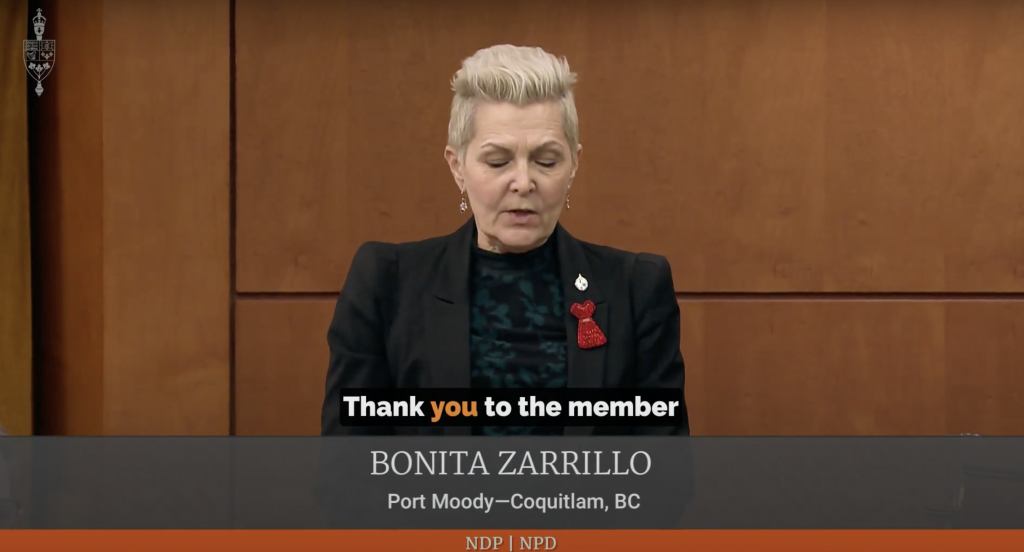
A local MP is attempting to amend an act that would broaden financial support for people with disabilities.
Bill C-422 got first reading in the House of Commons earlier this week. If passed, the bill would remove marital status and household income as requirements to get the Canada Disability Benefit. Those requirements can result in reduced benefits or ineligibility, explained Port Moody-Coquitlam MP Bonita Zarrillo, who brought the bill forward Monday.
“Whenever they get the slightest increase in income their critical government benefits are reduced,” Zarrillo said.
Local news that matters to you
No one covers the Tri-Cities like we do. But we need your help to keep our community journalism sustainable.
The Canada Disability Benefit was introduced in 2022. At the time, the federal government said it would lift hundreds of thousands of people out of poverty. But when the bill passed one year later, it was estimated that the benefit would lift about 25,000 adults out of poverty.
Canadians with disabilities can receive a maximum of $200 per month through the act.
Zarrillo’s amendment would help disabled people have more autonomy over their lives, said Michelle Hewitt, chair of Disability Without Poverty (DWP), a nationwide group advocating for disability rights.
In 2022, the unemployment rate for people aged 16 to 64 with disabilities was 6.9 per cent, almost double the rate (3.8 per cent) for people without disabilities. Despite the high unemployment rate, a person with disabilities without a job is still required to submit marital status and household income.
“Whenever it comes to benefits like this, it’s measured across the family, so that means they never get any income of their own. They’re always beholden to somebody else,” Hewitt said.
“We very much support Bonita’s amendment.”
Hewitt said she believes the amendment would particularly help people in abusive relationships become less reliant on another person’s income, and have the independence to leave the relationship.
The announcement came one day before the International Day of Persons with Disabilities, which is annually celebrated on Dec. 3. That day, the PWD released a report that gave the federal government a failing grade for its handling of disability poverty.
The report called on the government to triple its $200 monthly pledge, which amounts to $6.66 per day and has received criticism from disability advocates. In comparison, Canadians can receive maximum payments of almost $650 for child benefits, and over $1,000 for the Guaranteed Income Supplement.
The report also asked to simplify the application process and for the federal government work with provincial and territorial governments to automatically enroll people already receiving disability supports, among other improvements.
Bea Bruske, president of the Canadian Labour Congress, praised the amendment in an emailed statement to the Dispatch.
“Individualizing the benefit by removing barriers tied to marital status is a common-sense change that will help lift people with disabilities out of poverty,” Bruske wrote. But she noted there are still no guarantees applicants won’t face other provincial or territorial clawbacks. And that the $200 maximum monthly promise falls short of their needs.
More than 16 per cent of Canadians with disabilities live below the poverty line, roughly double the average of people without disabilities, according to the CLC.
The Canada Disability Benefit is only available to people who already receive a disability tax credit, a program that requires a medical form and approval from the Canada Revenue Agency.
About 40 per cent of Canadians with disabilities qualified for the tax credit in 2022.
Hewitt says the tax credit is another hurdle for people with disabilities.
“It has an onerous medical that costs, I’ve heard, anywhere from $200 to $900 that doctors are charging,” Hewitt said. “If you’re living in poverty, you can’t afford to pay for a medical.”
Kamal Khera, Minister of Diversity, Inclusion and Persons with Disabilities, defended the disability benefit in the spring, calling it an important first step that the federal government is planning to grow in the future.
But Hewitt said the government can do more for people with disabilities, especially considering the feds planned to use $4 billion to fund a $250 GST rebate last month. The federal government budgeted $6 billion over six years for the disability benefit in 2023.
“They can find the money to give away over two months, and miss disabled people,” Hewitt said.
“We’re an affluent country. We can afford to take care of disabled people.”
The disability payments are expected to begin in July 2025.
Author