16-storey rental tower in Port Moody headed to public hearing, revised with 80% fewer affordable units
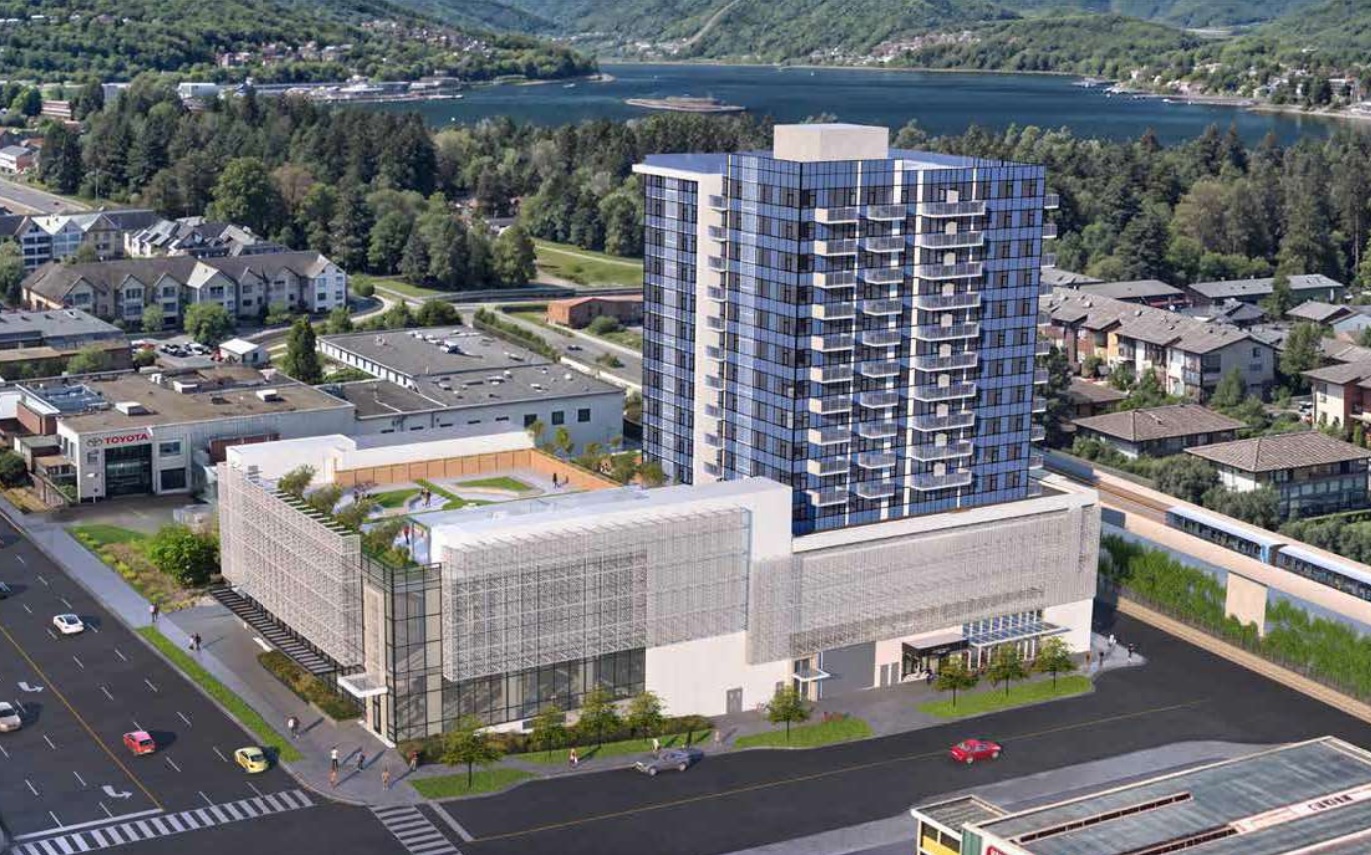
A proposal for a 16-storey purpose-built rental building in Port Moody is headed to public hearing, though the number of affordable units has been significantly reduced.
Council approved sending the application forward by a vote of 6-1 on Tuesday, though most councillors expressed disappointment at the loss of below market housing.
“I think it just highlights the fact that we cannot depend on for-profit developers to provide us with all of the affordable housing that we need,” said Mayor Meghan Lahti. “It’s going to take partnerships with non-profits and BC Housing.”
Local news that matters to you
No one covers the Tri-Cities like we do. But we need your help to keep our community journalism sustainable.
Anthem Properties Group’s mixed-use project is located on a 41,006 square foot site on the 3100 block of St. Johns Street and the 80 block of Moray Street, and requires rezoning and an amendment to the official community plan due to its height.
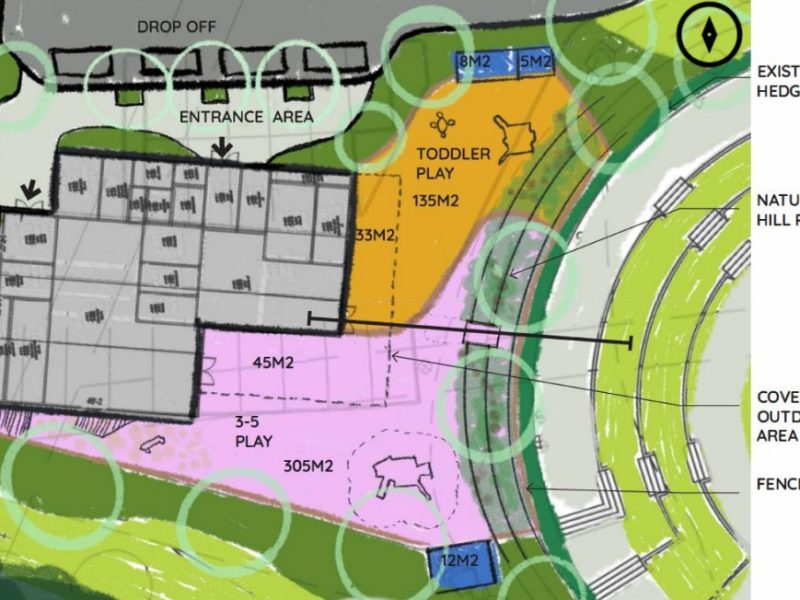
The project has three components: a two-storey Jamat Khana cultural facility; a 12-storey rental tower with 128 units atop a four-storey parkade; and a 2,552 sq. ft. commercial space.
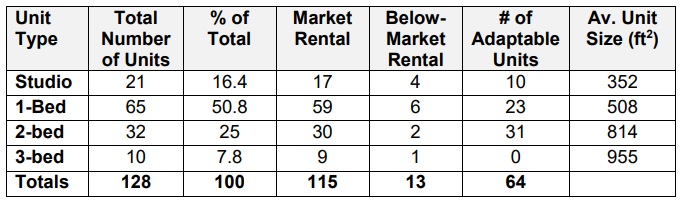
When the application was first submitted in late 2022, half the units were being offered at affordable rates – 20 percent below median rents in the Tri-Cities set by the Canadian Mortgage and Housing Corporation – but that number has since been changed to 13 affordable units, or 10 percent of the total.
Anthem Vice President Isaac Beall wrote a letter to the city, explaining that rapid increases to interest rates and construction costs forced them to revise the project to make it financially viable.
Because the proposal is entirely purpose-built rental stock, it is exempt from inclusionary zoning policy, and any requirement to provide any affordable units.
Coun. Kyla Knowles said she was grateful affordable units were still included in the project at all, pointing to the financial challenges currently facing many projects.
“It’s more than others would have offered,” she said. “It is difficult to build anything anywhere right now, and it’s of great concern, particularly for affordable housing.”
Coun. Callan Morrison agreed, stating even if council gives final approval to a project, there’s no guarantee it will get built, noting no building permit has been issued for Westport Village, which was greenlit in July 2023.
Still, Knowles and other councillors made inquiries with staff regarding amending its inclusionary zoning policy to capture large rental projects in the future.
Kate Zannon, general manager of community development, said the exclusion of rental buildings in the policy was due to market analysis, which showed they would rarely be economically feasible, adding their inclusion could hurt efforts to build up the city’s rental stock.
But Coun. Amy Lubik said the issue needs to be revisited, noting the analysis was focused on six-storey rental buildings, and not towers. “When you’re getting up to like 30 storeys, it changes the performance significantly,” she said.
Coun. Diana Dilworth, on the other hand, noted the new provincial legislation on inclusionary zoning, Bill 16, will come into effect on June 1 2025, and council is still waiting for the final guidelines to be released.
“We may just want to take a pause and wait to see exactly what the province is suggesting . . . rather than trying to change our rules, and then perhaps having to change them again,” she said.
Council had unanimously voted to have staff update to the policy on Nov. 21, 2023 following early input for PCI Developments’ two 39-storey rental towers, but that work does not appear to have started.
The cultural and design aspects of the project, however, were almost universally praised by councillors, with many describing the building as “beautiful.” The revisions made since council provided early input were also applauded, including number of the family sized units nearly doubling.
Many purpose-built rental applications have been “very, very boring,” according to Lubik, who said Anthem’s design should be a signal to other developers. “It can be done, it turns out,” she said.
Lubik was also happy with the greening of the property, noting the proposal predicts tree canopy coverage of the site will grow from 7 to 39 percent over 20 years.
The only councillor unsupportive of the project was Coun. Haven Lurbiecki, who raised numerous concerns about the density, unit sizes, and the loss of industrial space.
Describing the residential component as “sub-par,” she questioned why council would approve an OCP amendment when the project’s main selling feature – the affordable units – was largely cut out.
Lurbiecki added that the tower exceeds the height prescribed in the province’s mandated transited oriented area (TOA), noting half the site is zoned for light industry, making it exempt.
“I don’t understand how, as a council, we can claim to take such an issue with the provincial legislation, but then on the other hand, continue to grant density way above and beyond what is being mandated,” she said.
Another issue for Lurbiecki was the size of the units, which she called “tiny boxes in the sky” that are unsuitable for families.
The units range from an average size of 352 sq. ft. for a studio unit, to an average 955 sq. ft. for a three-bedroom unit.
Lurbiecki said developers will continue to shrink the square footage of units unless council acts. “This race to the bottom really needs to stop,” she said.
Mayor Lahti countered that housing is needed in all forms, and council should refrain from “shaming” small unit sizes.
Coun. Samantha Agtarap agreed, noting her family of four lives in a 900 sq. ft. two-bedroom plus den; she described the largest unit sizes as “quite manageable” for a family.
While Morrison said he shared some of Lurbiecki’s concerns related to the density being allowed outside of the TOA, he said the building’s design would not be as appealing if it was constrained to just eight storeys.
“Do we want a really ugly, boxy, rectangle wall?” Morrison said. “Or do we want this building that’s articulated and has spaces and views around it?”
The final concern raised by Lurbiecki stemmed from the $1 million in development levies the city was receiving from the developer, which she said seems extremely low for a project of this size.
Staff said the site is exempt from development cost charges and community amenity contribution because it falls under a special levy zone within the city, the 215A Levy Area.
The designation has existed since 1976, borne out of an agreement between the province and the city regarding then-undeveloped land at the head of the Burrard Inlet. It was outlined it as a “high density” developable area, but in need of a great deal of new infrastructure.
Paul Rockwood, general manager of finance, said there’s not much land left where the levy applies, and the city is unable to alter the arrangement.
Author