Through ice, salt and snow: Coquitlam looks at last winter’s $1.4M weather response
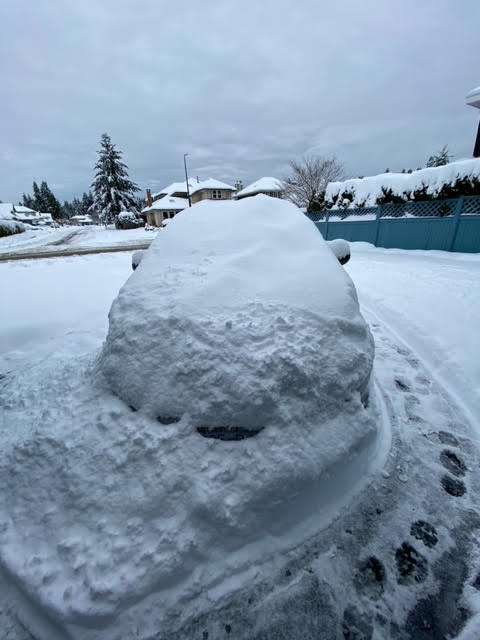
As we get set for summer, Coquitlam is thinking about winter.
Council recently discussed what worked and where Coquitlam struggled during the 2023/24 winter, which generally consisted of mild weather punctuated by sudden extremes.
The city spent $1.47 million on its extreme weather response in 2023, in part to deal with the biggest one-day snowfall in 15 years and the coldest snap since 1950.
Local news that matters to you
No one covers the Tri-Cities like we do. But we need your help to keep our community journalism sustainable.
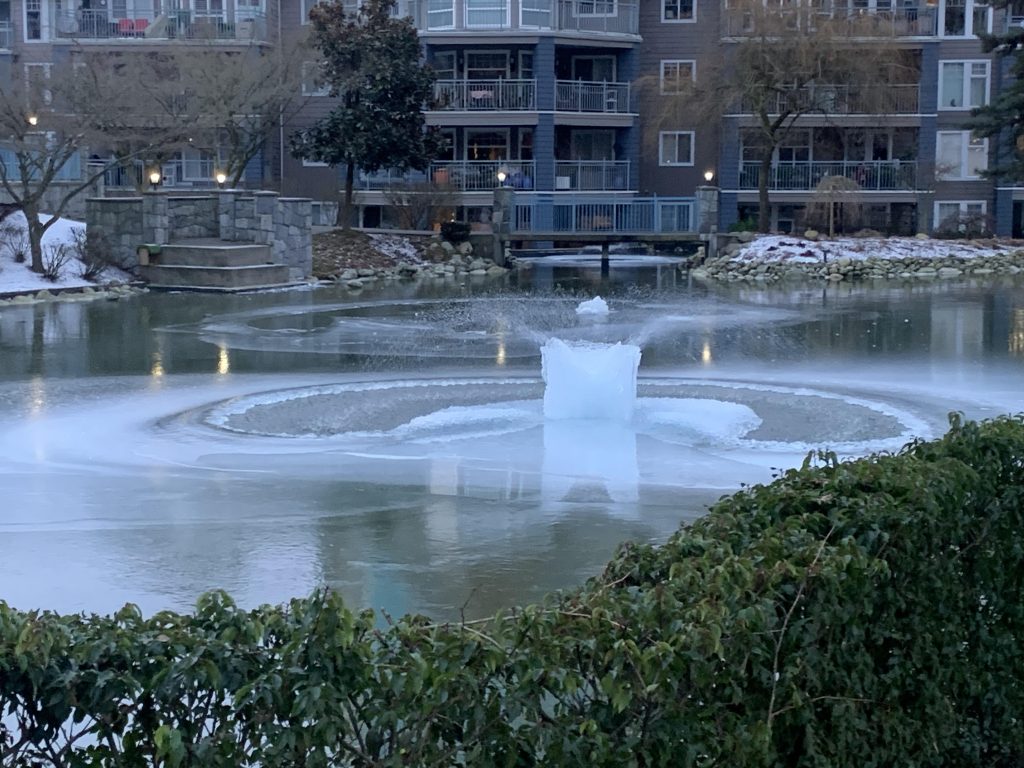
On Jan. 11, a blast of arctic air resulted in plummeting temperatures as an isolated snowfall flash froze on roads throughout southwest Coquitlam.
“This resulted in widespread black ice just in time for the afternoon commute,” noted a city staff report.
“Everything just came to a stop and the cars were sliding sideways on a slight incline,” recalled Coun. Craig Hodge, noting other cities didn’t get hit with the same micro-climate.
Coquitlam staff rolled to the streets with salt and sand, although not as quickly as they would have liked, explained Jaime Boan, Coquitlam’s general manager of engineering and public works.
“Because it happened so quickly we were behind and playing catch-up, essentially,” he told council.
Typically, city staffers are out with salt or brine before the temperature drops, Boan noted.
By Jan. 12, temperatures had dipped to -13 C, rising a few days later as more than 30 centimetres of snow piled up around the city, marking the largest one-day snowfall since 2008/09.
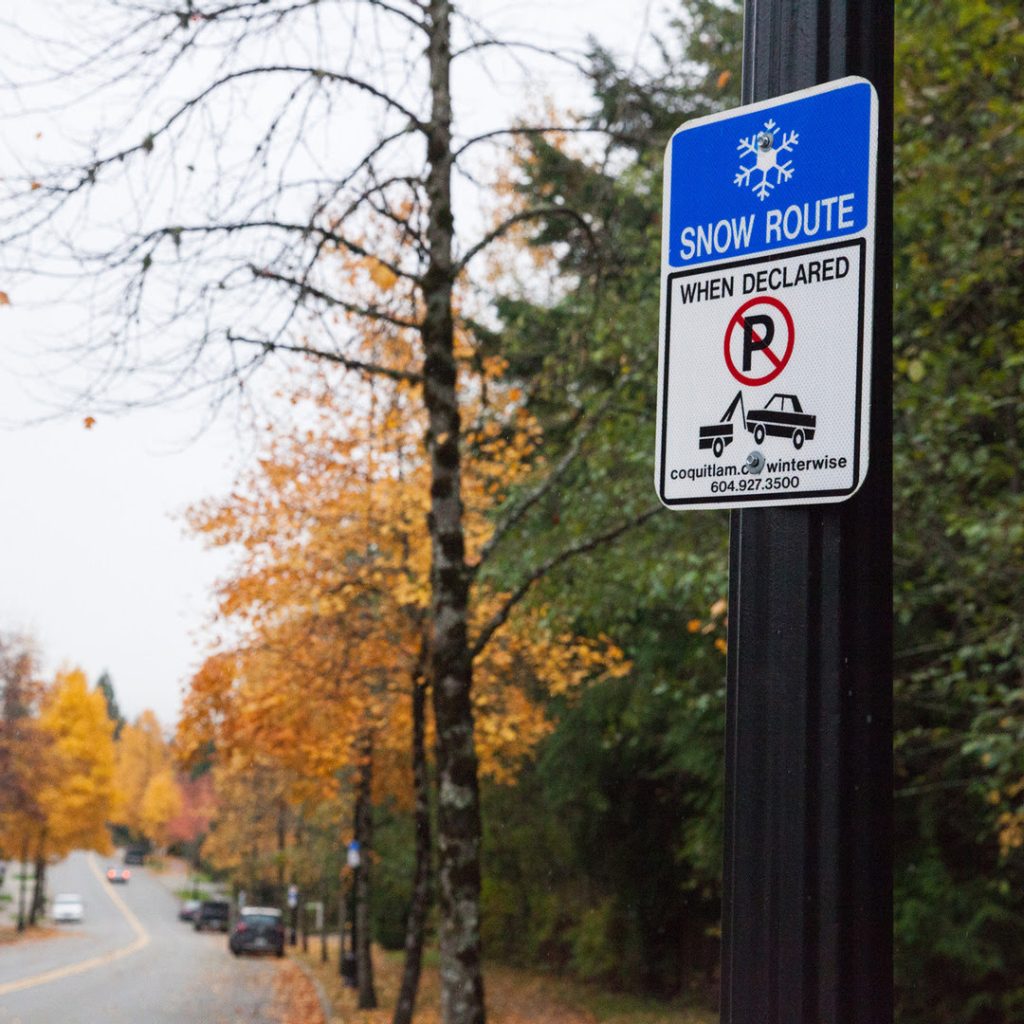
On Jan. 11, “Everything that could go wrong, went wrong,” said Coun. Matt Djonlic. However, the city’s response to the Jan. 16 snow fall was “very successful,” he added.
Traffic volumes in the city were down 76 percent on Jan. 17, allowing for 18 trucks and three backhoes to clear streets.
In the future, Hodge suggested the city give residents real-time updates on road conditions and plowing routes.
“The technology is there,” Boan said. “It’s just not been a priority yet.”
Flooding was a concern for Djonlic.
When the temperature rose on Jan. 18, staff went to work clearing catch basins before 20 millimetres of rain fell the following day.
“This created unique challenges to maintain adequate drainage on Guildford Drive between Lansdowne and Falcon Drives due to ice dams forming around the new curb infrastructure for the bike lane, and preventing water from reaching the catch basins,” noted a city staff report.
Djonlic asked if the city might put more resources toward keeping bike lanes clear after a snowfall.
The city has a device used to clear leaves and debris that could be outfitted to serve as a mini snow plow, but would probably only be used in rare circumstances, according to Boan.
“If the winter draws on and we’re continuing to have snow . . . then we would be looking to clear those [bike lanes]. But we’ve got to keep the priority to the roads and the sidewalks,” he said.
Besides the steep costs of dealing with extreme weather, the city also deals with a limited staff.
“One of the biggest challenges . . . is actually staffing,” Boan told council.
When the worst weather hits, the city supplements their road crew with employees from Coquitlam’s sewer/drainage department. However, when a 24/7 rotation becomes a necessity, there’s a limit to how many workers Coquitlam can put on the street, Boan explained.
The city has more than 1,110 kilometres of laneway, many of which are plowed several times during a snowfall.
That lack of labour is one of the reasons the city contracts out the plowing for Lougheed and Barnet highways, according to a city staff report.
“This is something that was, I think, dumped on us years ago by the provincial government,” Hodge commented.
The costs of the Lougheed/Barnet contract has ballooned more than 50 percent in four years, rising from $202,000 to $314,000 in 2023/24.
Bringing the work in-house would likely mean buying at least one more snow/ice truck, according to a city staff report.
Asked about those times a snow plow deposits a clump of powder in front of a resident’s driveway, Boan discussed the challenges of driving a plow.
“Snowplowing is not an easy job,” Boan told council.
Drivers try to plow at a lower speed to prevent sending the snow too far, but sometimes less experienced snow plow pilots hit the gas and end up stacking up the snow.
Cold hard cash
The city spent $1.475 million on extreme weather in 2023 – coming in $14,000 under budget.
Extreme weather tore though the city budget from 2019 to 2022. During that period, the extreme weather budget ranted from $1 million to $1.36 million. The amount that ended up being spent, however, ranged from $1.6 to $2.4 million.
Coquitlam also maintains a $2 million reserve, which allows the city to maintain the program without running into a deficit.
Following the arrival of a new tandem axle snow/ice plow truck at the end of winter, the city should be better equipped to handle the next snowfall, both logistically and financially.
“Early indications are that that will save quite a bit of money for the city,” he said.
Overall, the city went through 2,600 tons of salt last winter – approximately 1,800 fewer tons than winter 2022/23. The city also received 64 complaints about icy sidewalks last winter.
Coquitlam received more than 1,000 complaints related to snow clearing as well as another 150 complaints about sidewalk clearing following the 2022/23 winter.
Author