West Coast Express services might pause indefinitely during national lockout

A national rail dispute between rail companies and a workers union is threatening to disrupt the West Coast Express commuter rail service.
The train runs on rail owned by the Canadian Pacific Kansas City (CPKC), a company that is negotiating new terms with Teamsters Canada Rail Conference, a transportation and supply union.
On Aug. 9, CPKC announced that if they haven’t reached an agreement with Teamsters by Aug. 22, they will lockout rail employees.
Local news that matters to you
No one covers the Tri-Cities like we do. But we need your help to keep our community journalism sustainable.
If this lockout happens, rail across the country will be impacted (CN rail is also negotiating with Teamsters) — and the West Coast Express could cease service until the CPKC lockout is over.
It runs between downtown Vancouver and Mission City on weekdays, traveling westward in the morning and eastward in the afternoon and evenings. It makes stops at Moody Centre, Coquitlam Central and Port Coquitlam stations.
It cannot run without CPKC dispatchers and rail workers, Translink told The Dispatch in an email.
And with 3,000 customers on the train each day, local groups have expressed concern about the impact it could have on local commuters and businesses — including those in the Tri-Cities.
“This potential labour disruption at Canada’s major railways would be an absolute nightmare for our local businesses, our communities, and our nation,” Leslie Courchesne, the CEO of the Tri-Cities Chamber of Commerce, told the Dispatch in an email.
“It’s bad for business, and it’s bad for our communities,” she said.
Teamsters strike notice
However, according to Christopher Monette, Teamsters director of public affairs, CPKC has managers — who are not in the union — that perform rail traffic control. Thus, they could allow certain trains to run.
“How they choose to use those management resources is, of course, a decision entirely in CPKC’s hands,” he told the Dispatch in an interview.
Monette said CPKC and CN are trying to push for concessions around crew scheduling, rest times, rail safety and fatigue management.
“We’re obviously trying to improve working conditions,” said Monette. “But right now, so much energy is being spent on simply protecting the language we do have in our agreements from companies who seem to just want to get more availability from train crews, no matter the risks associated.”
On Aug. 18, Teamsters served a 72-hour strike notice to CPKC, which Monette said they were “forced” into.
“They had signaled their intention of canceling the terms of the collective agreement.”
A collective agreement is the contract between an employer and union with the terms and conditions of employment.
When a collective agreement expires and parties aren’t able to reach a new one, three things can happen, Monette explained: strike, lockout, or — alternatively — an employer can serve notice to cancel the terms of the collective agreement.
“We would have ended up in a situation where our members are presenting to work in safety sensitive positions with no protections under the collective agreement,” he said.
In a letter published on Aug. 19, CPKC said they are trying to negotiate a contract with competitive wage increases that complies with rest requirements.
Business organizations concerned
On Aug. 19, the Tri-Cities Chamber Chamber of Commerce sent letters to Port Coquitlam MP Ron McKinnon and Port Moody – Coquitlam MP Bonita Zarrillo, urging them to “immediately intervene and do everything necessary to avert a disruption.”
Courchesne told the Dispatch over email that many businesses rely on rail, such as those in automotive, construction, agriculture/food, retail and manufacturing.
The Tri-Cities Chamber of Commerce also signed a joint letter to Prime Minister Justin Trudeau on Aug. 9., stating the labour disruption would drive up costs and add to affordability challenges.
The Greater Vancouver Board of Trade has also called on the federal government to “use every tool in its toolkit to facilitate an immediate agreement.”
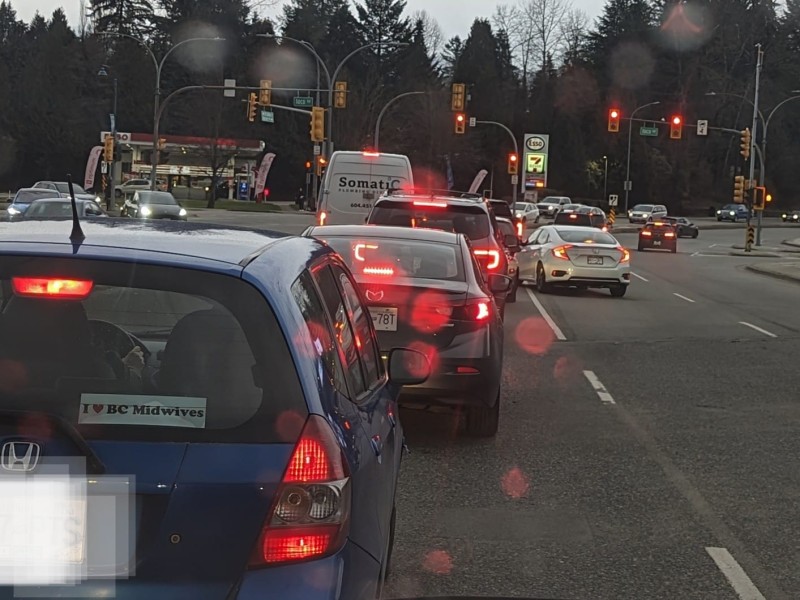
It said that the stoppage of the West Coast Express would worsen congestion in the Greater Vancouver region.
But MP Zarrillo told the Dispatch that CPKC must negotiate in good faith.
“There is a lot of time for the employer to come to the table and make sure that Canadians are not impacted in their travels.”
She said hopes that CPKC doesn’t rely on the Liberal government to enforce back-to-work legislation. “That’s not the way good faith bargaining works.”
“I’m concerned for Coquitlam and Tri City residents who are Teamsters, who are the employees that are going to be impacted or are impacted right now,” MP Zarrillo said.
Steve MacKinnon, federal Minister of Labour and Seniors, posted a statement on X (formerly Twitter), where he said that “these collective bargaining negotiations belong to CN Rail, CPKC and TCRC workers alone — but their effects will be borne by all Canadians.”
He added they “must do the hard work necessary to reach agreements at the bargaining table and prevent a full work stoppage.”