Port Moody councillors backs sweeping tree protection overhaul to curb mature canopy loss city-wide
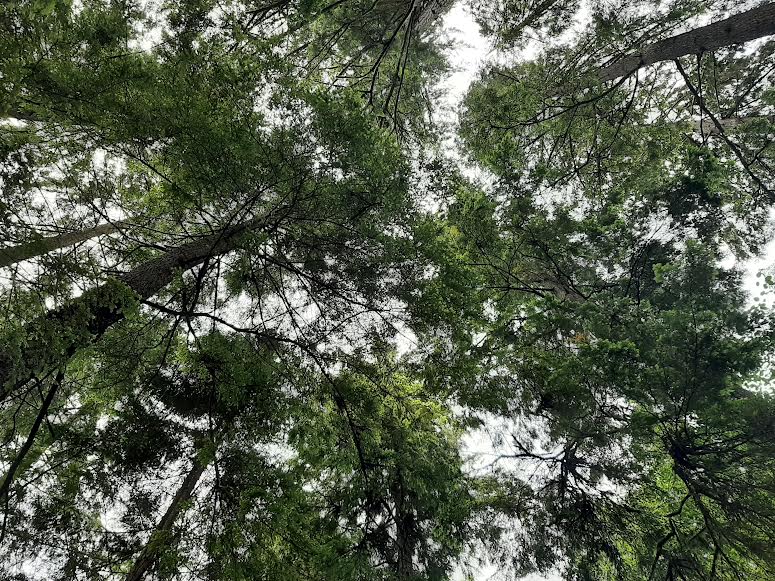
Port Moody councillors unanimously threw their support behind a new tree protection bylaw, stating the update will finally give the city real tools to curb the loss of mature trees across neighbourhoods, development sites and strata properties.
The updated bylaw was presented to council on Feb. 17 and discussed at length ahead of the formal readings and vote scheduled for Feb. 24.
Several councillors described the changes as a “long time coming.”
Local news that matters to you
No one covers the Tri-Cities like we do. But we need your help to keep our community journalism sustainable.
“I think we all can identify some worst case scenarios that have taken place recently in our community, and the loss of trees that shouldn’t necessarily have been lost,” said Coun. Diana Dilworth. “I’m really pleased that we’re going to actually have some teeth in a bylaw that is going to be able to address that.”
Under the proposed changes, tree protection would expand city-wide – no longer limited primarily to active development sites.
Any tree 30 centimetres in diameter or larger would require a Tree Removal Permit on any property in Port Moody, while trees 10 centimetres or larger on sites undergoing development – including demolitions, building permits and rezonings – would be subject to retention efforts, securities and fines.
Staff said this expansion alone would bring thousands more trees under formal protection across the city.
The bylaw also layers in new requirements around canopy coverage, soil volume, permeability, legacy tree protections and financial enforcement – all aimed at prioritizing keeping mature trees in the ground wherever possible.
Coun. Kyla Knowles said the changes respond directly to residents’ frustration over widespread removals, especially on single-family properties that previously fell largely outside city control.
“It’s been pretty devastating to see so many massive mature trees coming down — certainly on single family lots — and not being able to do anything about it,” Knowles said. “So this is fabulous news.”
She also welcomed what staff described as a more equitable approach between detached homes and strata properties.
The updated bylaw includes lower permit fees and reduced security requirements for non-development properties, recognizing the financial strain tree management can place on strata communities, while still requiring permits for large removals.
Knowles described the constant risk her East Hill strata faces.
“With every wind and rainstorm, we have trees down every single time,” she said. “Nobody is trying to cut down trees, but we have to take care of our homes — and the fire risk is very huge.”
Coun. Amy Lubik said the bylaw reflects years of public engagement — including three major survey phases between 2022 and 2024 — that shaped how aggressive the protections should be.
Staff confirmed the updated bylaw now ties minimum tree canopy requirements on redevelopment sites directly to targets in the city’s Urban Forest Management Strategy, requiring that specific canopy coverage is achieved when retained or replacement trees reach maturity.
Lubik framed the bylaw as both environmental policy and climate resilience infrastructure.
“This is something we’re doing together – protecting the trees for each other, for our ecosystems, but also for climate resilience from heat and flooding,” she said. “It’s about prioritizing retention wherever possible.”
One of the biggest changes is enforcement.
The updated bylaw introduces Tree Protection Orders that allow staff to immediately halt illegal removals or damage, new financial securities tied to retained trees on development sites, and a strengthened fine system that includes penalties of up to $1,000 per tree for unauthorized cutting.
Staff said the securities – ranging from $1,000 per protected tree to $5,000 for large or legacy trees – are designed to ensure developers protect trees throughout construction rather than absorbing small penalties as a cost of doing business.
Coun. Diana Dilworth said recent large-scale tree losses in the city highlighted the need for stronger consequences.
“When we develop bylaws and legislations and policies, we’re setting out societal expectations about what we want to see done, but inherently, we also prepare those bylaws and legislation to address what might be a worst case scenario that we as a city face,” she said. “I think this is an amazing tool, and I can’t wait to see it rolled out.”
Staff also built flexibility into the replacement system to avoid punishing properties that already maintain high canopy coverage.
For sites not undergoing redevelopment, replacement requirements can be reduced if canopy will remain between 35 and 45 percent after a tree is removed, and fully waived if canopy exceeds 45 percent. Where replanting is not feasible, cash-in-lieu contributions will flow into the city’s Urban Forestry Reserve to fund planting elsewhere in Port Moody.
Coun. Haven Lurbiecki pressed staff on how the permit system would actually lead to fewer mature trees being lost.
Staff said the biggest change is that retention is now embedded at the very start of any development inquiry.
Applicants will be directed immediately to tree protection requirements, required to submit arborist reports, and encouraged to shift building footprints, parking areas and layouts to preserve existing trees. Retained trees are secured financially, and unauthorized removals trigger fines.
The bylaw also introduces a formal legacy tree nomination system allowing residents to propose significant trees for enhanced protection, along with new soil volume and spacing standards to ensure replacement trees survive and thrive, not just get planted and fail.
Lurbiecki also raised concerns about potential gaps in the bylaw, which may allow smaller trees to be removed ahead of a development application being submitted, allowing the removal to be subject to less stringent permitting rules.
Staff admitted the issue was recognized, but described it as a “small gap,” adding the bylaw strikes a balance between regulating trees on single-family lots and developing properties.
To ensure council can evaluate whether the system works, staff have created a new tracking program that records the number of permits issued, trees removed and retained, the reasons for removals and replacement outcomes.
Staff said this data will allow council to review performance and adjust the bylaw in future years.
Mayor Meghan Lahti echoed some Lurbiecki’s concerns, especially in the context of the provincial small-scale multi-unit housing (SSMUH) legislation.
While the city has only received a handful of applications under the legislation, Lahti said that may increase in the coming years.
Coun. Callan Morrison raised frustrations about the lack of consideration for tree protections in the recent provincial housing legislation around transit oriented areas.
He pointed out that the 3.4-kilometre area captured under Bill 44’s new density allowances have the lowest tree canopy coverage.
“There’s an entire massive swath of our community that is covered by this (bylaw), and yet there’s no ability for us to put permanent protections in place in those areas,” Morrison said.
Staff are also planning a major communication push once the bylaw is adopted, including updated online resources, new permit guides and a city-wide mailout to roughly 16,000 households to ensure residents and property owners understand the new requirements before removals occur.
Author