Port Moody releases timeline of shelved St. Johns Street housing project; council discussion reveals divisions over its rejection
Port Moody’s decision to reject moving forward with a supportive housing facility on St. Johns Street appears to have not been unanimous.
The city released its timeline of the 40-50 unit project on Oct. 28, which council quietly voted down in 2023, sparking comments from councillors revealing sharp divisions on the topic.
The move, initiated by Coun. Kyla Knowles, follows a tense summer of political fingerpointing over homelessness issues in the Tri-Cities.
Local news that matters to you
No one covers the Tri-Cities like we do. But we need your help to keep our community journalism sustainable.
“I hope each resident takes the time to read the memo outlining the history of discussion,” Knowles said. “I was shocked that such important conversations about city land and supportive housing could and would take place without resident input.”
The public release marks the first time residents have seen the city’s own summary of closed-door discussions with B.C. Housing, which began more than five years ago.
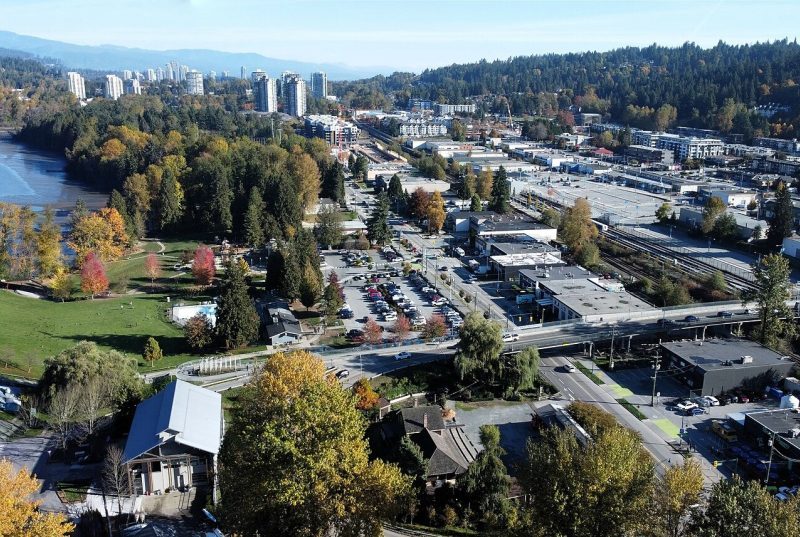
According to the newly released memo, the previous council first directed staff in 2019 to explore locations for shelter, modular, or low-income housing. By early 2020, the city-owned lot at 3051 St. Johns St., next to the Port Moody Police Station, was flagged as a potential site.
That September, the city initiated a Memorandum of Understanding (MOU) with B.C. Housing for a supportive housing project – a non-binding agreement ratified by both parties in June 2021.
In 2022, BC Housing launched a site feasibility assessment, and by June 2023, had presented preliminary designs to council, including conceptual layouts and estimated city servicing costs of $420,000 to $600,000.
The memo also confirms that council discussed feedback from the Port Moody Police Department and Police Board, both of which raised concerns about long-term policing implications.
At that point, a majority of the new council voted to halt discussions, citing the site’s potential future need for police expansion and the city’s limited inventory of developable land.
Council later passed a 2024 motion reaffirming its support in principle for supportive housing but asking B.C. Housing to look for other parcels — including provincially or federally owned land — within Port Moody
Coun. Kyla Knowles said she had made good on her promise from June to make the full history public.
“This council elected in 2022 voted not to allow it for a number of important reasons,” she said. “Despite this decision, our then-provincial Housing Minister continued to pressure us to change our decision.”
Knowles also criticized voices in the community who she says regularly espouse principals supporting public engagement, but are still willing to move forward on decisions about city land “behind closed doors.” She later clarified to the Dispatch she was referring to residents on social media, including a former city councillor.
“That is inconsistent and it’s disrespectful to residents,” she said. “I have said time and again that I feel public engagement and input, particularly around city land, should not be conducted in secret. Our residents deserve to weigh in on how our tiny amount of municipal lands are being used and for what purpose.”
Her comments reflect the same frustration she expressed in June, when she alleged the province had applied “unacceptable political pressure” on the city to reverse its 2023 decision — a claim Housing Minister Ravi Kahlon at the time rejected, telling the Dispatch that BC Housing’s discussions were “standard collaboration.”
Coun. Amy Lubik, one of the councillors who supported the project, said she was “very disappointed” it didn’t go ahead and urged the city to work collaboratively with B.C. Housing to identify another site.
She pointed out the Tri-Cities have no supportive housing facilities, noting that Coquitlam’s 3030 Gordon Ave. facility has no wraparound support.
“They are a shelter and transition housing, but people can’t leave the transition housing because they have nowhere else to go, which is why we’re seeing more people living on the streets,” Lubik said. “It’s not a one-size-fits-all situation, and we need an actual plan.”
Lubik added the record shows these projects almost unanimously face “initial fear and opposition” but are later welcomed by neighbourhoods, despite half being located close to schools.
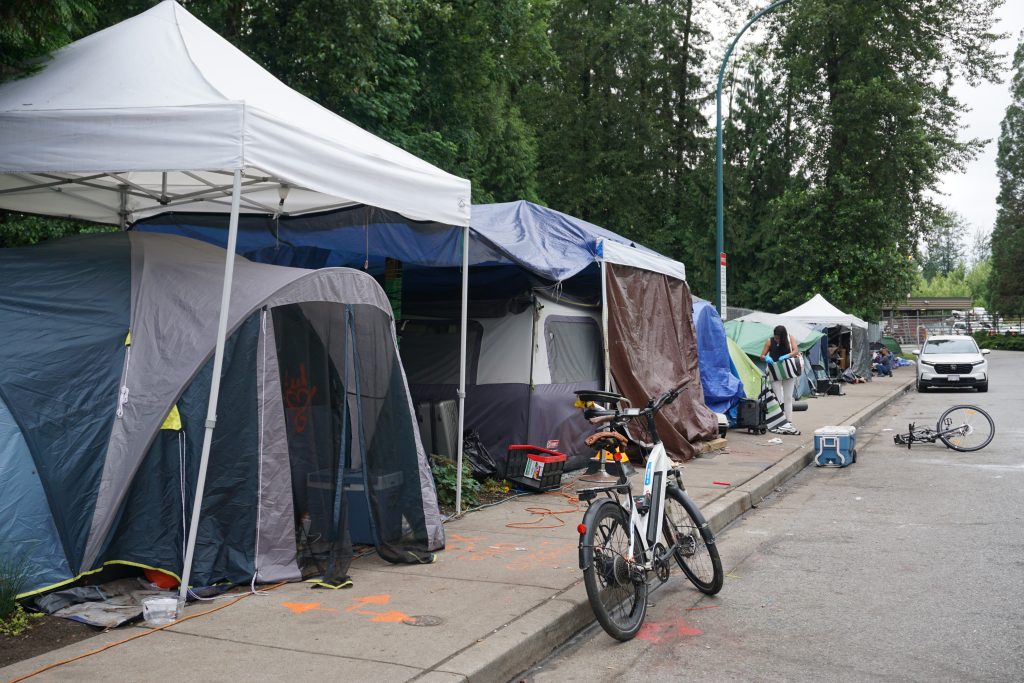
She said the data shows the number of unhoused residents is growing, and not everyone living in the streets is hard to house, with many being seniors or people priced out of the market.
“The province, the federal government and the cities are all basically pointing at each other like that ubiquitous Spider-Man comic,” Lubik said. “We can say it’s not our role, but in reality this is our community, and we all have a part to play.”
Coun. Haven Lurbiecki backed Lubik’s call for compassion and criticized what she called “angry and mean-spirited” rhetoric surrounding the issue, stating it would not help in future negotiations.
“The tone we set at this table is very important,” she said. “Regardless of the site, we need this kind of housing – it’s our contribution to supporting that spectrum.”
Coun. Callan Morrison said he shared his colleagues’ desire to address homelessness but argued the process used by previous councils was flawed.
“At no point was the community engaged on that,” he said. “We need to bring our community along – not just show them a site chosen behind closed doors and say, ‘This is where it’s going.’”
Morrison said he supported reopening the discussion on supportive housing but urged the province to consider its own land holdings near Eagle Ridge Hospital or Riverview before asking cities to give up scarce public land.
“One of those levels of government is responsible for this – and they’re not delivering,” he said. “They’re asking for our public land.”
Author