Port Moody poet delves beneath smooth surface in new book
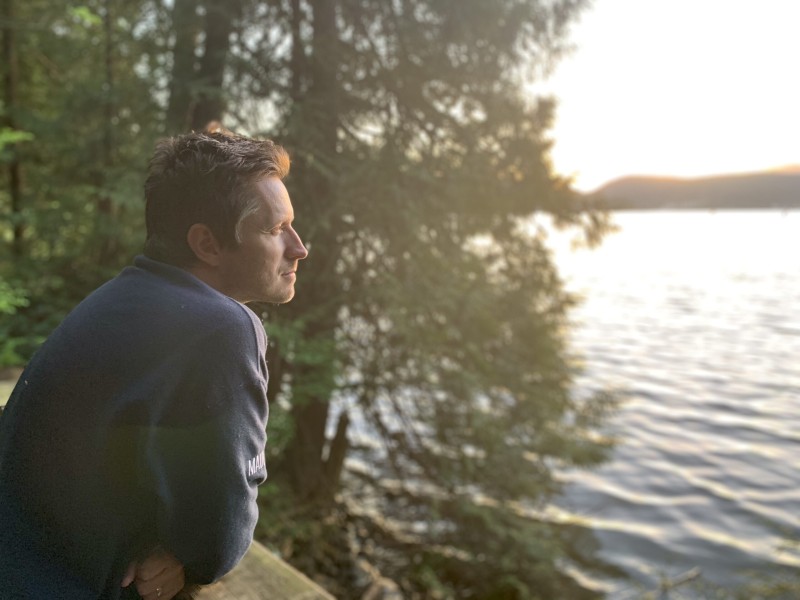
Scars and words. Seated in a folding chair on Rocky Point, poet Rob Taylor meditates on the real scars and the deeper, invisible marks.
Scars and words.
Seated in a folding chair on Rocky Point, poet Rob Taylor meditates on the real scars and the deeper, invisible marks.
Taylor was 11 when his father died.
“[A] formative experience in my life,” he says.
That’s one scar.
Then there’s a mark on his knuckle, about the size of fork tines. It was from the time he was 14 and tried to swipe fruit from his mother’s plate during brunch.
“She did not want me to take that melon,” he laughs.
That’s another scar. And then the words start roiling to the surface.
Taylor captures the moment of his mother’s fork, “cascading down to catch my knuckle mid-retreat.”
He paints a picture of his family at that moment and the barrier of civility that simply wasn’t there to stop them. There was blood, he writes, “and our brunch guests’ laughter clotted to a glottal stop.”
The poem, That Scar, is one of the dozens of stories and memories and connections in Strangers, Taylor’s new poetry collection set to for release May 27.
Taylor discusses the ten-years-in-the-writing collection from his home in Port Moody.
“I spend more money on my small apartment than my parents did on their house,” he chuckles.
He was a student at Gleneagles when a teacher presented him with the poetry William Carlos Williams (Taylor recently cultivated a poetry nerd following on Twitter by composing numerous tweets about eating icebox plums).
Since then, poetry has become a lifelong vocation. Besides being a writer, editor, and creative writing teacher at Simon Fraser University, Taylor has interviewed dozens of poets about their craft.
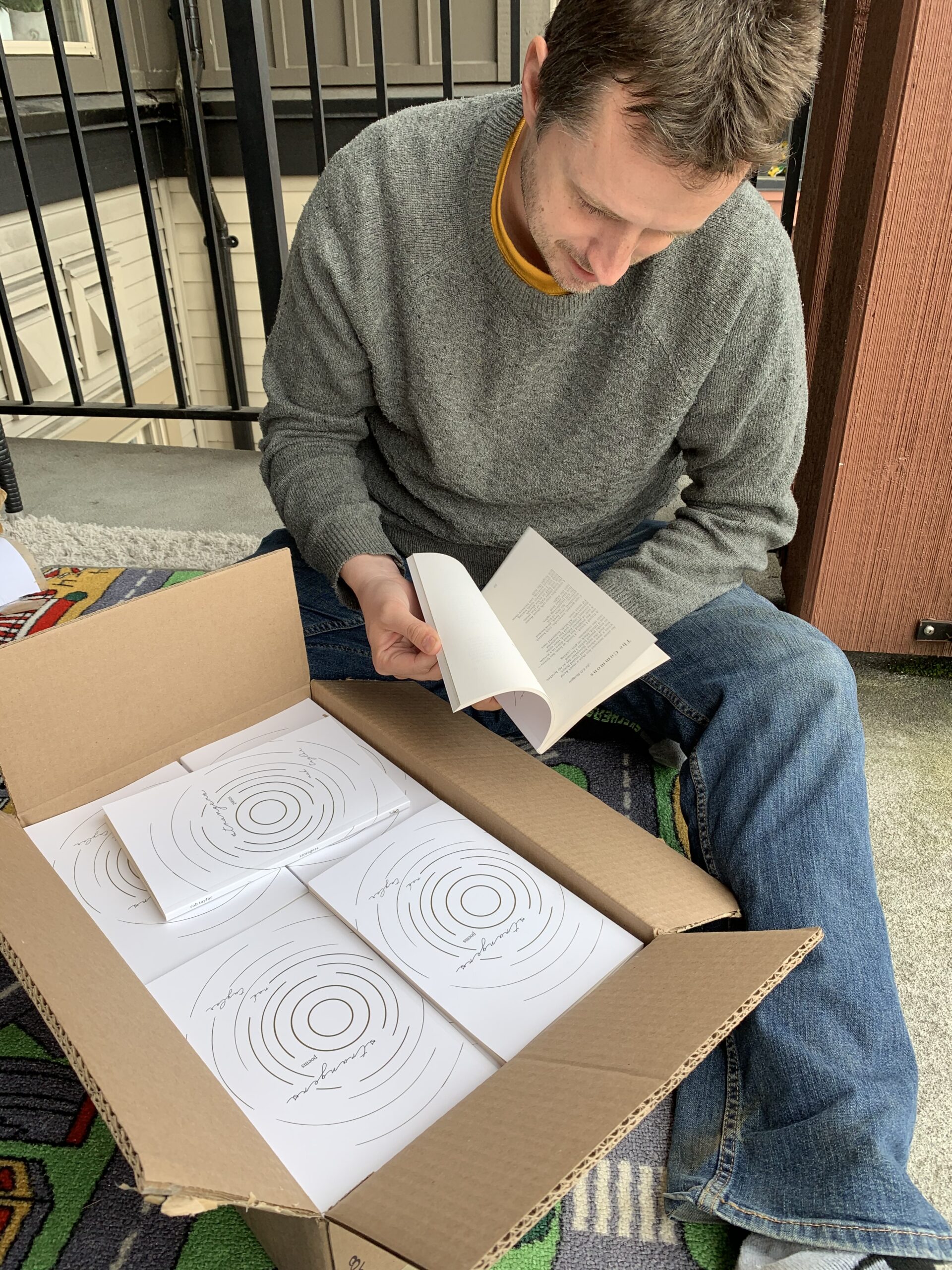
Through it all, Taylor has been steadily writing poems about parents and children and illness and birth.
“It wasn’t that I set out to write a book on these things, it was just that I kind of discovered that book,” he says.
It’s an odd time in your life, he notes, those years when your parents, the formative loves of your life die and your children, those new formatives loves of your life, are born.
“It’s a very revelatory moment in life but you also don’t have much time to process it as it happens,” he says.
Writing about his father seemed simpler than writing about his mother, he notes.
“It’s easier to see someone when you have a little distance from them,” he says.
In figuring out how to write about his mother, he delves into: “all the funny stories she would tell about ways she accidentally hurt me.”
One poem, which recounts his mother slamming a Toyota trunk on his neck, includes the phrase: “No harm was done, I say, and so you laugh, and I laugh, as does my mom.”
In discussing his mother, Taylor talks about admiring her grace in handling the struggles of life. Those stories gave him a different way to talk about her, he explains.
“It made it that I could talk about her in a way that just wasn’t sappy because I think my feelings for her are pure love and adoration,” he says.
Finishing a poem – or, more accurately, accepting that a poem is finished – is a perpetual challenge, Taylor says.
Asked when he knows he’s finished, he replies: “The publisher says you can’t send another draft in.” Then he laughs.
Even poems published more than a decade ago still nag at him.
“I still have a couple, which I will not tell you because I don’t want to throw them under the bus, but I still have a couple where I think: ‘Oh god, if I’d only changed that word to this word.’”
With no more chances for rewriting Strangers, Taylor is planning a virtual launch on Facebook and YouTube on May 27. If the vaccines continue to beat back the variants, he’s also planning an in-person launch June 26, likely in Coquitlam at Blue Mountain Park.
Asked about the audience for the collection, Taylor demurs.
“I’m always surprised by the people who are drawn to books.”
While it’s impossible to sum the collection with one phrase, the most emblematic line in the collection might be in the poem Smooth the Holy Surfaces.
He writes about his mother stuffing his father into the car to drive him to the emergency room, about the aftermath.
“. . . we careened our way downhill in our clown car of misfortune, my mother in the driver’s seat.”
Anyone interested in finding out more about that clown car of misfortune can click here.
Update: An earlier version of the story listed the wrong park for the June 26 launch.
Local news that matters to you
No one covers the Tri-Cities like we do. But we need your help to keep our community journalism sustainable.
Author