
Q&A with Roland Verrier, Marxist-Leninist Party candidate for Port Moody-Coquitlam

Name: Roland Verrier
Party: Marxist-Leninist Party
U.S. Relations
Local news that matters to you
No one covers the Tri-Cities like we do. But we need your help to keep our community journalism sustainable.
Canada–U.S. trade relations have become increasingly tense. The new Trump administration has threatened our sovereignty and initiated a trade war impacting Canadian jobs, manufacturing, agriculture, and energy exports.
Amid U.S. nationalist and protectionist policies, should Canada be trying to repair its relationship with our southern neighbour?
Canada should be developing trade with countries across the globe who genuinely want to establish trade relations that are for mutual benefit – not for oligarchs in one country dominating the other as has been the case with the United States.
What steps should Canada take to protect its economy?
Central to that aim is taking control of, and further developing, our economy – an economy that meets the needs of everyone rather than filling the pockets of transnational corporations. In short, stop paying the rich. Canada’s resources belong to the Canadian people.
Affordability & Cost of Living
Inflation has moderated but remains a significant concern. Many Canadians are struggling with stagnant wages, rising rents, and the high cost of essentials like groceries and fuel. Food bank use has hit record highs.
What is your plan to address the rising cost of living, especially housing, groceries, and transportation, which continue to outpace wages for many Canadians?
Food security, housing, transportation and much more are necessities of life – basic human rights in a modern society – rights that governments have failed to uphold. Everyone should have access to a livable income, decent wages and working conditions –enough for a good quality of life.
How will your policies ensure long-term affordability, rather than short-term relief?
Do you believe price-fixing is a systemic issue? If so, how should it be addressed?
The wealth created from our economy should be used to meet the needs of Canadians, not to line the pockets of the rich. The focus should be on developing and maintaining livable incomes and accessible public services while ensuring the rights of workers.
Housing Crisis
Canada faces a severe housing shortage, particularly in major cities. CMHC estimates the country needs over 3.5 million new homes by 2030 to restore affordability. Homelessness is rising, and many young Canadians are locked out of the housing market.
What specific measures will you take to increase the supply of affordable housing?
How will you address homelessness and ensure vulnerable populations have access to secure housing?
Stop giving more and more dollars to land speculators and real estate developers whose sole goal is to make as much money as possible. Instead, governments should build affordable housing that is accessible to everyone while at the same time putting direct investment into social housing.
Climate Change and Energy Transition
Canada is not currently on track to meet its 2030 emissions reduction targets under the Paris Agreement. Extreme weather events like wildfires and floods are becoming more frequent, and many governments are transitioning away from fossil fuels to clean energy.
How should Canada balance priorities regarding its natural resources and climate policy?
What are your party’s concrete targets for reducing greenhouse gas emissions between now and 2030, and how will you ensure accountability?
We should utilize the expertise of industrial workers, scientists, researchers and, importantly, Indigenous peoples, to determine the steps that are needed to ensure that any resource extraction, logging, mining, etc. is undertaken in a way that ensures protection of the environment, replanting trees, etc. while at the same time, meeting the needs of community members.
Health Care
Health systems across provinces are under pressure. Staffing shortages, long ER wait times, and limited access to family doctors are widespread.
How will you address the shortage of family doctors and long wait times in emergency rooms across the country?
Make post-secondary education accessible to everyone who has the interest and capacity to train to become a doctor. And not only doctors – nurses, social workers, and more. Expand accessibility for those with foreign training.
Do you support expanding public health care to include dental care, pharmacare, and mental health services? If so, how will it be funded and implemented?
Healthcare is a basic right and should be accessible to everyone. It should be a public service that excludes any privatization or for-profit healthcare and is implemented via either work-based or government-based programs. And it goes beyond healthcare. There should be no privatization of any social programs or public institutions.
Indigenous Reconciliation
Progress on the Truth and Reconciliation Commission’s 94 Calls to Action and the MMIWG Inquiry’s Calls for Justice has been slow.
What steps should be taken regarding the TRC’s Calls to Action and the MMIWG Inquiry’s Calls for Justice?
Implementation, under the leadership and direction of Indigenous nations and communities, should begin without delay and continue until the calls for action are fully implemented.
How will you approach equitable access to clean water, health care, housing, and education in Indigenous communities?
Reparations must be paid for crimes past and present via nation-to-nation processes. Hold governments to account for the climate crisis, pollution and destruction of natural habitats. And recognize the final say of Indigenous peoples on unceded territories.
Economic Inequality & Tax Reform
Wealth inequality is growing in Canada. The wealthiest Canadians have seen major gains, while lower- and middle-income households face stagnating or declining real incomes. Corporate profits remain high, yet some large companies pay minimal tax.
Do you support changes to Canada’s tax system? If so, what specific reforms do you propose?
How would you reduce income inequality?
The wealth that is created by workers in both the public and private sectors should go toward the betterment of society as a whole, not toward corporate profits for private interests. And, yes, there should be a significant corporate tax to support education, health care, etc. Monopolies and transnational corporations extract profits from the labour of workers and should provide the funds for the well-being of these workers.
Technology, Misinformation & AI
The rise of artificial intelligence and digital misinformation threatens public trust, job security, and democratic institutions. Canada has yet to pass comprehensive legislation to regulate AI and social media algorithms.
How will your government address the growing influence of misinformation, particularly regarding discourse on U.S. tech platforms?
What safeguards will you put in place regarding the development and use of AI in Canada, including impacts on jobs, privacy, and ethics?
While it is important to engage experts in this area to develop safeguards in terms of the use of AI and social media algorithms, it is also critical that any mechanisms and/or legislation do not interfere with the human right to conscience, speech, assemble and to organize.
Democratic Reform
Many Canadians feel alienated from federal politics. The 2015 Liberal promise of electoral reform was abandoned. Concerns over transparency, lobbying, and accountability continue to erode trust.
Do you support electoral reform to move away from the first-past-the-post system? Why or why not?
The MLPC stands firmly for the renewal of the political process including ending the First Past the Post system; having the people, not private political parties select candidates; funding the process (not parties) so every candidate’s voice is heard and can be considered by the electorate: a government by the people, not by political parties.
What will you do to restore public trust in government institutions and political transparency?
Among other measures, we suggest electing a Constituent Assembly to propose a modern constitution that is put forward for a national referendum. Let members of Parliament form the government rather than the cartel party system. Create a free and equal union of Canada, Quebec, Inuit, Indigenous Peoples and the Metis Nation.
Immigration
Canada has ambitious immigration targets, but there’s growing concern about whether infrastructure—especially housing, transit, and social services—can keep pace.
What is your plan for balancing immigration with infrastructure and housing capacity, particularly in high-demand cities?
Canada is a country of immigrants, with the exception of the Indigenous peoples whose home it has been from time immemorial. It is the ongoing schemes to privatize everything and line the pockets of the rich oligarchs that the source of the lack of infrastructure for all residents of Canada, not immigrants. Immigrants continue to make a significant contribution to our country.
Should Canada’s immigration targets be adjusted?
There should be permanent residency and open work permits for migrant workers and international students; ending deportation of undocumented workers; and full rights and benefits for all workers. Together we can defend the dignity of all workers and build the kind of country where the voice of the population is not only heard but determines the direction of our economy and our lives.
Crime & Public Safety
Concerns about violent crime, organized crime, gun violence, and safety in public spaces have increased in many communities. At the same time, experts emphasize the need for evidence-based approaches that focus on prevention, mental health supports, and root causes. There’s also ongoing debate about bail reform, policing budgets, and systemic inequities in the justice system.
What is your plan to address crime and improve public safety, particularly in urban settings?
How will your approach balance enforcement with investments in mental health, addiction treatment, housing, and poverty reduction as part of a long-term strategy for safer communities?
Addressing crime, improving public safety, etc. must involve tackling the underlying reason for the crime and unsafe behaviour – often lack of income, mental health challenges, and limited or no access to needed health and related services. Tackling underlining causes will limit the development of future crime and assist in the rehabilitation of those already caught up in a cycle of crime.
Toxic Drug Crisis & Public Health Response
Canada’s toxic drug crisis continues to worsen, with more than 50,000 deaths since 2016, driven largely by fentanyl and other synthetic opioids. The crisis affects people across age groups, income levels, and regions, and is closely tied to mental health, poverty, and homelessness. Provinces and cities are calling for stronger federal leadership on harm reduction, treatment, and decriminalization.
What is your plan to address the toxic drug crisis?
Will your party support harm reduction measures such as safe supply programs, supervised consumption sites, and decriminalization of drug possession?
Harm reduction measures are a critical component of addressing the toxic drug crisis and should be available to all those in need of such support. At the same time, we have an obligation as a society to provide for the basic needs of everyone.
How will you expand access to addiction treatment, mental health care, and long-term support to prevent overdose deaths and help people recover?
Supports must include accessible addiction treatment, mental health care and long-term supports that are available when you need them – not months or years later. And long-term support must include housing, a decent income, health care, education, etc. This foundation is necessary for a good quality of life to maintain recovery.
Is there an issue you plan to address that is not part of your party’s platform?
Why should Canadians vote for you?
In addition to my responses above, the MLPC seeks to make Canada a zone for peace with trade for mutual benefit and oppose phoney pretexts to interfere with other countries. We oppose violence as a way to sort out problems and oppose Canada’s integration into US Homeland Security, war machine and wars of aggression. We believe Canada should get out of both NATO and NORAD. And we stand with Palestine and call for an end to US/Israeli genocide. In short, the foundation of the Marxist-Leninist Party platform is for democratic renewal and the development of a modern Canada that defends the rights of all and humanizes both the natural and social environment. We want to work with everyone to bring this about.
Related Articles
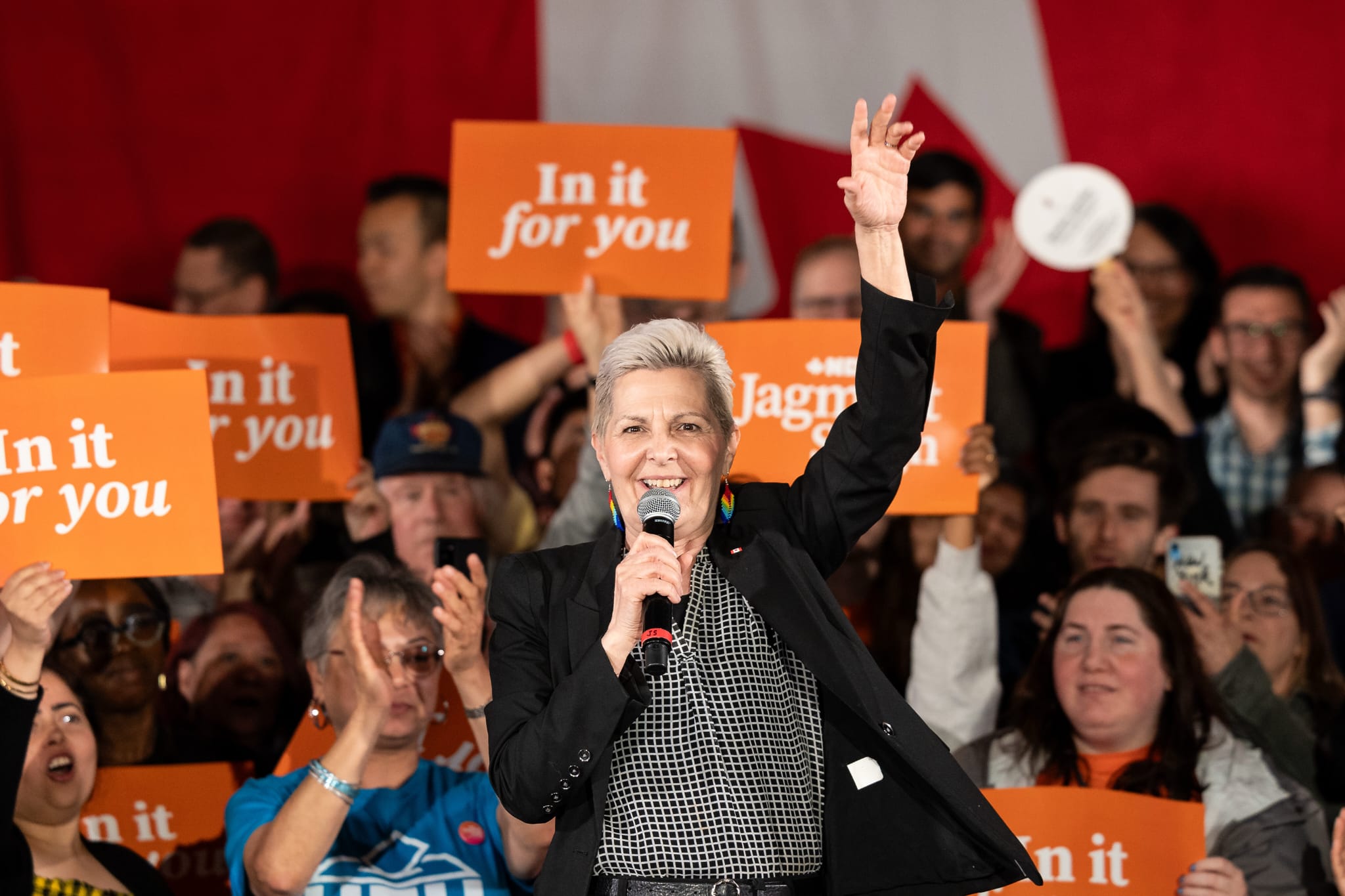
‘Sideswiped by history’ A closer look at incumbent Bonita Zarrillo’s loss in Port Moody-Coquitlam and the fall of the NDP
Bonita Zarrillo, NDP candidate and incumbent for Port Moody-Coquitlam, was one of the many in the party who lost their seat in the 2025 election