Conductor wins job back after being fired for positive cocaine test following incident at Port Coquitlam rail yard
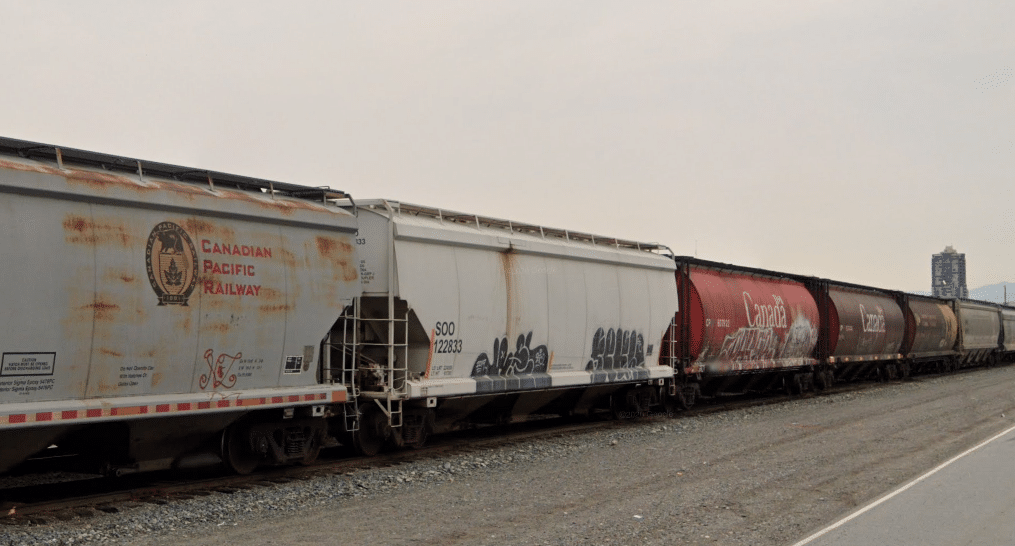
A railway conductor has won his job back after being fired for having trace amounts of cocaine in his system following an incident at the Port Coquitlam rail yard.
An arbitration hearing was held on May 18 between the Teamsters Canada Rail Conference and the Canadian Pacific Kansas City Railway (CPKC), formerly known as Canadian Pacific.
The dispute arbitrator ruled there was no just cause for the discipline, and the conductor should be reinstated without conditions, loss of seniority or benefits, and be made whole for lost earnings.
Local news that matters to you
No one covers the Tri-Cities like we do. But we need your help to keep our community journalism sustainable.
“While the positive test is one piece of evidence and demonstrates some ‘use’ of cocaine several days before, it does not establish impairment by cocaine while on the job,” the arbitrator said in the decision. “As a result, there was no just cause to discipline the grievor for his illegal drug use which had occurred several days before his shift began.”
The incident occurred in the early morning hours of Feb. 5, 2021, and involved a train running through a switch at the west end of the Port Coquitlam yard.
A miscommunication between the train’s brakeman and engineer occurred, and the conductor was not positioned on the footboard as required by operating procedures.
The conductor testified that he was in the locomotive doing paperwork as the train was stopped at a red light, and he had not given the go ahead to the engineer.
He was subject to a post-incident substance test later that day, which included an oral fluid swab test and a urine test.
The result of the former was negative, however, the result of the urine test was just below the screening concentration limit set in company policy.
In follow up interviews, the conductor admitted to cocaine use with some friends following a shift on Feb. 1, but added he rarely uses the drug and had not used it since.
He said he had never reported for work under the influence of a prohibited substance, or been impaired during his shifts.
The conductor was fired by CPKC on Feb. 24, 2021.
CPKC was relying on its policy stating that all employees must report fit to work, and be able to safely and effectively perform their duties.
They argued the conductor’s ingestion of cocaine could still be affecting his performance due to the residual effects during the “crash phase” of the drug.
Substantial memory and cognitive impairments, such as decreased alertness, poor and divided attention, reaction time, and concentration can last from one to five days, the company argued.
CPKC also highlighted the position of conductor as a “safety critical role.”
The union argued that the investigation was not conducted in a fair or impartial manner as per the collective agreement, the company had failed to meet the burden of proof and had ignored past labour precedents on drug tests.
Past arbitrations have established that the mere presence of drug metabolites does not establish just cause for discipline, according to the union.
While the arbitrator acknowledged the company has a legitimate and pressing legal obligation to safely run the business, the issue has to be balanced with what individuals choose to do in their private lives.
A significant body of jurisprudence exists to determine whether an individual is impaired, the arbitrator noted, adding “the evidence is lacking” in this case.
“To find that this grievor was impaired by cocaine during his shift on Feb. 4/5, 2021 – either by the initial high or the ‘crash’ from cocaine – would require evidence,” the arbitrator said. “It is this fact of impairment – and not just ‘some’ level of use – that shifts the balancing of privacy and safety interests in the employer’s favour.”
There was no evidence that verbal or behavioural issues, cognitive lapses, irritability or other ‘crash’ type symptoms, and those involved in the drug testing did not raise any issues that would indicate impairment led to the crash, the arbitrator added.
The union was also seeking damages, but the arbitrator said that due to another ongoing grievance with company policy, it would not be reasonable until that grievance is settled.
Author