Vigil held for Robert Pickton’s victims as serial killer becomes eligible for day parole
The trauma suffered by the families of Robert Pickton’s victims are wounds regularly reopened even as he lingers being bars.
Dozens of family members and friends held a vigil at the former site of Pickton’s pig farm in Port Coquitlam on Wednesday, one day before the serial killer became eligible to apply for day parole.
Michele Pineault, mother of Stephanie Lane who disappeared in 1997 at 20-years old, said Pickton’s updated status brings back a flood of memories from his trial and the subsequent national inquiry into Canada’s Missing and Murdered Indigenous Women.
Local news that matters to you
No one covers the Tri-Cities like we do. But we need your help to keep our community journalism sustainable.
“I think of my daughter every single day, but I don’t want to think of Robert Pickton anymore. I don’t want to think of him every day. It gets thrown in your face all the time, it’s like he’s a part of my life,” Pineault said. “I’ve been living in hell.”
Pickton was arrested in 2002, and eventually charged with 26 murders of women who disappeared from Vancouver’s Downtown Eastside from 1995 to 2001. He was convicted of second-degree murder for six of the women in 2007, with the remaining charges stayed in 2010.
The DNA of 33 women were discovered on Pickton’s Port Coquitlam property, and he later bragged to killing 49 women to an undercover police officer while in jail.
Pickton was never charged for Lane’s killing, and his mere ability to apply for parole was seen by the families as another injustice in the infamous case.
Most recently, the families have been fighting against the RCMP’s move to destroy, dispose and return evidence from the case – around 14,000 exhibits held in storage. The RCMP’s application to dispose of that evidence is still before the courts.
Minister of Public Safety Mike Farnworth said the province realizes the fate of the evidence is an, “incredibly sensitive issue for families.”
“We want to make sure that everything is done properly, and their concerns need to be taken into account on any decision that’s made on this,” he said.
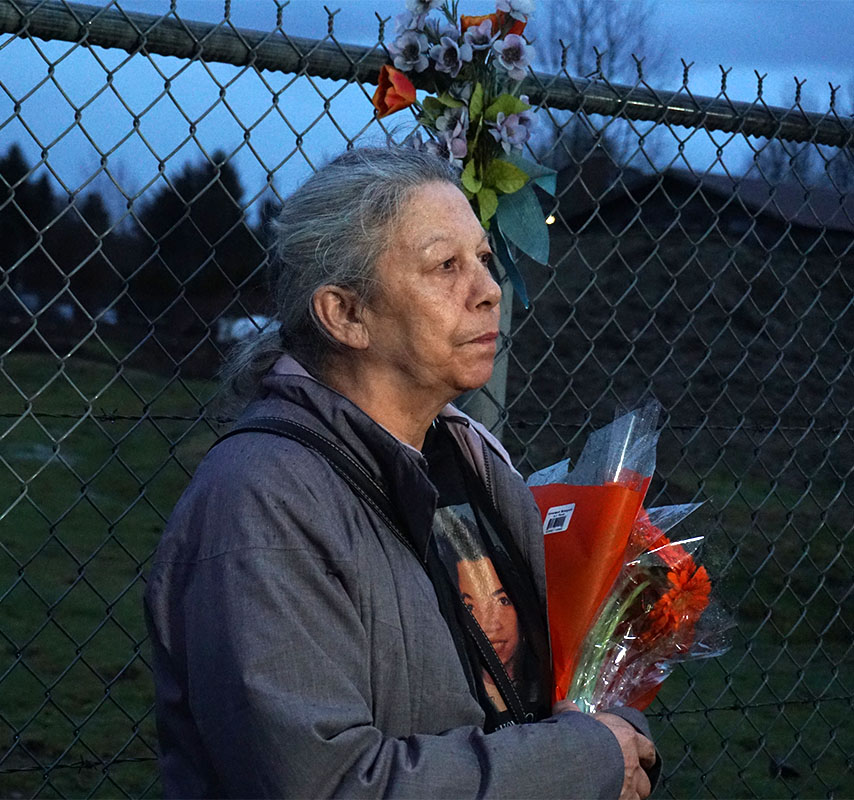
Evidence was returned to Pineault in 2015 following the national inquiry, including two vials containing crushed bone fragments found on the property that belonged to her daughter.
She said police informed her the evidence was misplaced during the investigation.
“It brings everything to the surface again, you go over and over it in your head, every last (detail) of the trial, the inquiry,” Pineault said. “If they are returning evidence like that, I’m sure there was an opportunity to charge.”
She said she thinks the RCMP’s investigation was flawed from the beginning, adding that many questions remain for the families.
They have heard other instances of files being misplaced, and many of the files released during the inquiry were heavily redacted, according to Pineault.
At this point, she said she is at a loss for words for the government.
“Everything that could be said, has been said, and no one’s listening,” Pineault said. “It’s still happening, women are still going missing because they’re still being murdered.”
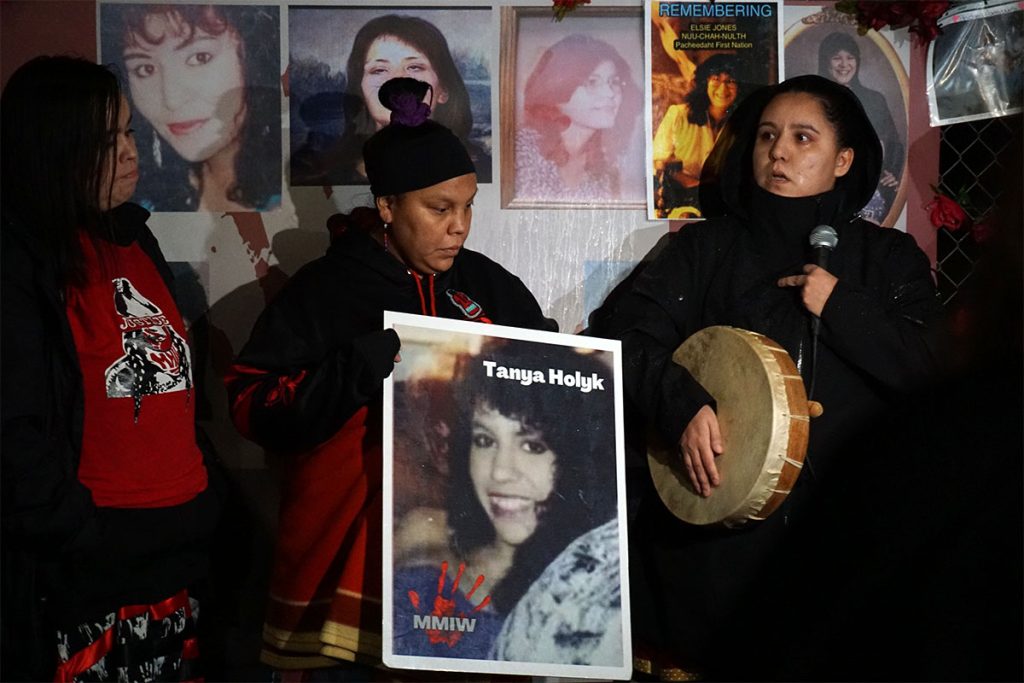
The vigil was not merely meant as a message to the Parole Board of Canada. Many of the families had never visited the site, and wanted to honour their lost loved ones.
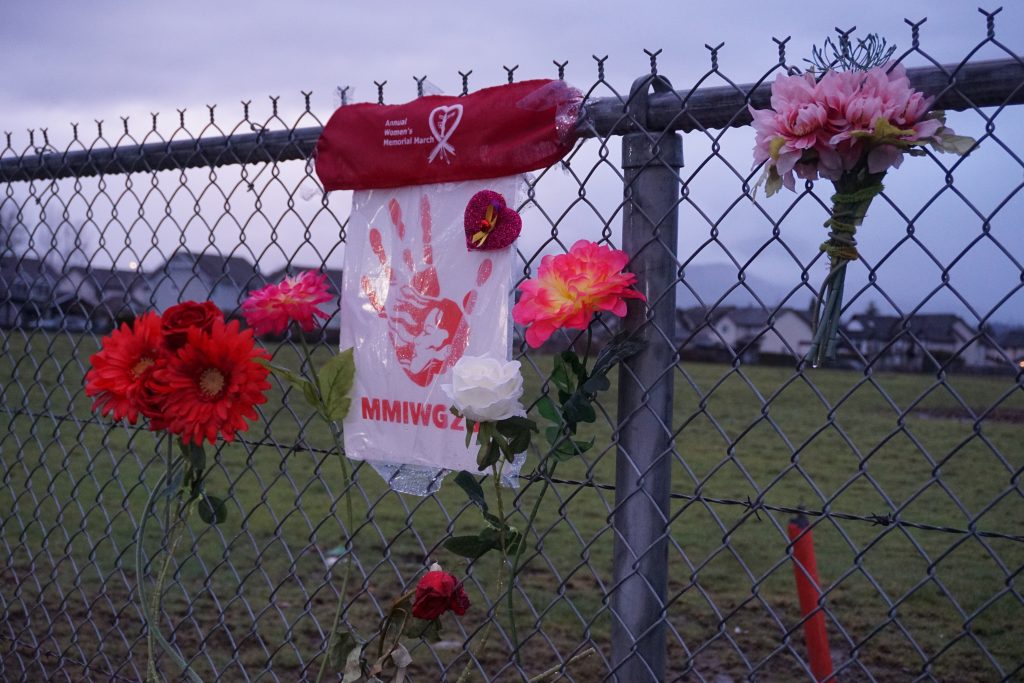
Flowers, commemorative posters, and red dresses were hung on the fence which now surrounds Pickton’s former property while Indigenous elders led traditional songs.
Some attendees had not ever had a chance to meet their lost family members, and only heard stories of what they were like in life.
Lily Louis-Irving, 17, showed up to honour her aunt, Sherry Irving, who went missing in 1997 at the age of 24. Charges for Irving’s death were stayed by the Crown in 2010.
Louis-Irving said her aunt’s death caused her family a lot of pain, and also affected her as she grew up.
“I don’t really know her, but I really, really wanted to know her growing up,” she said. “They said she was really outgoing, and goofy, and really calm and intelligent.”
Family members also detailed how the victims left behind children of their own.
Raven Hall said that her aunt, Tanya Holyk, who was reported missing in 1997 at the age of 23, would have been a grandmother today. Charges for Holyk’s murder were also stayed in 2010.
Pineault, who took charge of her daughter’s nine-month-old son after she disappeared, said it is “like a piece of the puzzle is missing.”
“I can’t even fathom that she’d be turning 48 (this year). She was 20,” she said. “Pickton should not walk on this Earth, he doesn’t deserve to take one step. He deserves to stay where he is until he dies.”
Pickton, now 74, received a maximum life sentence in 2007, with no chance of parole for 25 years from the date of his 2002 arrest. His first opportunity for parole is scheduled for 2027.
The chance of any type of parole being granted for Pickton is extremely slim, according to some legal experts.
Parole is not automatically granted when an inmate becomes eligible. When reviewing any application, the Parole Board of Canada’s overriding consideration is the risk that offender could pose to society if released.

Author