Port Moody’s new paid parking program shows little turnover at Rocky Point Park; council exploring resident pass, but lacks key data
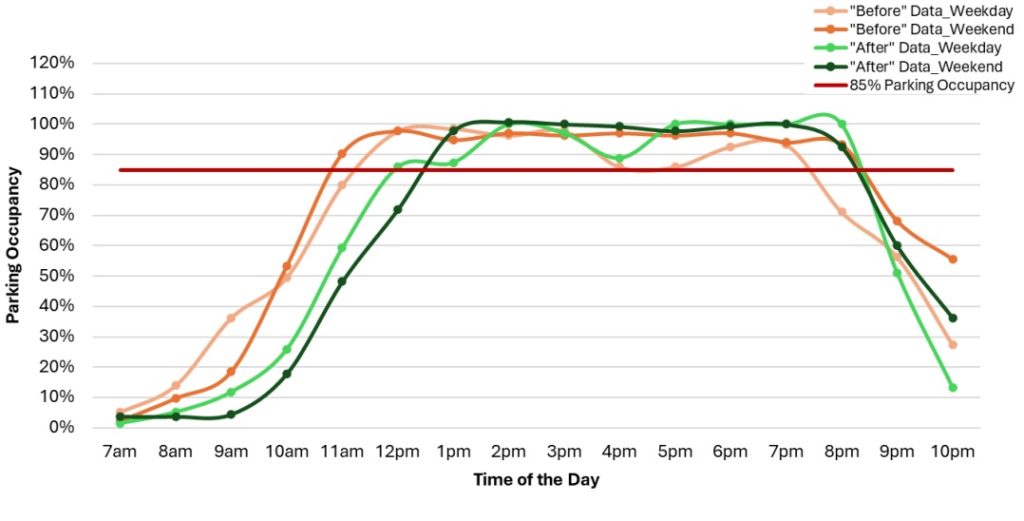
Port Moody’s paid parking program is not producing the turnover the city hoped for at Rocky Point Park, with new data showing the lots remain routinely full and vehicles are staying nearly as long as before.
The findings set off a wide-ranging discussion on Nov. 18, with council approving a motion directing staff to return with proposed rate changes, revised seasonal hours, resident-pass options for Rocky Point Park and other potential pay-parking areas, and an analysis of possible pay-parking expansion across the city.
Mayor Meghan Lahti said she was disappointed the report didn’t include data on the ratio between locals and visitors, data she said is key to understanding whether a residents pass is justified.
Local news that matters to you
No one covers the Tri-Cities like we do. But we need your help to keep our community journalism sustainable.
“Yes, it would be nice to be able to give free parking, I would love to be able to do that, if it’s borne out that that wouldn’t actually impact our overall goal – which is managing traffic down there,” Mayor Meghan Lahti said. “We may be actually undermining the goal in the first place.”
The parking program update shows that despite the introduction of pay-by-plate stalls in September 2024, Rocky Point Park’s main and secondary lots continue to reach or exceed the city’s 85 percent occupancy threshold at peak times.
The data
Turnover, a key measure of how many different vehicles use a space each day, has fallen sharply from pre-payment levels. Rocky Point’s main lot saw weekday turnover drop from 5.7 vehicles per stall to 4.0, and weekend turnover fall from 5.8 to 4.5. Average stays shortened slightly.
The program generated $581,700 in gross revenue and $233,200 in net revenue in its first year.
The overall picture, staff said, is a high-demand waterfront area where paid parking has not reduced congestion or increased circulation to the extent the policy intended.
Other locations, such as Suter Brook Village and especially Ungless Way, showed lower-than-expected occupancy – sometimes below 20 percent suggesting that current rates may be too high in those areas.
Staff recommended council consider adjusting parking rates, hours, and seasonal structures to better meet the city’s occupancy target. They suggested increasing Rocky Point Park’s rates due to persistent high demand, and reassessing pricing at low-use areas.
They also noted that off-season rates at Rocky Point and surrounding streets could be lowered to address concerns from the Economic Development and Tourism Committee about winter business impacts.
But Mayor Meghan Lahti said the report is missing a key piece of information before it can meaningfully redesign the program: whether or not the people occupying stalls are Port Moody residents.
Staff said the parking vendor does not collect this information, and the only likely method would be matching licence plates with ICBC’s registry – an uncertain process with no clear timeline.
Lahti also questioned whether pay parking had caused the winter business downturn, stating they only have anecdotal evidence to support that.
Coun. Kyla Knowles noted a survey was conducted informally at last year’s Golden Spike Awards, where businesses were asked about their experiences, but staff noted those results have not been published
“I think part of this is that we need to be more diligent about getting this information,” Lahti said, arguing the city should not rely on assumptions. “If it is an issue, then show us. Don’t just make assumptions.”
New motion
A new motion introduced by Coun. Haven Lurbiecki framed much of the evening’s discussion.
She argued that because the program is not achieving the city’s target turnover rates – particularly at Rocky Point Park – council should consider targeted changes. In other areas, such as Ungless Way, Lurbiecki noted the opposite problem exists: parking fees are high enough that usage is now far below the 85 percent target, suggesting the price point may be suppressing activity to an unintended degree.
Lurbiecki – who was the only councillor opposed to the initial implementation of the paid parking program – said she believed the council needed to examine the possibility of a resident parking pass in tandem with any rate adjustments.
“I don’t think council can have the conversation about potentially increasing the rates at Rocky Point without at the same time having that conversation,” she said.
Coun. Amy Lubik said she supported looking at resident options but also wanted staff to examine a low-income parking pass model similar to the city’s discounted recreation centre program. She said that if it was not feasible for the entire region, council should still explore what might be possible for Port Moody residents.
Couns. Samantha Agtarap and Knowles both argued that if Port Moody is going to consider resident parking passes, council should look at the program holistically across more areas, not only Rocky Point.
Knowles pointed towards staff’s identification of St. Johns Street, Clarke Street, and Inlet Field as emerging high-demand zones, where parking occupancy often reaches daytime capacity.
Lahti, however, was reluctant to support residents passes, cautioning they were in danger of “putting the cart before the horse.” Without reliable data showing how many Rocky Point users are local and how many are from outside the city, she said, council could inadvertently subvert the goal of creating turnover by offering discounts or free parking to a group that may actually be driving demand.
“I think we’re missing that middle step,” she said. “This has to be accompanied by the data . . . to understand the impact.”
Morrison echoed the mayor’s caution, adding he is concerned over impacts to businesses, suggesting that perhaps council can make adjustments to allow for the first 30 minutes of parking to be free.
He also proposed that early-morning parking could be free.
“People that are trying to utilize our parks and want to utilize them at a low cost shouldn’t have the barrier to do that, especially if they’re coming at non-peak times,” Morrison said.
Morrison urged staff to return with the information as soon as possible so council can make minor adjustments to the program.
Staff said they will attempt to gather the data quickly and will report back to council if delays arise.
Lahti agreed, but argued the more persistent complaints she heard relate not to business impacts, but to the lack of short-term drop-off parking for parents using Rocky Point’s preschool program.
“We already know there’s a problem,” she said, adding that short-term free parking deserved attention even before broader data arrives.
Council’s motion underwent several amendments as the discussion progressed. One amendment – opposed only by Lurbiecki – directed staff to investigate other locations in Port Moody where paid parking might be introduced in the future.
Author