Overdose calls plummet more than 40% in Coquitlam and Port Coquitlam, as drug deaths fall across B.C.
Expert says drop likely the result of a changing supply, not local efforts
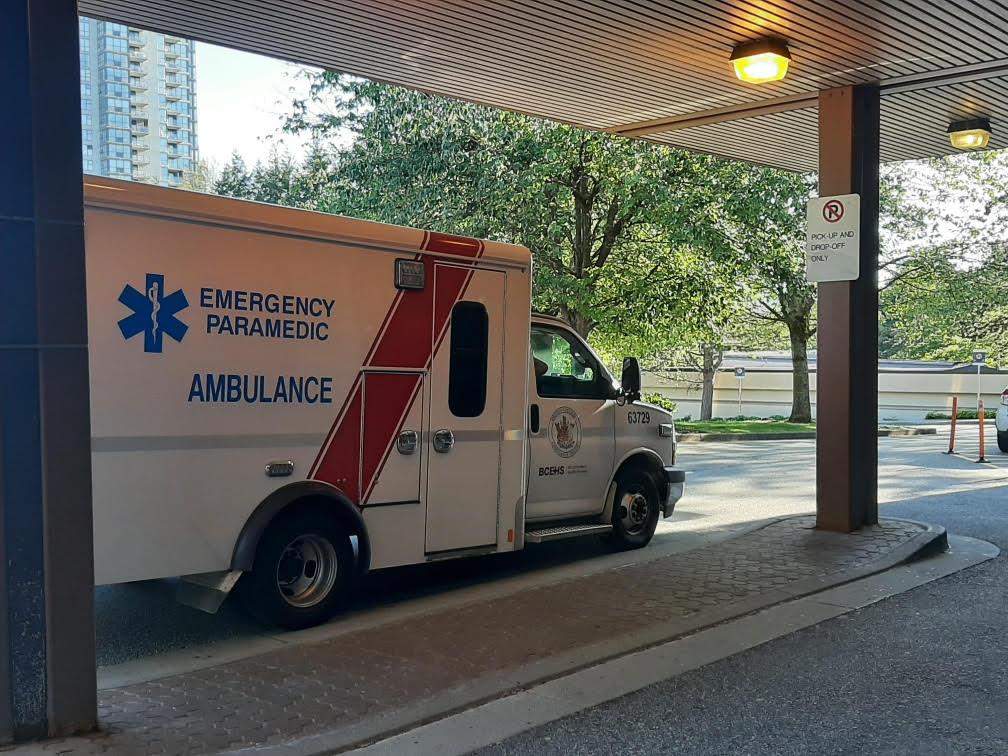
Emergency responders in Coquitlam and Port Coquitlam are reporting a steep decline in overdose-related calls this year – a shift that mirrors a broader drop in toxic drug deaths across British Columbia and beyond.
Coquitlam Fire Rescue says overdose calls between January and November fell 40.8 percent compared to the same period last year, dropping from 446 incidents to 264. Port Coquitlam Fire and Emergency Services recorded a similar decline, with calls down 40 percent over the same period, from 170 to 102.
Deputy Chief Blake Clarkson told Port Coquitlam council last month the department cannot explain the sudden drop.
Local news that matters to you
No one covers the Tri-Cities like we do. But we need your help to keep our community journalism sustainable.
“We can’t take credit for that one, but it is a positive sign that those calls are down,” he said.
Port Moody is not seeing the same shift. Fire Chief Darcey O’Riordan said his crews are on track to respond to roughly the same number of overdoses as last year, with 46 incidents reported so far compared to 51 in all of 2024.
Provincewide deaths also falling
The downward trend aligns with provincial fatality data. The BC Coroners Service reports that between January and September, toxic drug deaths fell 25 percent compared to 2024, dropping from 1,834 to 1,384.
But why overdose events and deaths are declining remains uncertain – and likely has little to do with local interventions, says Dr. Kora DeBeck, a professor at SFU’s School of Public Policy and a scientist with the BC Centre on Substance Use.
DeBeck said the trend is not unique to Metro Vancouver or even Canada. Similar drops are appearing across North America and other global hotspots, despite widely different drug policies.
“That really suggests, from my perspective, that it is most likely from changes in the drug supply,” she said.
One clue lies in fentanyl detection rates. According to the coroners service, fentanyl was found in 77 percent of toxic drug deaths so far in 2025 – the lowest share since 2016. Between 2020 and 2024, that figure ranged from 84 to 87 percent.
“That would lend support to a change in the drug supply,” DeBeck said. “When we look at so many different settings, seeing these similar patterns, I think really the most credible explanation is the drug supply.”
She rejected theories that a shift from injecting to smoking might be driving the decline, noting that transition happened years ago.
DeBeck also pushed back sharply on claims from Vancouver Mayor Ken Sim, who has suggested his police-led Downtown Eastside task force contributed to lower overdose numbers.
“I’m quite infuriated as someone who looks at data,” she said. “To say it’s policing with absolutely zero evidence goes against all the evidence we do have around the impact of policing on overdoses.”
Why the supply may be shifting
DeBeck said the unregulated nature of illicit drug production makes it difficult to know exactly why fentanyl may be appearing less often.
“One of the challenges with prohibition is that the production of drugs is totally unregulated and left to organized crime,” she said. “We don’t know what their thinking is.”
Producers may be incorporating other sedatives to lengthen the effects of drugs, she added, given fentanyl’s short half-life. Drug-checking programs and coroners data continue to show a toxic and unpredictable supply laced with substances like benzodiazepines and other chemical additives.
While these additives may not increase fatal overdoses, they can worsen instability and health problems for people who use drugs.
“Any reduction in overdose deaths is very important,” DeBeck said. “But the supply is still incredibly contaminated and still has lots of fentanyl in it.”
Deaths also remain far above levels recorded when B.C. declared a public health emergency in 2016.
Will the decline last?
Whether the current drop will continue is unclear. DeBeck noted a similar fall in 2019, when deaths plunged 37 percent from the previous year – only to spike 45 percent in 2020 when the COVID-19 pandemic set in.
“As long as we’re not intervening with the supply of drugs, we really have no control over it,” she said.
DeBeck added that prescribed alternatives, often referred to as “safe supply,” remain too limited to significantly affect mortality trends. While as many as 5,000 people were receiving some form of prescribed alternatives at the program’s peak, an estimated 150,000 people in B.C. are dependent on opioids.
“We’re nowhere close,” she said. “So we wouldn’t expect any prescribed alternatives or safe supply interventions to make any impact on the total deaths.”
Author