New POMO Museum exhibit shows communication through time
When a local museum got hold of Port Moody’s last pay phone, staff got an idea: why not create an exhibit that shows how communication has evolved through time?
This weekend, POMO Museum did just that, launching an exhibit called Communication Through The Ages that will run until next June.
“It is an evolution of technology, but also it’s how people use those technologies to keep in touch with and communicate with each other,” said Rachel Lige, the museum’s collection technician curator of this exhibit.
Local news that matters to you
No one covers the Tri-Cities like we do. But we need your help to keep our community journalism sustainable.
Since Lige joined the museum in April, she has taken on the project, putting it together from the thought and concept behind it to deciding what artifacts to put on display.
She has gotten some items on loan — like radios from SPARC (the Society for the Preservation of Antique Radio in Canada), phones from Aldergrove, and smartphones from some board members. But most of the items come from the museum’s own collection, she said.
Lige said this exhibit will be a way younger generations can learn about past forms of communication — especially for those who might have had a smartphone their entire life.
“I think it’s really cool to look back even 50 years, 100 years, and see where we used to be, where it just took so much more time and energy to maybe speak to a family member who lives on the other side of the world.”
She added that it illustrates how communication was centralized in the past— like one radio station, one voice and one newscaster — to today, where most people can have a voice online.
What is the exhibit like?
Lige said the earliest forms of communication at the exhibit are quill and ink pen pots, with written explanations of how humans have been writing for thousands of years.
The next display she set up like a mail room, with postal service, letters and typewriters. They borrowed typewriters from Brendan Raftery, a local collector, which are in working condition for people to use.
The communication then evolves to wires, like telegraphs, with reflections on how this technology changed society.
“Suddenly you go from mailing a letter that would take weeks or months to reach somebody to having something that you can send and message instantly within minutes, and how that really changed things for communities and governments and news,” said Lige.
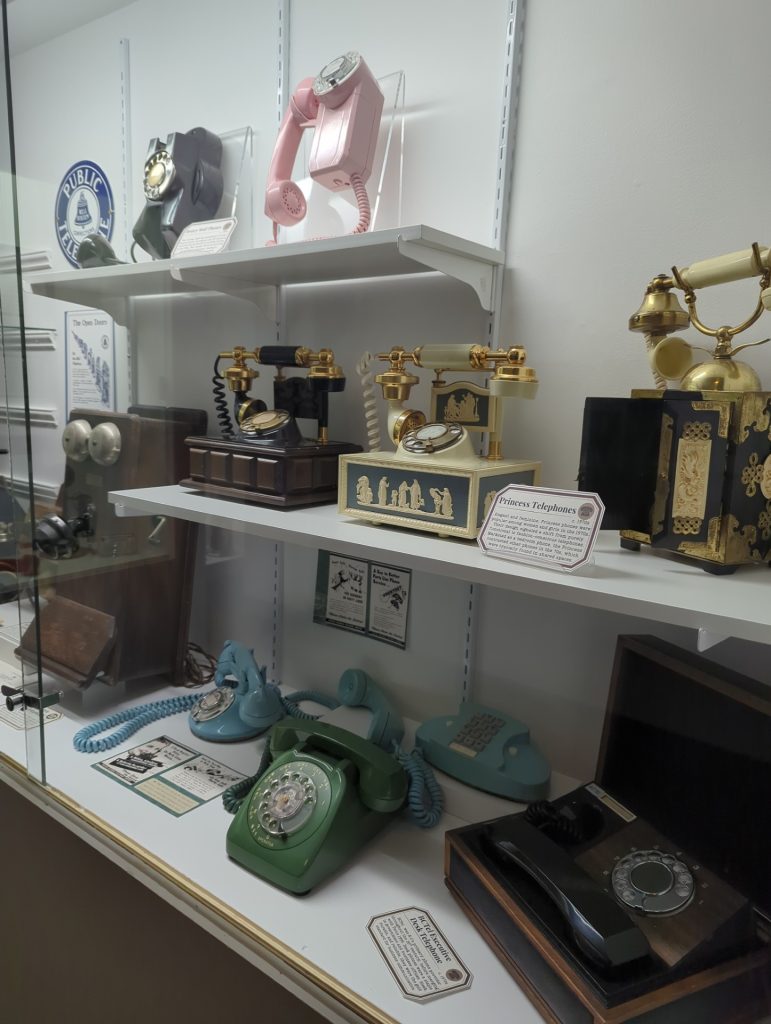
There’s also a telephone display (which were once run on the same wire as telegraphs) and a radio display — another significant shift in communication, as people could now quickly get messages out to the masses, like in times of war.
Lige also put together a camera display, which allowed people to “capture reality.”
And POMO museum visitors will be able to be part of the exhibit. This week, they are setting up a photo booth for people to pose in and take photos, and encouraging them to post the photo with the hashtag KeepInTouchAtPOMO.
While in the past humans communicated through things like mail or telegrams, it is now largely online, Lige said.
“It’s through social media and emojis and hashtags and all these ways that we connect online through that technology,” she said.
Additional segments will roll out on Oct. 1 and Nov. 1, including one on the printing press and how that changed communication. Lige said that the museum’s events over the next several months will also be communication related.
POMO Museum is open Tuesday to Sunday, from noon to 4 p.m.