Neuron closes up shop in Coquitlam as city gets ready to tweak e-scooter plan
Council referred a report back to staff, following Port Moody’s intentions to add its own e-scooter and e-bike program
E-scooter riders may soon be able to navigate a smoother path between Port Moody and Coquitlam.
Coquitlam recently delayed voting on a two-year extension to the city’s ongoing micromobility pilot project to better align with changes on the other side of the municipal border. Port Moody city council recently voted to look an operator for an e-bike and e-scooter share service in the City of the Arts.
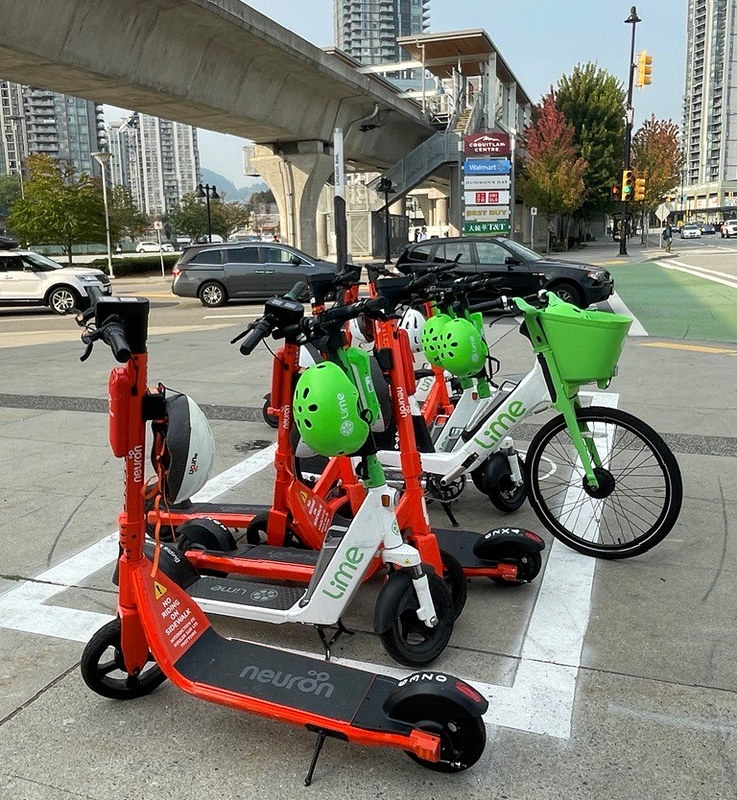
Two operators, Lime and Neuron, previously handled e-bike and e-scooter rentals in Coquitlam. However, Neuron has ceased operations in Coquitlam, according to a city staff report.
Local news that matters to you
No one covers the Tri-Cities like we do. But we need your help to keep our community journalism sustainable.
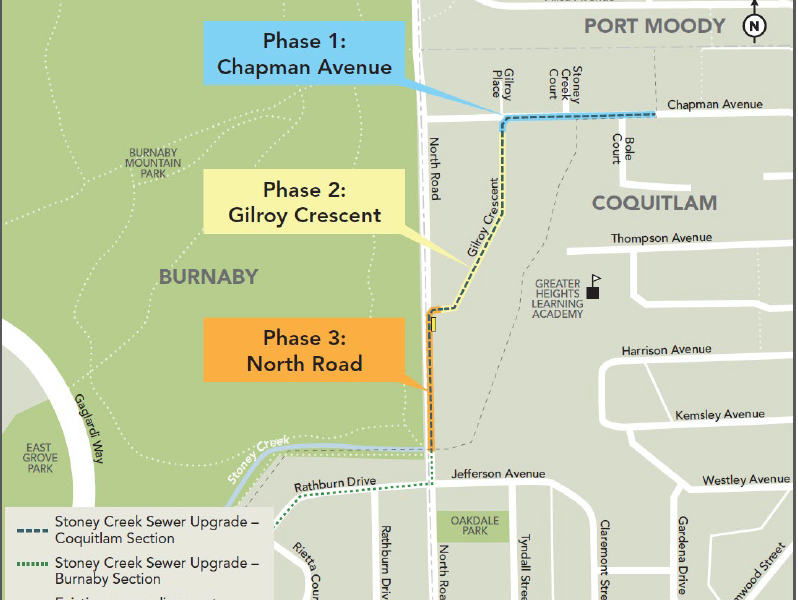
Coquitlam has considered adjusting the micromobility plan including extending the city’s northern scooter boundary by about 500 metres above David Avenue while dropping the southern boundary below Coquitlam Central SkyTrain Station along Lougheed Highway.
A key issue for some residents is the impact on accessibility when e-scooters are left on sidewalks.
Wheelchair-user Lelainia Lloyd previously told the Dispatch that she’s frequently had to pivot off the sidewalk and onto the grass to navigate carelessly parked e-scooters.
A speaker at a recent Coquitlam city council meeting urged the implementation of geofencing auto-lock technology. Ideally, a rider wouldn’t be able to close their account unless their e-scooter was parked in a designated area.
The situation should be “considerably better” this summer, according to the city’s general manager of engineering Jamie Boan. The city is making a move away from dockless parking to designated parking pad locations, he added.
It’s a balancing act, said Mayor Richard Stewart. The city wants to encourage more people to get out of cars but also needs to ensure sidewalks are clear for all members of the public to use.
“We’re enthusiastic about micromobility but we recognize as well there’s growing pains on a system that is doing a lot of growing in the last two years,” Stewart said.
Within Town Centre, there are 21 dockless parking stations — areas without a physical barrier but marked with paint, signage, and geo-fencing technology that prevents people from using a scooter or bike without the app.
About 30 new stations would be added under the change, which would be funded and run by Lime.
Approximately 15,000 users made more than 106,000 on e-scooters and e-bikes over the past 18 months, according to a city staff report. Most trips span 1.8 kilometres. Ridership tends to increase in evenings and weekends, as well as during city festivals.
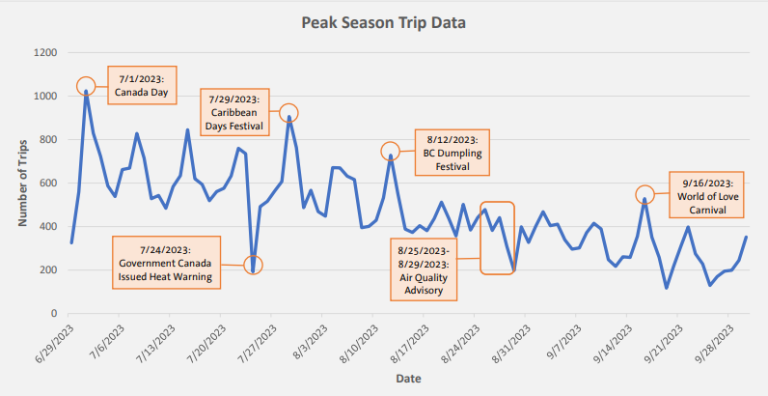
Coquitlam city staff estimated 35,000 car trips were replaced by e-vehicles.
There were two RCMP files involving e-scooters, including a “minor motor vehicle incident” and a case where an e-scooter rider was weaving in and out of traffic, according to a city staff report.
Coquitlam Fire and Rescue responded to 17 medical injury calls involving scooters. However, the data doesn’t discriminate between personal vehicles and rented e-scooters.
The program cost the city $129,600 in 2023. However, with no new signs, stations or labour needed from the city in 2024, the program cost dipped to $36,500.
Authors